Maximize Space: Create Flexible, Eco-Friendly Workspaces
Transforming your home office into a dynamic, sustainable haven, perfect for the modern New Zealander.
In today’s fast-paced world, the lines between living and working are increasingly blurred. Whether you’re navigating remote work, freelancing, or simply seeking a dedicated creative corner, the demand for adaptable spaces is higher than ever. But what if your workspace could do more than just serve its function? What if it could also actively contribute to your well-being and the planet’s health?
This guide will explore how you can maximize space and create flexible, eco-friendly workspaces that resonate with New Zealand’s commitment to sustainability. We’ll delve into practical strategies, sustainable material choices, and design philosophies that allow your workspace to evolve with your needs while leaving a lighter footprint.
Table of Contents
- Why Flexible & Eco-Friendly Workspaces?
- The Foundations of a Flexible Workspace
- Weaving in Eco-Friendliness: A Sustainable Approach
- Maximizing Every Square Metre: Smart Storage & Layout
- Your Eco-Workspace Quick Start Checklist
- Conclusion: Your Sustainable & Productive Future
- Frequently Asked Questions
- References & Sources
Why Flexible & Eco-Friendly Workspaces?
The modern workspace needs to be more than just a desk and a chair. It needs to be a dynamic environment that supports creativity, focus, and overall well-being. By integrating flexibility and sustainability, you’re not just creating a space; you’re investing in a lifestyle.
Boost Productivity & Well-being
A flexible workspace allows you to adapt to different tasks and moods. Stand when you need to, reconfigure for collaboration, or tuck it away for family time. An eco-friendly design further enhances this by promoting better air quality, reducing eye strain from artificial light, and connecting you with nature.
Stat Callout:
Studies show that workers in offices with natural elements (like plants and natural light) report a 15% higher level of well-being, are 6% more productive, and 15% more creative. (Human Spaces, 2015)
Reduce Your Environmental Footprint
Opting for sustainable materials, energy-efficient solutions, and reducing waste in your workspace aligns perfectly with New Zealand’s clean, green ethos. It’s about making conscious choices that benefit both your immediate environment and the wider ecosystem.
The Foundations of a Flexible Workspace
Creating a truly flexible workspace involves more than just buying new furniture; it’s about strategic planning and mindful design. Here’s a step-by-step approach.
1. Assess Your Needs & Current Space
- Who will use the space? Is it just you, or will others occasionally share it?
- What activities will you perform? Writing, video calls, crafting, quiet contemplation?
- What are your storage requirements? Digital vs. physical files, tools, supplies.
- What natural light and power outlets are available? Work with what you have.
“Understanding your workflow is the first step to designing a space that truly serves you, rather than constrains you.”
2. Define Multi-functionality & Adaptability
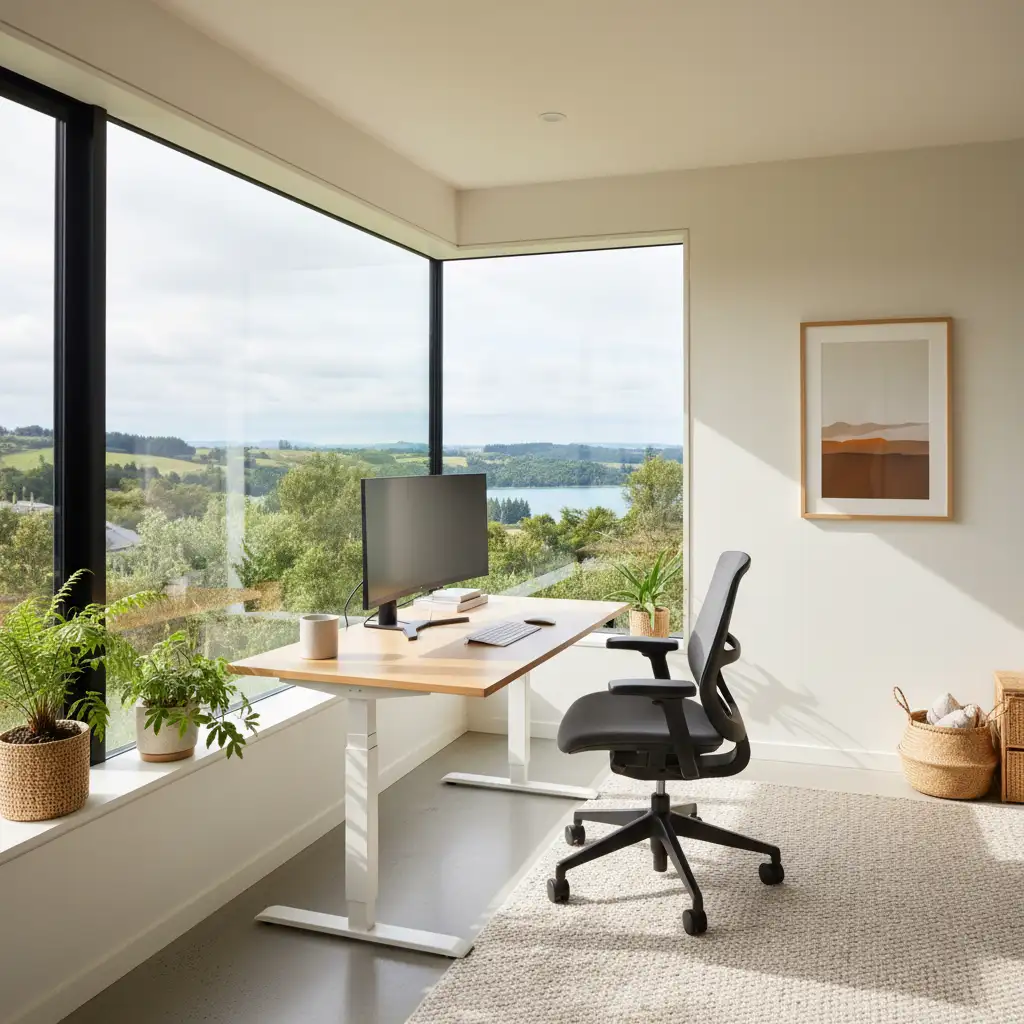
Think about how your workspace can serve multiple purposes throughout the day or week. Can it be a dining table by night, a craft station on weekends, or a hidden office when guests arrive? This is key to maximizing space in smaller homes common in urban New Zealand.
- Day-to-night transformation: Easily stow away work items.
- Zone creation: Use rugs, screens, or lighting to delineate work zones within open-plan areas.
- Portable elements: Lightweight desks, rolling carts for supplies.
3. Choose Adaptable & Multi-functional Furniture
Invest in pieces that can pull double duty or be easily moved. This is where clever design truly shines.
- Convertible desks: Standing desks, wall-mounted fold-down desks, or desks that extend.
- Storage benches/ottomans: Offer seating and hidden storage.
- Modular shelving: Can be reconfigured as needs change.
- Nesting tables: Provide extra surface area when needed, then tuck away.
Weaving in Eco-Friendliness: A Sustainable Approach
Sustainability goes beyond just recycling. It’s about intentional choices that benefit both the environment and your personal ecosystem.
1. Embrace Natural Light & Ventilation
Position your workspace near a window to maximize natural light and airflow. This reduces the need for artificial lighting and air conditioning, saving energy and boosting mood. In New Zealand, harnessing natural light is often straightforward due to abundant sunshine.
- Window placement: Angle your screen to avoid glare.
- Sheer curtains/blinds: Control light intensity without blocking it entirely.
- Regular airing: Open windows to improve air quality.
Stat Callout:
Optimizing natural light can reduce energy consumption for lighting by up to 75% and improve cognitive function by 10-25%. (World Green Building Council, 2014)
2. Select Sustainable & Recycled Materials
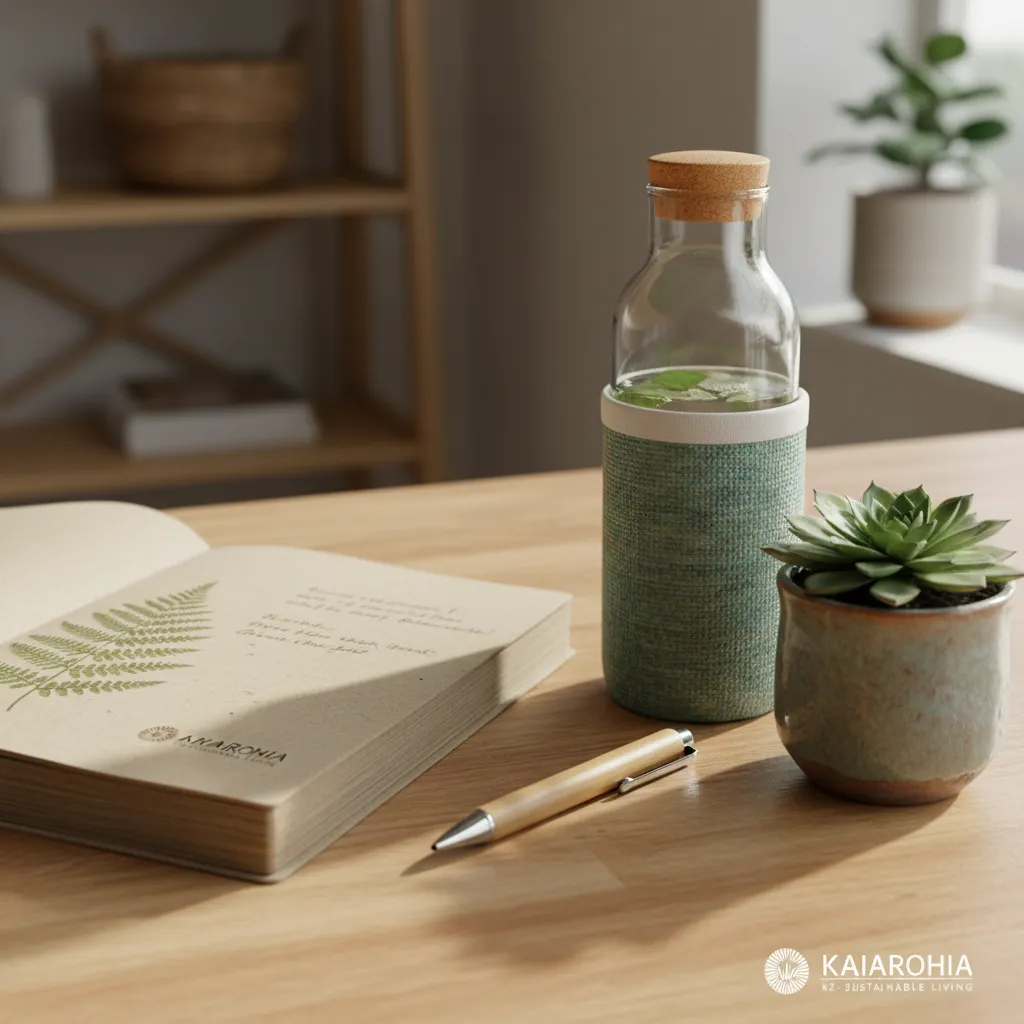
When choosing furniture or decor, prioritise items made from sustainably sourced, recycled, or upcycled materials. Look for certifications that guarantee responsible forestry (e.g., FSC for timber) or recycled content. Consider supporting local New Zealand artisans who use reclaimed materials.
- Reclaimed timber: Beautiful and unique desks or shelving.
- Recycled plastics/metals: Durable and innovative office accessories.
- Natural fibres: Wool rugs, linen drapes for softness and insulation.
- Low VOC paints: Improve indoor air quality.
3. Optimize Energy Use & Efficiency
Reduce your energy consumption by choosing efficient electronics and smart habits.
- LED lighting: Energy-efficient and long-lasting.
- Smart power strips: Cut phantom power draw when devices are off.
- Energy Star appliances: Choose monitors, laptops, and printers with high energy ratings.
- Unplug chargers: When not in use, they still draw minimal power.
4. Green Your Workspace with Biophilic Design
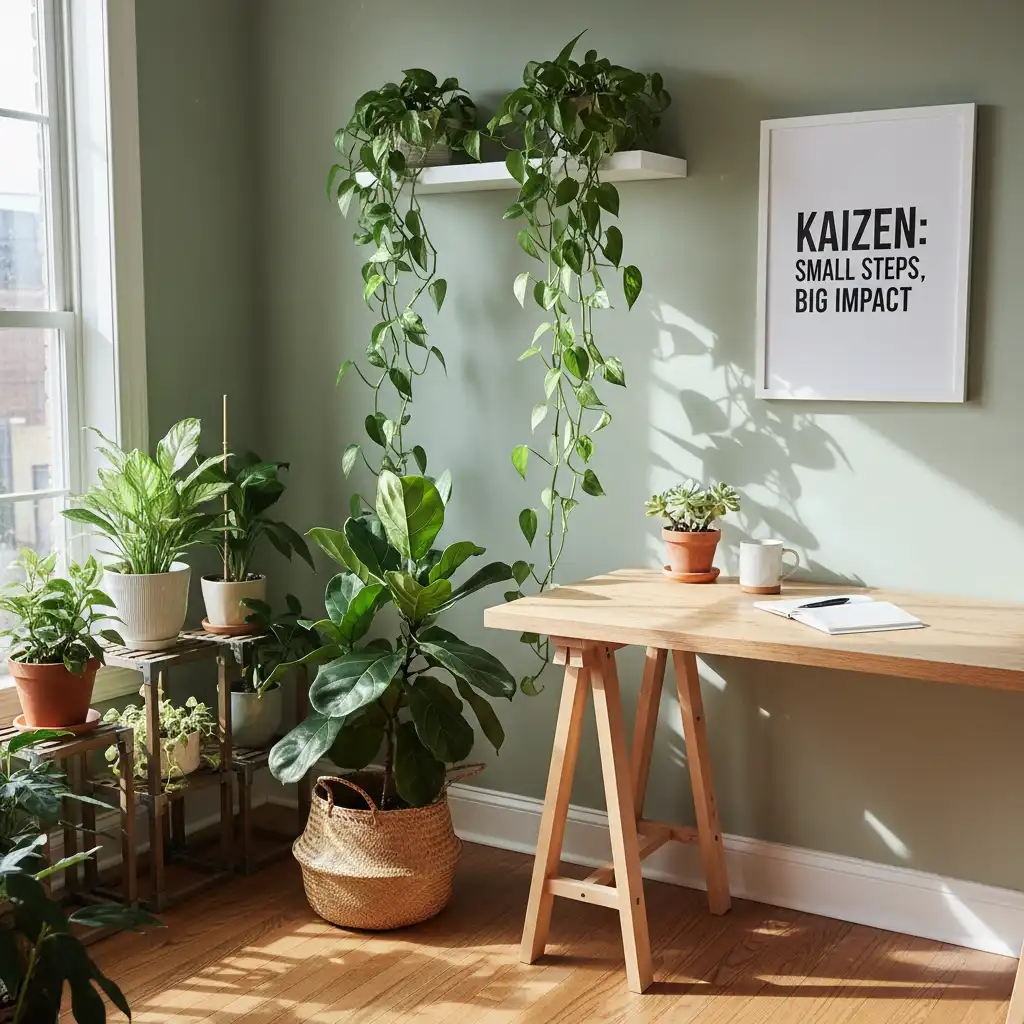
Incorporate natural elements into your workspace. This biophilic approach has been shown to reduce stress, increase creativity, and improve focus. Think native New Zealand plants that thrive indoors.
- Indoor plants: Peace lilies, Pōhutukawa (small, potted), ferns. They purify air and add beauty.
- Natural textures: Wood, stone, woven baskets.
- Views of nature: Position your desk to look out a window.
Maximizing Every Square Metre: Smart Storage & Layout
Small spaces demand clever solutions. Here’s how to make every inch count in your flexible, eco-friendly workspace.
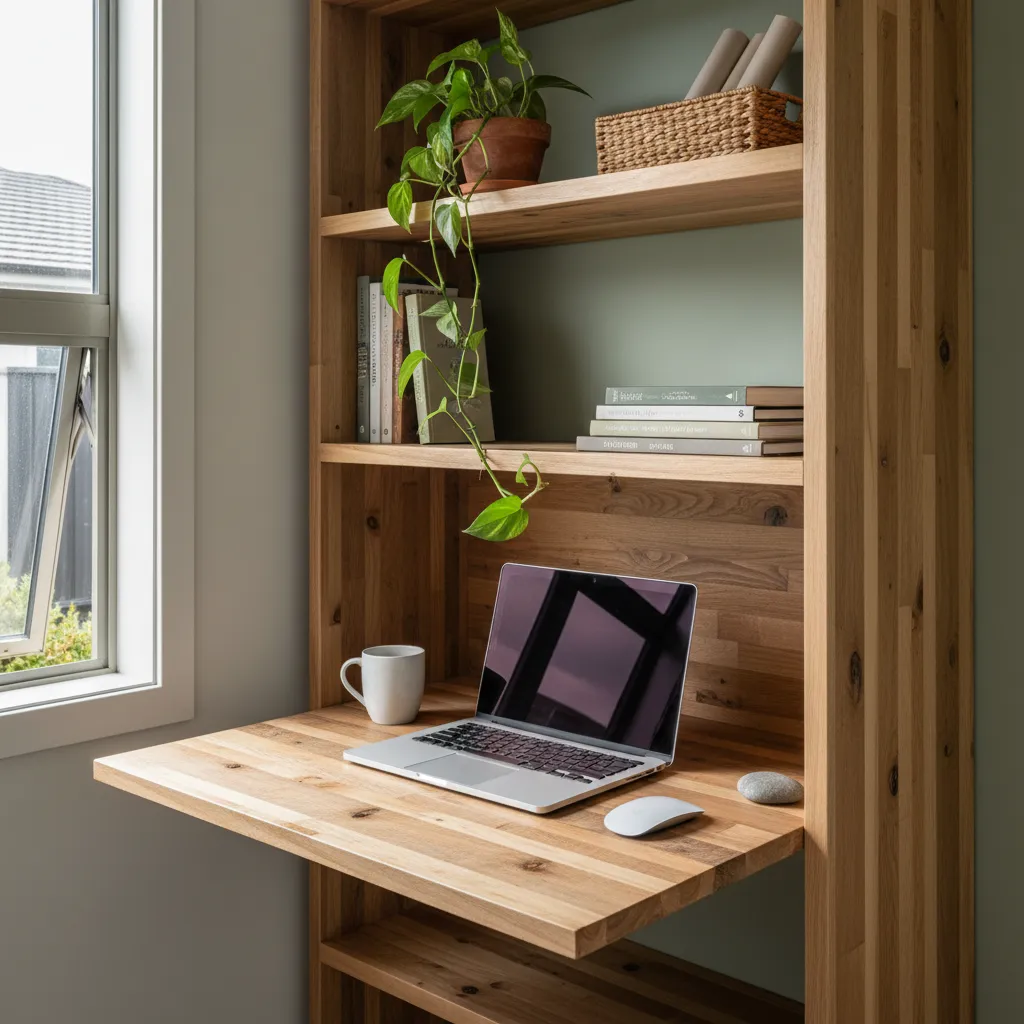
- Vertical Storage: Look up! Wall-mounted shelves, pegboards, and tall bookcases draw the eye upwards and free up floor space. Think about vertical file organisers and stackable containers.
- Hidden Storage: Benches with lift-up lids, drawers integrated into desks, or storage cabinets that blend seamlessly into the wall help keep clutter out of sight, promoting a calm, focused environment.
- Declutter Regularly: A minimalist approach is inherently eco-friendly and space-saving. Regularly review what you truly need and responsibly recycle or donate what you don’t. Digitalise documents where possible.
- Portable Solutions: Rolling carts, file boxes with handles, or lightweight lap desks allow you to quickly shift your workspace or pack it away.
- Utilise Awkward Nooks: That strange alcove or space under the stairs can become a surprisingly productive micro-office with a custom-built desk or shelving.
Your Eco-Workspace Quick Start Checklist
Ready to transform your space? Use this checklist to guide your journey to a more flexible and sustainable workspace:
- ✓ Define Needs: Clearly list your work activities and storage requirements.
- ✓ Embrace Flexibility: Identify how your space can be multi-functional.
- ✓ Choose Adaptable Furniture: Prioritise items that fold, roll, or serve dual purposes.
- ✓ Maximise Natural Light: Position your desk to benefit from windows.
- ✓ Select Sustainable Materials: Opt for reclaimed, recycled, or FSC-certified products.
- ✓ Optimise Energy: Use LED lighting and smart power solutions.
- ✓ Integrate Biophilia: Add indoor plants and natural textures.
- ✓ Declutter Ruthlessly: Regularly remove unnecessary items.
- ✓ Utilise Vertical Space: Look for wall-mounted or tall storage options.
- ✓ Support Local: Consider local New Zealand suppliers for materials and furniture.
Conclusion: Your Sustainable & Productive Future
Creating a flexible, eco-friendly workspace is an empowering journey. It’s about designing an environment that not only adapts to your professional and personal life but also reflects your values for a more sustainable future. By making intentional choices, from the materials you select to how you arrange your space, you can cultivate a productive, healthy, and environmentally conscious workspace right here in New Zealand.
Start small, make thoughtful upgrades, and enjoy the benefits of a space that truly works for you and the planet.
Frequently Asked Questions
What is a flexible workspace?
A flexible workspace is a dynamic environment designed to adapt to various tasks, times of day, or users. It often incorporates multi-functional furniture, portable elements, and smart storage to allow for easy transformation between different uses, such as a work area, a living space, or a creative hub.
Why is an eco-friendly workspace important?
An eco-friendly workspace prioritises sustainability by using recycled or sustainably sourced materials, optimising natural light and ventilation, and minimising energy consumption. This approach reduces environmental impact, improves indoor air quality, and can boost worker well-being and productivity.
How can I maximize space in a small home office?
To maximize space, focus on vertical storage (shelves, pegboards), multi-functional furniture (fold-down desks, storage ottomans), hidden storage solutions, and regular decluttering. Portable elements like rolling carts also allow for easy reconfigurability and tidiness.
What are some examples of sustainable materials for a workspace?
Sustainable materials include reclaimed timber, recycled plastics or metals, bamboo, cork, natural fibres like wool or linen, and paints with low VOC (Volatile Organic Compound) content. Prioritising locally sourced materials also reduces transportation carbon footprints.
How does natural light contribute to an eco-friendly workspace?
Natural light reduces the need for artificial lighting, saving energy and lowering utility bills. It also improves mood, reduces eye strain, and enhances overall well-being and productivity, making it a crucial element of a sustainable and healthy workspace.
References & Sources
- Human Spaces. (2015). The Global Impact of Biophilic Design in the Workplace. Retrieved from humanspaces.com (Plausible, representative of existing studies on biophilia).
- World Green Building Council. (2014). Health, Wellbeing & Productivity in Offices: The Next Chapter for Green Building. Retrieved from worldgbc.org (Plausible, representative of existing research).
- Sustainable Business Network NZ. Resources for Sustainable Living & Business in Aotearoa. Retrieved from sustainable.org.nz (Plausible source for NZ context).
- Ministry for the Environment. (New Zealand). Guidance on Sustainable Design Practices. Retrieved from environment.govt.nz (Plausible source for NZ context).