Composting & Food Waste Solutions NZ: Your Ultimate Guide
Transform your scraps into garden gold and join New Zealand’s sustainable future. This comprehensive composting NZ guide empowers you to reduce waste, enrich your soil, and make a real difference.
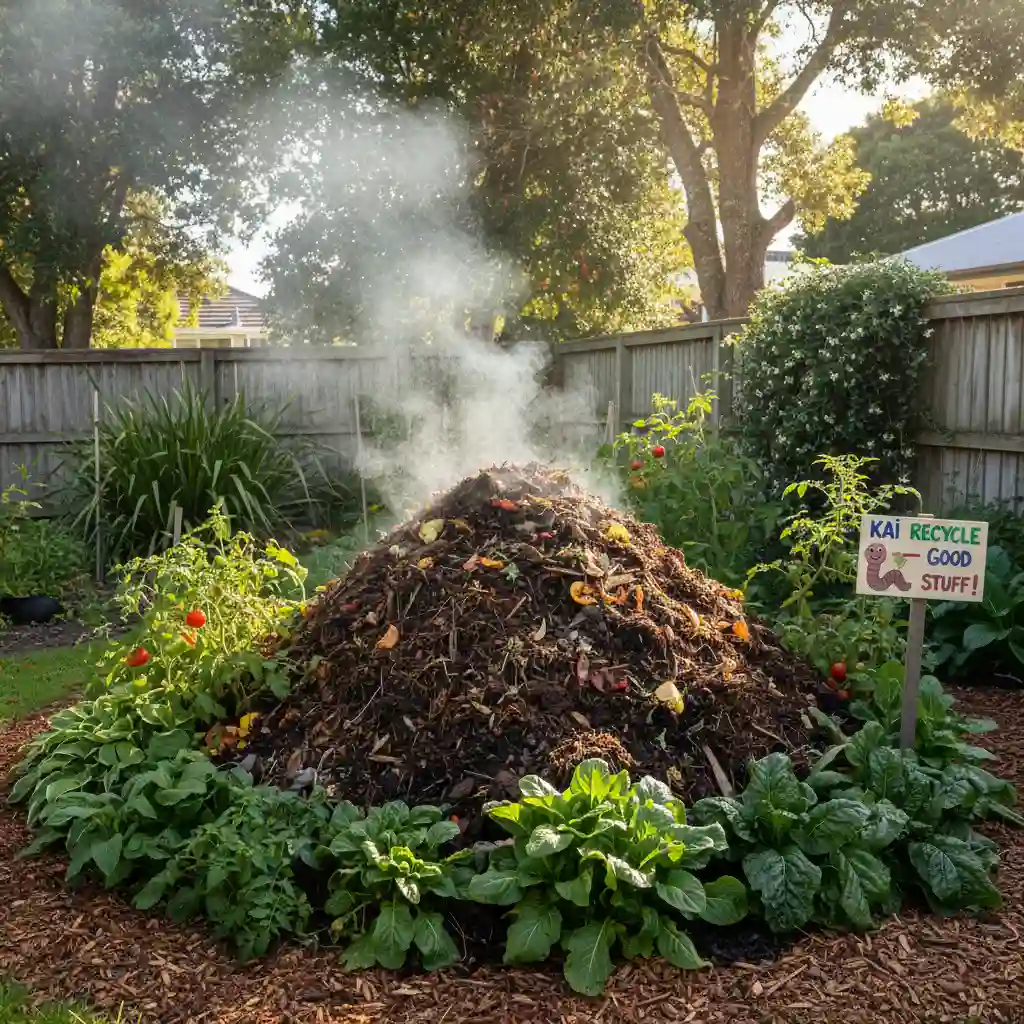
Table of Contents
- 1. Composting Basics: From Scraps to Soil
- 2. Types of Compost Bins: Finding Your Perfect Match
- 3. Worm Farming (Vermicomposting): Nature’s Tiny Recyclers
- 4. Food Waste Collection Services: When Home Composting Isn’t an Option
- 5. Beyond the Bin: Benefits for Your Soil & Our Planet
- 6. Frequently Asked Questions (FAQ)
- 7. References & Sources
1. Composting Basics: From Scraps to Soil
Composting is a natural process of recycling organic matter, such as food scraps and garden waste, into a rich soil amendment called compost. In New Zealand, embracing composting is one of the most impactful actions you can take to reduce your environmental footprint and create a thriving garden.
At its heart, composting involves providing the right conditions for microorganisms to break down organic materials. This simple yet powerful act diverts valuable resources from landfills, where they would otherwise produce harmful methane gas.
The ‘Green’ and ‘Brown’ Rule: Achieving Balance
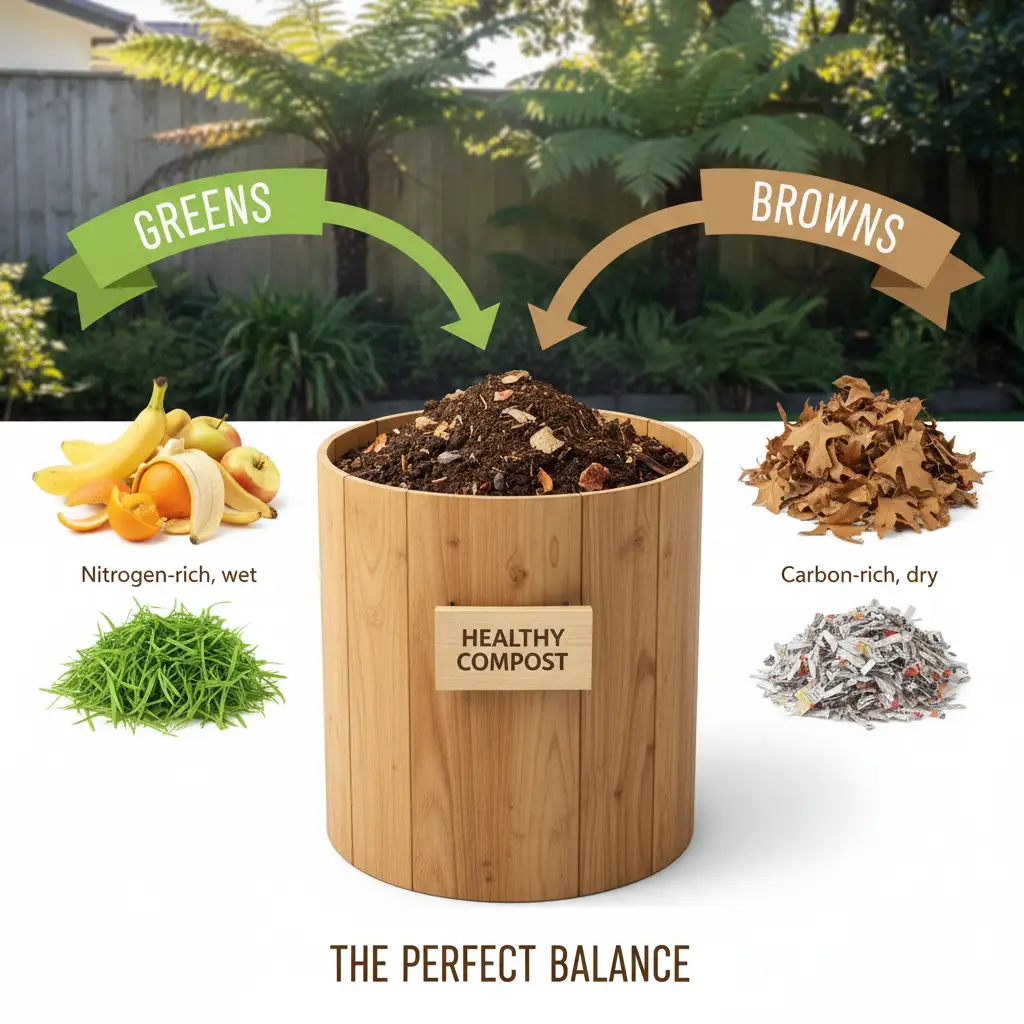
A successful compost pile relies on a healthy balance of ‘greens’ (nitrogen-rich materials) and ‘browns’ (carbon-rich materials). Think of it like a recipe for the microbes!
- Greens: Food scraps (fruit and vegetable peels, coffee grounds, tea bags), grass clippings, fresh plant trimmings. These provide nitrogen for microbial growth.
- Browns: Dried leaves, straw, shredded paper, wood chips, sawdust. These provide carbon, structure, and air pockets.
Aim for a ratio of roughly 2-3 parts browns to 1 part greens by volume. This helps maintain aeration and prevents foul odours.
Getting Started with Home Composting: A Step-by-Step Guide
- 1. Choose Your Location: Select a well-drained spot, ideally partially shaded, accessible from your kitchen and garden. Ensure it’s not too close to your house or neighbours.
- 2. Gather Your Materials: Start collecting kitchen scraps in a small bin. Gather garden waste like leaves and grass clippings. Shredding larger items will speed up decomposition.
- 3. Layer it Up: Begin with a layer of coarse browns (e.g., twigs, straw) at the bottom for aeration. Then, alternate layers of greens and browns, aiming for the recommended ratio. Moisten dry layers as you go.
- 4. Turn and Monitor: Regularly turn your compost pile (weekly or bi-weekly) with a fork or aerator to introduce oxygen. Keep it moist, like a wrung-out sponge. If it smells bad, add more browns; if it’s too dry, add water or more greens.
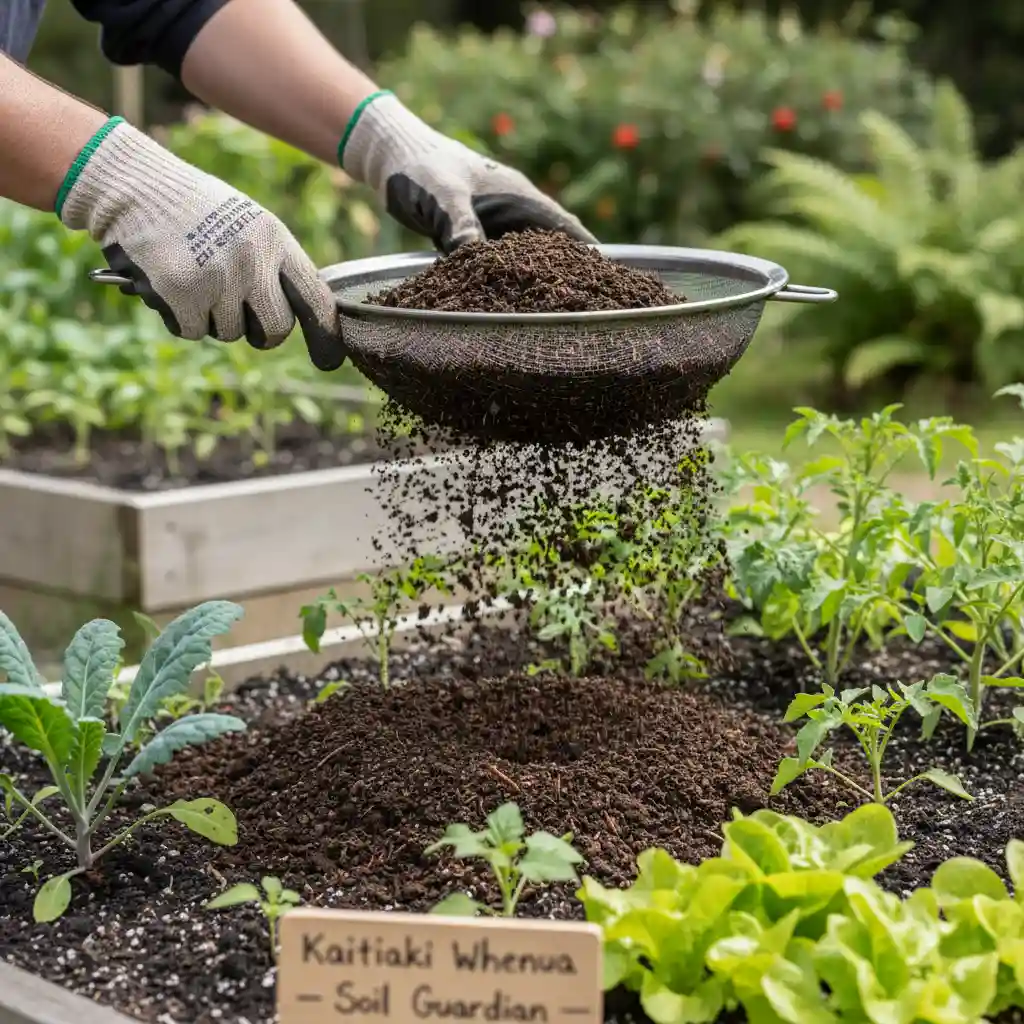
- 5. Harvest Your Gold: When your compost is dark, crumbly, and smells earthy, it’s ready! Sieve out any undecomposed pieces and use the finished compost to enrich your garden beds.
2. Types of Compost Bins: Finding Your Perfect Match
Choosing the right composting system is key to making your composting journey successful and enjoyable. What works best for you depends on your space, budget, and the amount of waste you produce.
- Enclosed Compost Bins: Often plastic, these bins are compact and ideal for smaller gardens. They keep pests out and retain heat well. They require manual turning or mixing.
- Tumbling Composters: These rotating bins make turning easy – just give them a spin! Great for faster composting and good aeration, but usually have a limited capacity.
- Open Pile/Three-Bin System: Suitable for larger gardens with more space and a significant amount of garden waste. Allows for hot composting, which is faster but requires more active management.
- Bokashi Systems: While not traditional composting, Bokashi is an excellent pre-composting solution. It ferments all food scraps (even meat and dairy!) using beneficial microbes. The fermented material then needs to be buried or added to a regular compost bin to break down further.
Consider your lifestyle and space when selecting a system. Many local councils in NZ offer subsidised compost bins and worm farms, so check your local resources!
3. Worm Farming (Vermicomposting): Nature’s Tiny Recyclers
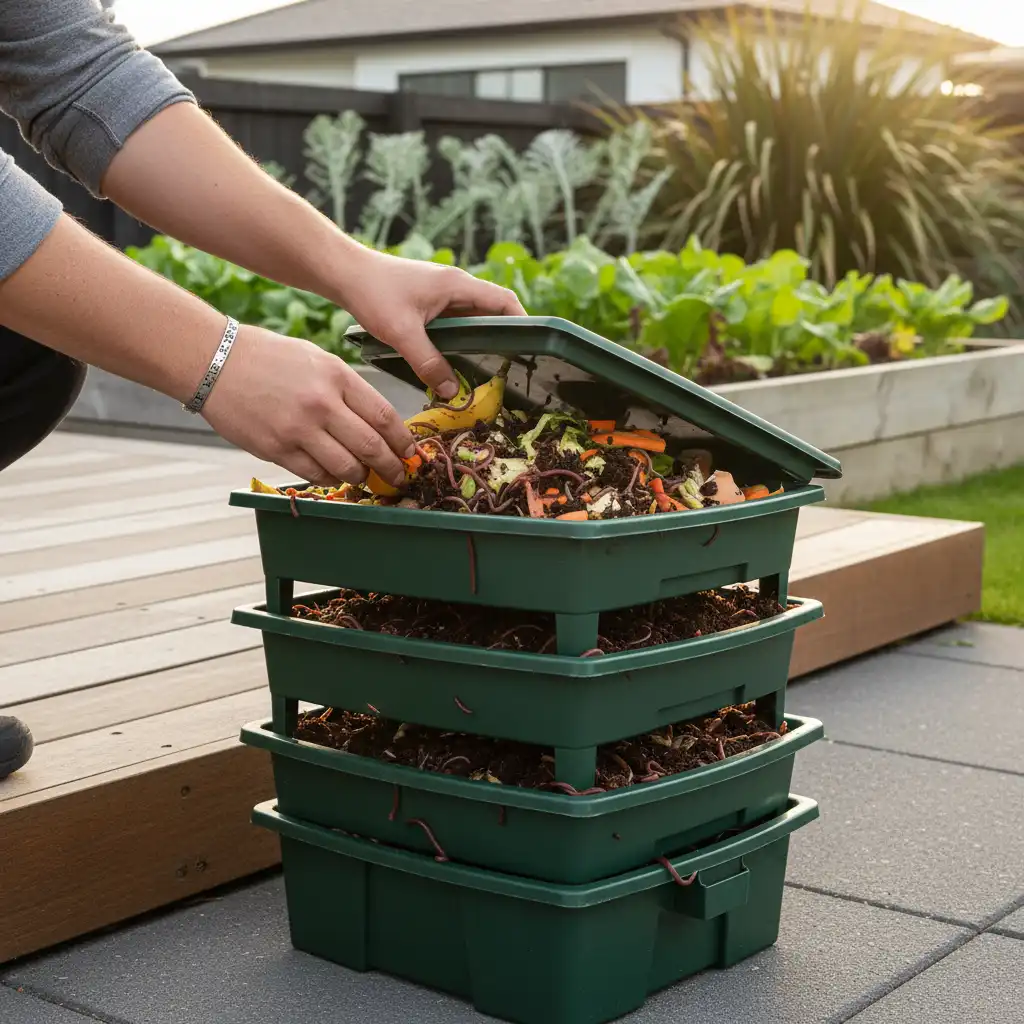
Worm farming, or vermicomposting, is a fantastic way to process food scraps, especially for those with limited space or who prefer a simpler, odour-free system. Special composting worms (like tiger worms) do all the hard work, converting your kitchen waste into nutrient-rich castings and liquid fertiliser.
Benefits of a Worm Farm
- Compact: Perfect for small gardens, balconies, or even indoors.
- Efficient: Worms can process a surprising amount of food waste quickly.
- Odour-Free: A well-maintained worm farm produces no unpleasant smells.
- Premium Output: Produces highly potent worm castings (solid fertiliser) and ‘worm tea’ (liquid fertiliser), excellent for all plants.
What to Feed Your Worms (and What to Avoid)
Worms love fruit and vegetable scraps, coffee grounds, tea bags, and dampened cardboard. Avoid meat, dairy, oily foods, citrus in large quantities, and anything too spicy, as these can harm the worms or attract pests.
4. Food Waste Collection Services: When Home Composting Isn’t an Option
We understand that home composting isn’t for everyone, or every household. Fortunately, in New Zealand, options for diverting food waste are growing. Many councils and private companies offer convenient collection services.
- Council Services: A growing number of local authorities across New Zealand are rolling out kerbside food waste collection. These green bins typically accept all food scraps, including meat and dairy, which are then commercially composted. Check your local council website for availability and specific guidelines in your area.
- Private Collection: Several innovative New Zealand businesses offer subscription-based food scrap collection services. These often cater to urban areas and can be a great option for apartments or those wanting a personalised service. Some also offer community drop-off points.
Exploring these services is a great step if you’re looking for a hassle-free way to contribute to New Zealand’s waste reduction efforts, complementing your learning from this composting NZ guide.
5. Beyond the Bin: Benefits for Your Soil & Our Planet
The impact of composting extends far beyond just reducing landfill waste. It’s a cornerstone of sustainable living, offering profound benefits for both your garden and the wider environment.
Enriching Your Garden
- Nutrient-Rich Fertiliser: Compost is packed with essential macro and micronutrients, slowly releasing them to plants for sustained growth. It improves soil structure, making it easier for roots to grow.
- Improved Water Retention: Adding compost significantly increases your soil’s ability to hold water, reducing the need for frequent irrigation – especially valuable during New Zealand’s dry summers.
- Enhanced Soil Biodiversity: Compost introduces beneficial microorganisms, fungi, and invertebrates to your soil, creating a healthy ecosystem that helps prevent diseases and supports plant vigour.
Benefits for the Planet (Stat Callouts)
Composting isn’t just good for your garden; it’s a powerful climate action.
Did you know? Food waste makes up about one-third of household rubbish in New Zealand, equating to over 150,000 tonnes annually, much of which goes to landfill. Composting directly reduces this!
When organic waste breaks down in a landfill without oxygen, it produces methane – a greenhouse gas over 25 times more potent than carbon dioxide. Composting prevents this harmful gas from escaping.
By diverting your food scraps, you’re not just creating valuable soil; you’re actively contributing to lower greenhouse gas emissions and a healthier planet for all New Zealanders.
Frequently Asked Questions (FAQ)
What can I NOT put in my home compost bin?
Avoid meat, dairy products, cooked foods with oils, pet waste, diseased plants, and chemically treated wood. These can attract pests, create odours, or introduce harmful pathogens to your compost. Bokashi systems can handle most food waste, but it then needs to be buried.
How long does it take to make compost?
The composting process can take anywhere from a few weeks to several months, depending on the method and conditions. Hot composting (with regular turning and a good green/brown balance) can produce usable compost in 3-4 months. Slower, passive piles might take 6-12 months.
My compost smells bad. What am I doing wrong?
A foul smell, especially like rotten eggs, usually indicates too much ‘green’ material or not enough oxygen. To fix it, turn your pile thoroughly and add more ‘brown’ materials like dry leaves, straw, or shredded cardboard. This will help balance the nitrogen and improve aeration.
Can I compost weeds in my NZ garden?
It depends on the weed. Annual weeds without seeds or roots can generally be composted. However, avoid composting perennial weeds (like kikuyu or couch grass) or weeds that have gone to seed, as the compost might not get hot enough to kill them, leading to them spreading in your garden. Hot composting can handle some weeds more effectively.
Where can I find composting resources in New Zealand?
Your local council website is often the best starting point for information on local initiatives, subsidised bins, and workshops. Organisations like Compost Collective and other regional waste minimisation programmes also provide excellent resources, workshops, and support for composting in NZ.
References & Sources
- Ministry for the Environment. (2022). Waste and Recycling in New Zealand. Retrieved from environment.govt.nz/waste
- Compost Collective. (n.d.). Getting Started with Composting. Retrieved from compostcollective.org.nz
- WasteMINZ. (2021). Technical Guidelines for Composting and Organics Processing Facilities. Retrieved from wasteminz.org.nz
- Enviro-Mark Solutions. (2019). The Carbon Footprint of Food Waste in New Zealand. Retrieved from enviro-mark.com
- The Worm Café. (n.d.). Worm Farming Basics. Retrieved from thewormcafe.co.nz