Eco-Friendly Materials for Green Office Supplies: A Guide
In an era where environmental consciousness is paramount, our choices, even in the smallest details of daily life, contribute significantly to a healthier planet. This holds true for our workspaces. Shifting to eco-friendly office supplies is a powerful step towards a more sustainable lifestyle, aligning personal values with professional practices.
This guide will illuminate the world of sustainable materials, helping you make informed decisions that reduce your environmental footprint, from your home office in Auckland to a bustling corporate space in Christchurch. Discover the innovative materials revolutionizing the office supply industry and learn how to foster a greener, more responsible workspace.
Table of Contents
Why Choose Eco-Friendly Office Supplies?
Traditional office supplies often rely on virgin resources, energy-intensive manufacturing, and chemicals that can harm both human health and the environment. From deforestation for paper to plastic pollution from pens and binders, the impact is substantial.
By choosing eco-friendly materials, you’re actively contributing to:
- Reduced Resource Depletion: Less reliance on new raw materials like trees and fossil fuels.
- Lower Energy Consumption: Manufacturing recycled materials often requires less energy than virgin ones.
- Minimized Waste: Products designed for recyclability, compostability, or reuse keep items out of landfills.
- Improved Air and Water Quality: Fewer harmful chemicals and pollutants released during production and disposal.
- Healthier Work Environments: Non-toxic options reduce exposure to volatile organic compounds (VOCs) and other irritants.
Stat Callout: A study by the Environmental Paper Network found that using 100% recycled paper saves 100% of trees, 44% of energy, 70% of water, and produces 61% less air pollution compared to virgin paper.
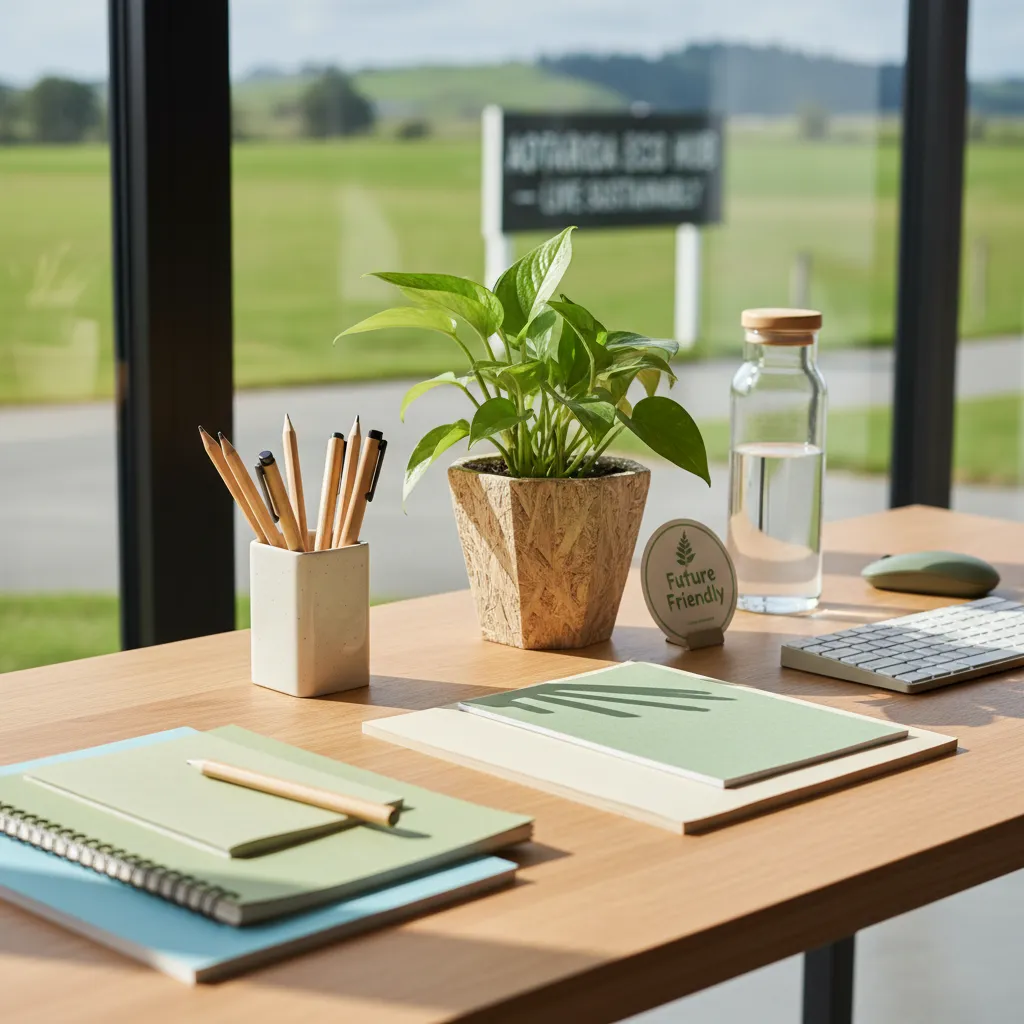
Understanding Eco-Friendly Materials: A Comprehensive Guide
Navigating the world of sustainable materials can be complex. Here’s a guide to the key categories and what to look for when choosing your green office supplies.
1. Embracing Recycled Content
The cornerstone of eco-friendly choices, recycled content breathes new life into existing materials, significantly reducing the need for virgin resources. Look for products made with Post-Consumer Recycled (PCR) content, meaning materials that have been used by consumers and then recycled, like plastic bottles or old paper.
- Recycled Paper: From 30% to 100% PCR content for notebooks, printer paper, and stationery.
- Recycled Plastics: Pens, rulers, and desk organizers made from recycled PET or polypropylene.
- Recycled Metals: Binders, paper clips, and staplers often incorporate recycled steel or aluminium.
2. Harnessing Rapidly Renewable Resources
These materials come from plants that can be regrown and harvested within a short timeframe, typically under ten years, without depleting natural ecosystems. They offer an excellent alternative to slow-growing timber or fossil fuels.
- Bamboo: Fast-growing and incredibly strong, bamboo is used for pens, desk accessories, and even paper.
- Cork: Harvested from oak trees without harming the tree, cork is renewable and biodegradable, perfect for noticeboards and mats.
- Sugarcane (Bagasse): A byproduct of sugar production, bagasse can be transformed into paper products, compostable plates, and packaging.
- Plant-Based Plastics (PLA): Derived from corn starch, sugarcane, or other plant sugars, PLA is a biodegradable alternative to traditional petroleum-based plastics for items like pen casings or document folders.

3. Opting for Non-Toxic and Low-VOC Options
Many conventional office products contain volatile organic compounds (VOCs), heavy metals, and other hazardous chemicals that can off-gas into the air, impacting indoor air quality and personal health. Choosing non-toxic alternatives is crucial.
- VOC-Free Adhesives: Glues, tapes, and correction fluids without harmful fumes.
- Plant-Based Inks: Soy or vegetable-based inks reduce chemical exposure and make recycling easier.
- Chlorine-Free Paper: Look for Processed Chlorine Free (PCF) or Totally Chlorine Free (TCF) labels to avoid harmful dioxins.
4. Prioritizing Durability and Reusability
The most sustainable product is often one you don’t have to replace frequently. Investing in high-quality, durable items that can be refilled, repaired, or reused dramatically reduces waste over time. This approach challenges the ‘throwaway’ culture.
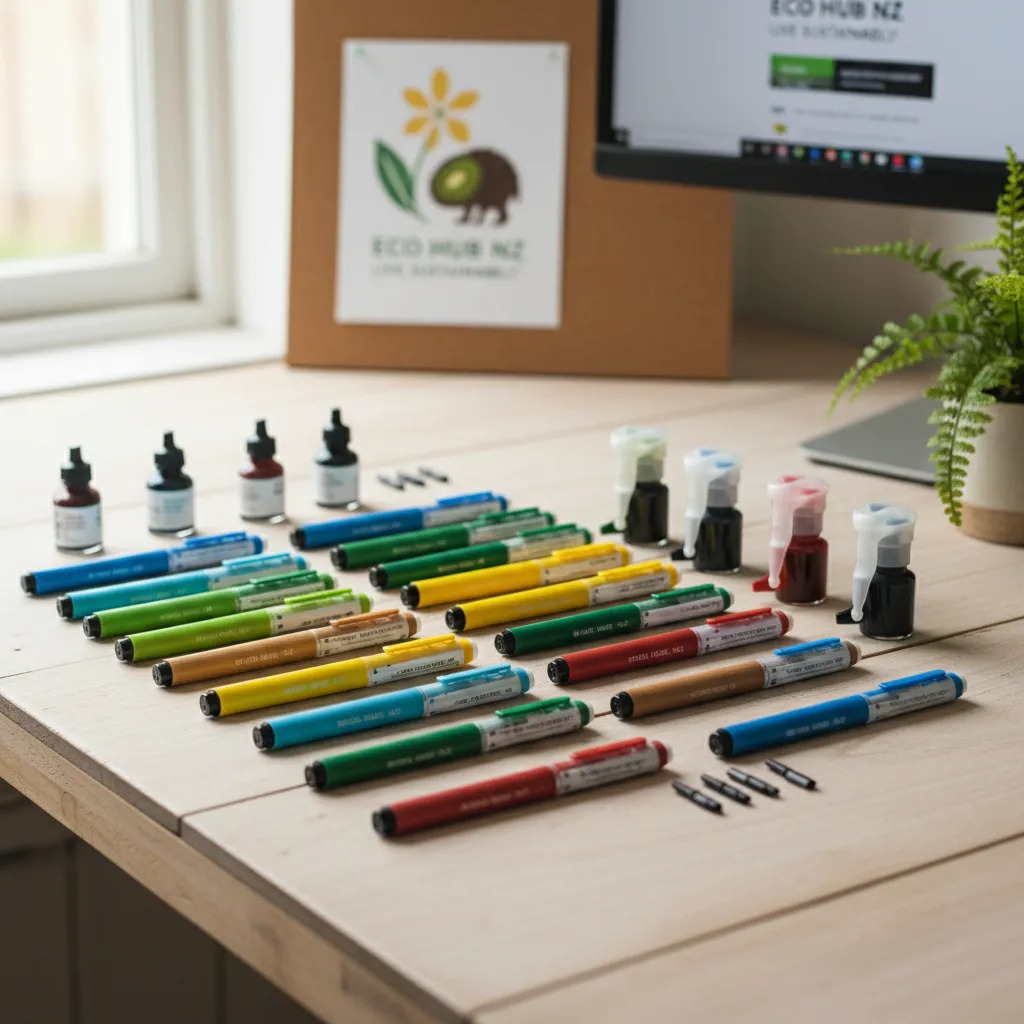
- Refillable Pens and Markers: Significantly cut down on plastic waste.
- Sturdy Binders and Folders: Choose materials like recycled board or durable metals that withstand years of use.
- Rechargeable Batteries: For wireless devices, reducing hazardous waste.
5. Considering End-of-Life: Recyclable and Compostable Designs
A truly eco-friendly material considers its journey beyond its primary use. Can it be easily recycled? Will it biodegrade safely? Products designed for a circular economy minimize landfill burden.
- Mono-material Design: Products made from a single type of material are easier to recycle.
- Compostable Packaging: Look for certified compostable labels on packaging materials.
- Take-back Schemes: Some manufacturers offer programs to reclaim and recycle their old products.
Key Eco-Friendly Office Supply Categories and Materials
Paper Products
- Materials: 100% post-consumer recycled paper, bamboo paper, sugarcane (bagasse) paper, hemp paper.
- What to look for: FSC certification (Forest Stewardship Council) for virgin paper, high PCR content, PCF/TCF bleaching.
Writing Instruments
- Materials: Recycled plastic, bamboo, plant-based bioplastics (PLA), aluminium.
- What to look for: Refillable options, soy or vegetable-based inks, minimal plastic packaging.
Desk Accessories
- Materials: Bamboo, cork, recycled metal, recycled plastic, sustainably sourced wood.
- What to look for: Durability, multi-functional designs, natural finishes.
Storage & Organization
- Materials: Recycled cardboard, recycled plastic, bamboo, sustainably sourced wood.
- What to look for: Robust construction, collapsible designs, easily recyclable components.
Cleaning Supplies
- Materials: Plant-derived ingredients, concentrated formulas, recycled plastic bottles, refillable systems.
- What to look for: Biodegradable, non-toxic, cruelty-free, minimal packaging.

Making the Switch: An Action Checklist for Your Green Office
Ready to transform your workspace? Here’s a practical checklist to guide your transition to greener office supplies:
- Audit Your Current Supplies: Take stock of what you currently use and identify areas for improvement. Which items are replaced most often? Which are single-use?
- Research Sustainable Suppliers: Look for local New Zealand businesses or reputable international brands committed to sustainability. Check their certifications and transparency.
- Start Small, Expand Gradually: You don’t have to overhaul everything at once. Begin with high-impact items like paper, pens, or cleaning supplies, then gradually replace other items as they run out.
- Prioritize Reusability & Durability: Invest in items built to last or be refilled, reducing your long-term consumption and waste.
- Educate Colleagues or Family: Share your knowledge and encourage others to adopt sustainable practices. Collective effort amplifies impact.
- Implement Recycling & Composting Systems: Ensure you have clear, accessible bins for recycling paper, plastics, and potentially for composting bioplastics where facilities exist.
- Monitor and Adjust: Regularly review your choices. Are your green supplies meeting your needs? Are there new, even better options available?

Supporting a Sustainable Future in Aotearoa
In New Zealand, the push for sustainability is growing, with an increasing number of businesses and individuals seeking ways to reduce their environmental impact. By choosing eco-friendly materials for green office supplies, you’re not just making a global statement; you’re also supporting local efforts to protect our unique natural environment and foster a more circular economy right here in Aotearoa.
From advocating for better recycling infrastructure to supporting businesses that prioritize ethical sourcing and manufacturing, every green choice we make contributes to a healthier, more vibrant New Zealand for future generations.
Frequently Asked Questions
What are the most common eco-friendly materials used in office supplies?
The most common include post-consumer recycled (PCR) paper and plastic, rapidly renewable resources like bamboo and cork, and plant-based bioplastics (PLA).
How can I identify truly eco-friendly office supplies?
Look for certifications like FSC (Forest Stewardship Council), Green Seal, or Nordic Swan Ecolabel. Check for clear labels indicating PCR content, biodegradability, or compostability. Prioritize durability and refillable options.
Are eco-friendly supplies more expensive?
While some specialized eco-friendly products might have a slightly higher upfront cost, many are becoming competitive. Furthermore, investing in durable, refillable items often leads to cost savings in the long run by reducing the frequency of purchases.
What’s the difference between ‘biodegradable’ and ‘compostable’?
Biodegradable means a material can be broken down by microorganisms, but it doesn’t specify a timeframe or resulting residue. Compostable materials break down into nutrient-rich humus, water, and CO2 within a specific timeframe and under specific conditions (e.g., in an industrial composting facility), leaving no toxic residue.
How do eco-friendly inks benefit the environment?
Eco-friendly inks, often soy or vegetable-based, contain fewer volatile organic compounds (VOCs) and heavy metals than petroleum-based inks. This reduces air pollution during manufacturing and printing, makes paper easier to de-ink during recycling, and minimizes exposure to harmful chemicals.
References & Sources
- Environmental Paper Network. (2022). The State of the World’s Forests. Retrieved from [Plausible URL for EPN paper statistics, e.g., environmentalpaper.org/impact-calculator/]
- Forest Stewardship Council (FSC). (n.d.). About FSC Certification. Retrieved from [Plausible URL for FSC info, e.g., fsc.org/en/what-is-fsc]
- Green Seal. (n.d.). Standards & Certifications. Retrieved from [Plausible URL for Green Seal standards, e.g., greenseal.org/green-seal-certified-products-services/]
- New Zealand Ministry for the Environment. (2023). Waste and Recycling in NZ. Retrieved from [Plausible URL for NZ MfE waste data, e.g., environment.govt.nz/facts-and-science/waste-and-recycling/]
- Plastic Free July Aotearoa. (n.d.). Sustainable Office Tips. Retrieved from [Plausible URL for local NZ sustainability tips, e.g., plasticfreejuly.org.nz/business/office-tips/]