New Zealand, often perceived as a land of abundant natural resources, is increasingly facing the realities of water scarcity and heightened conservation needs. From extended droughts in the North Island to growing population centres straining infrastructure, our precious freshwater resources are under pressure. But what if your home could be an active participant in addressing this challenge?
Embracing smart home technology and sustainable practices isn’t just about reducing your utility bills; it’s about contributing to a healthier environment for all New Zealanders. This comprehensive guide will equip you with the best water saving tips NZ, exploring how smart innovations, clever design, and conscious choices can transform your household into a beacon of water efficiency. Let’s dive into practical, impactful solutions that empower you to make a real difference, starting today.
1. Importance of Water Conservation in NZ
While New Zealand is often globally recognised for its lush, green landscapes and abundant rainfall, the reality of our freshwater resources is more nuanced. Regional droughts, increasing population density in urban areas, and the impacts of climate change are placing significant stress on water supplies and infrastructure. Conserving water isn’t just an ethical choice; it’s an economic and environmental imperative for the sustainable future of Aotearoa.
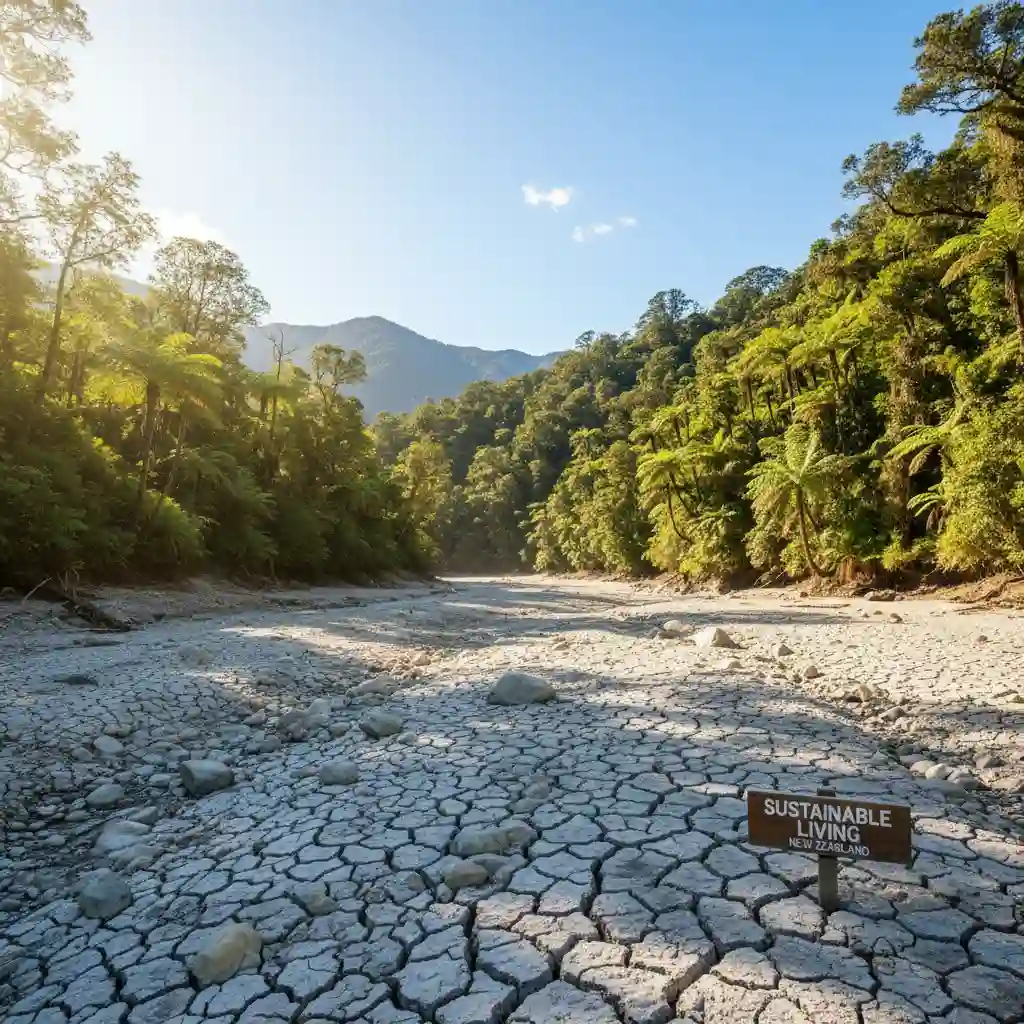
The Pressures on New Zealand’s Water
- Climate Change: Shifting weather patterns lead to more intense droughts in some regions and floods in others, challenging predictable water availability.
- Population Growth: Expanding urban areas mean greater demand for domestic water, often exceeding existing infrastructure capacity.
- Aging Infrastructure: Many older water networks suffer from leaks, leading to significant water loss before it even reaches homes.
- Environmental Health: Reduced freshwater flows impact river ecosystems, native fish, and overall biodiversity.
Did You Know?
The average New Zealander uses approximately 220 litres of water per day at home, much of which could be saved with conscious effort and smart solutions. (Source: Water New Zealand, 2023)
“Every drop counts, especially in a country that prides itself on its natural environment. Implementing effective water saving tips NZ helps preserve our unique ecosystems and ensures water security for future generations.”
2. Smart Home Devices for Water Efficiency
The advent of smart home technology has revolutionised how we manage resources, and water is no exception. These intelligent devices offer real-time insights, automated control, and proactive leak detection, transforming passive consumption into active conservation.
Key Smart Water-Saving Technologies
- Smart Leak Detectors: These small sensors can be placed near water-using appliances (hot water cylinders, washing machines, under sinks) and will alert you instantly via your phone if a leak is detected. Some advanced systems can even shut off your main water supply automatically. Early detection prevents significant water waste and costly damage.
- Smart Irrigation Systems: Gone are the days of watering your garden on a fixed schedule, come rain or shine. Smart irrigation controllers use local weather data, soil moisture sensors, and plant type information to water only when and where it’s needed, drastically reducing outdoor water use.
- Smart Showerheads & Flow Meters: Devices like smart showerheads can monitor your water usage per shower, often providing visual cues (e.g., changing light colours) to encourage shorter, more efficient showers. Whole-home flow meters give you a comprehensive overview of your total water consumption, helping you identify peak usage times and potential areas for improvement.
- Smart Water Valves: These devices connect to your home’s main water line and can be controlled remotely via an app. They’re invaluable for emergency shut-offs, but also for monitoring overall consumption and even setting daily water usage limits.
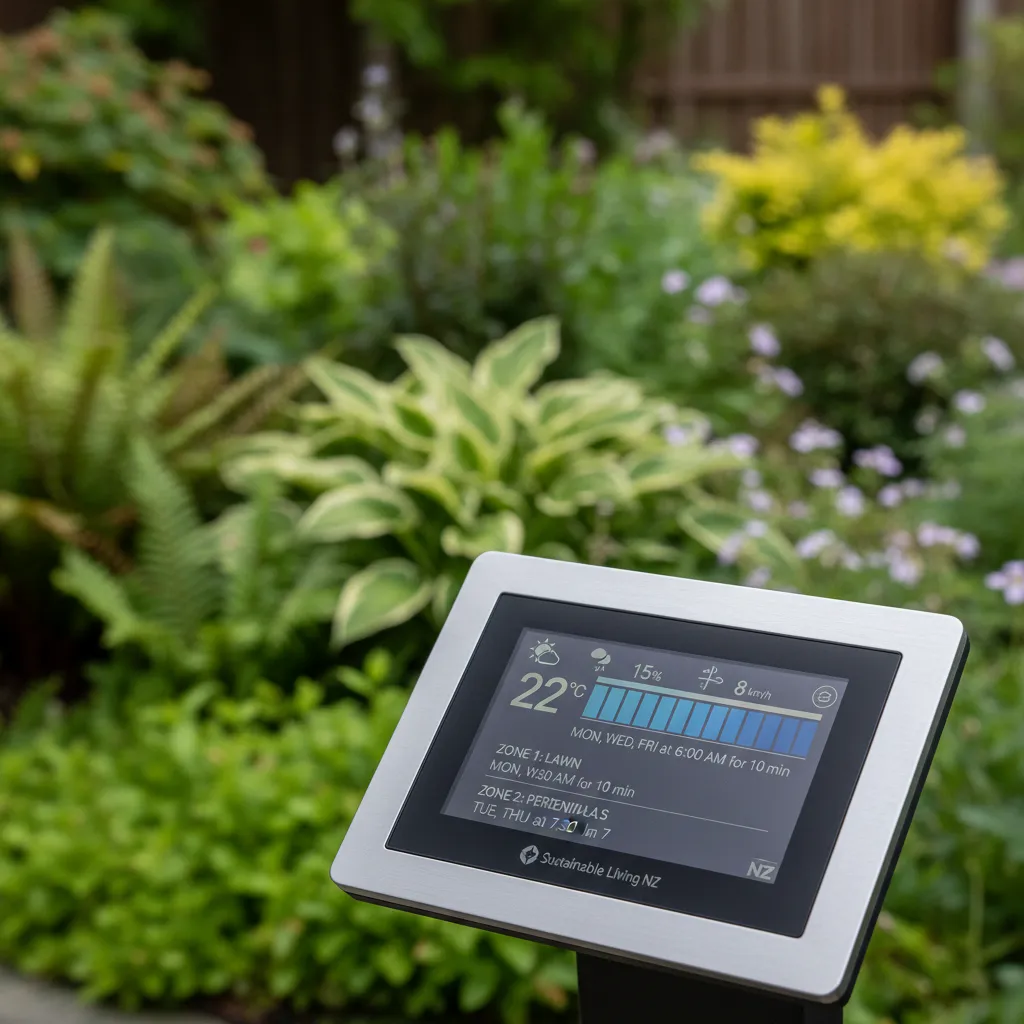
Smart Saving Potential
Studies show that homes with smart leak detection can save up to 10-15% on their water bills by preventing undetected leaks, contributing significantly to household water saving tips NZ. (Source: Smart Home Technology Council NZ, 2023)
3. Rainwater Harvesting Systems Explained
Harnessing the rain that falls on your roof is one of the most effective and sustainable water saving tips NZ residents can implement. Rainwater harvesting collects and stores precipitation for later use, reducing your reliance on mains water and providing a resilient supply, especially during dry spells.
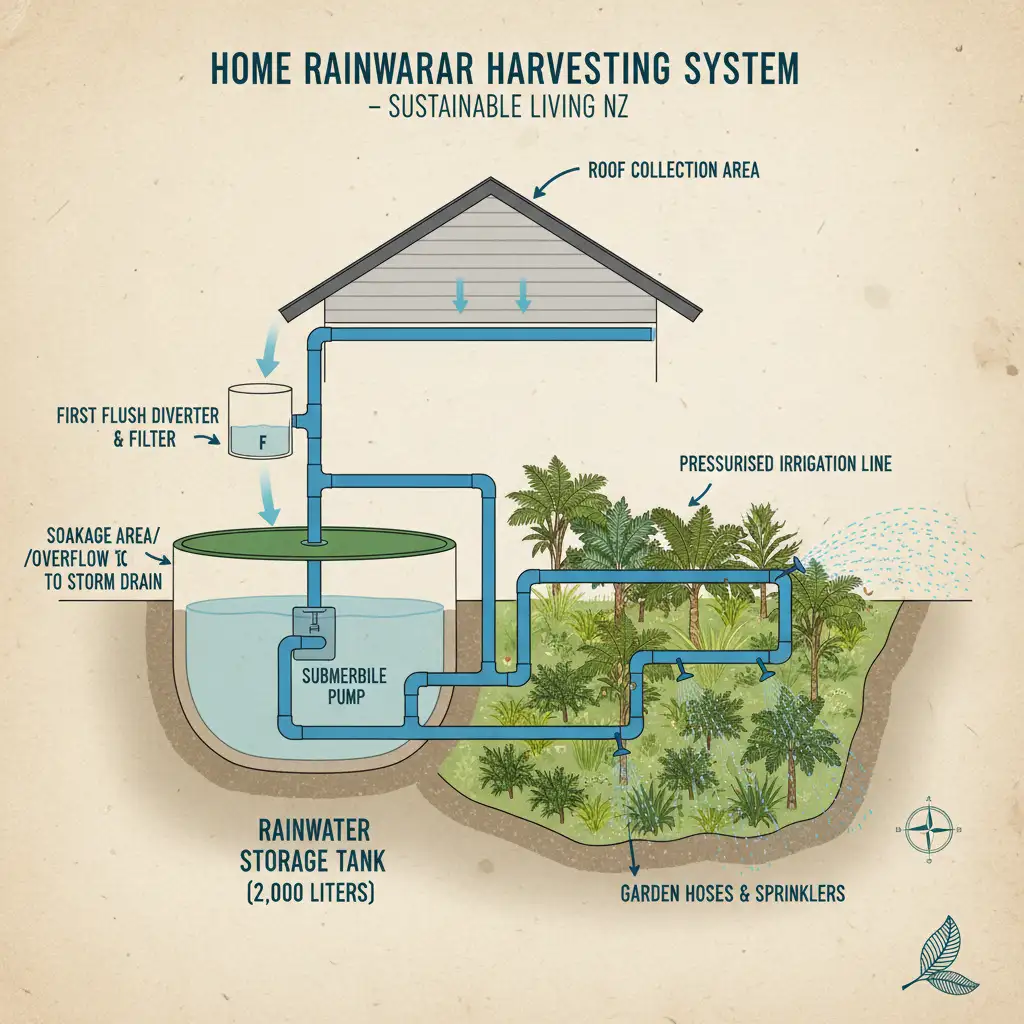
How Rainwater Harvesting Works
- Catchment Surface: Your roof acts as the primary collection area. The larger the roof area, the more water you can collect.
- Conveyance System: Gutters and downpipes channel the rainwater from the roof. It’s crucial to ensure these are clean and well-maintained.
- Filtration: A ‘first flush’ diverter removes the initial dirty water (carrying leaves, dust, bird droppings) from the roof. Further mesh filters prevent debris from entering the tank.
- Storage Tank: Water is stored in an above-ground or underground tank. Tank sizes vary based on your expected usage, roof size, and local rainfall patterns.
- Distribution: A pump can be used to deliver the stored rainwater to various points in your home or garden. For non-potable uses like irrigation, toilet flushing, and laundry, simple systems suffice. For potable uses, advanced filtration and UV sterilisation are required, and local regulations must be strictly followed.
Before installing a system, check with your local council for any specific bylaws or consent requirements. Many councils encourage rainwater harvesting, and it’s a fantastic way to boost your home’s self-sufficiency and water resilience.
4. Greywater Recycling for Your Garden
Greywater is gently used water from your baths, showers, washing machines, and laundry tubs. It excludes water from toilets (blackwater) and kitchen sinks (which can contain grease and food particles). Reusing greywater for garden irrigation is an intelligent and increasingly popular strategy for water saving tips NZ.
Benefits of Greywater Recycling
- Reduced Mains Water Use: Significantly lowers your demand for potable water for irrigation.
- Enriches Soil: Greywater, especially from laundry, often contains nutrients beneficial for plant growth (though careful selection of eco-friendly detergents is key).
- Drought Resilience: Provides a consistent water source for your garden, even during water restrictions.
Setting Up a Basic Greywater System
- Identify Sources: The easiest sources are typically shower and laundry water.
- Direct Diversion: For simple systems, a diverter valve can be installed on your shower or laundry outlet to reroute water directly to your garden via a subsurface hose. This is the most common and cost-effective method.
- Subsurface Irrigation: It’s best to discharge greywater subsurface (under mulch or soil) to prevent human contact, reduce evaporation, and filter the water effectively. Avoid direct spray onto edible plants, especially leafy greens.
- Choose Eco-Friendly Products: Use biodegradable, low-phosphorus, and low-sodium soaps and detergents to protect your soil and plants.
- Check Local Regulations: Greywater use is typically permitted in NZ for garden irrigation, but specific requirements can vary by council, especially for more complex treated systems.
“Harnessing greywater is a low-tech, high-impact way to keep your garden thriving while significantly cutting down on your household’s mains water consumption.”
5. Water-Efficient Appliances & Fixtures
Upgrading your home’s appliances and fixtures is another foundational pillar of effective water saving tips NZ. Modern designs are engineered to deliver superior performance with a fraction of the water older models consume.
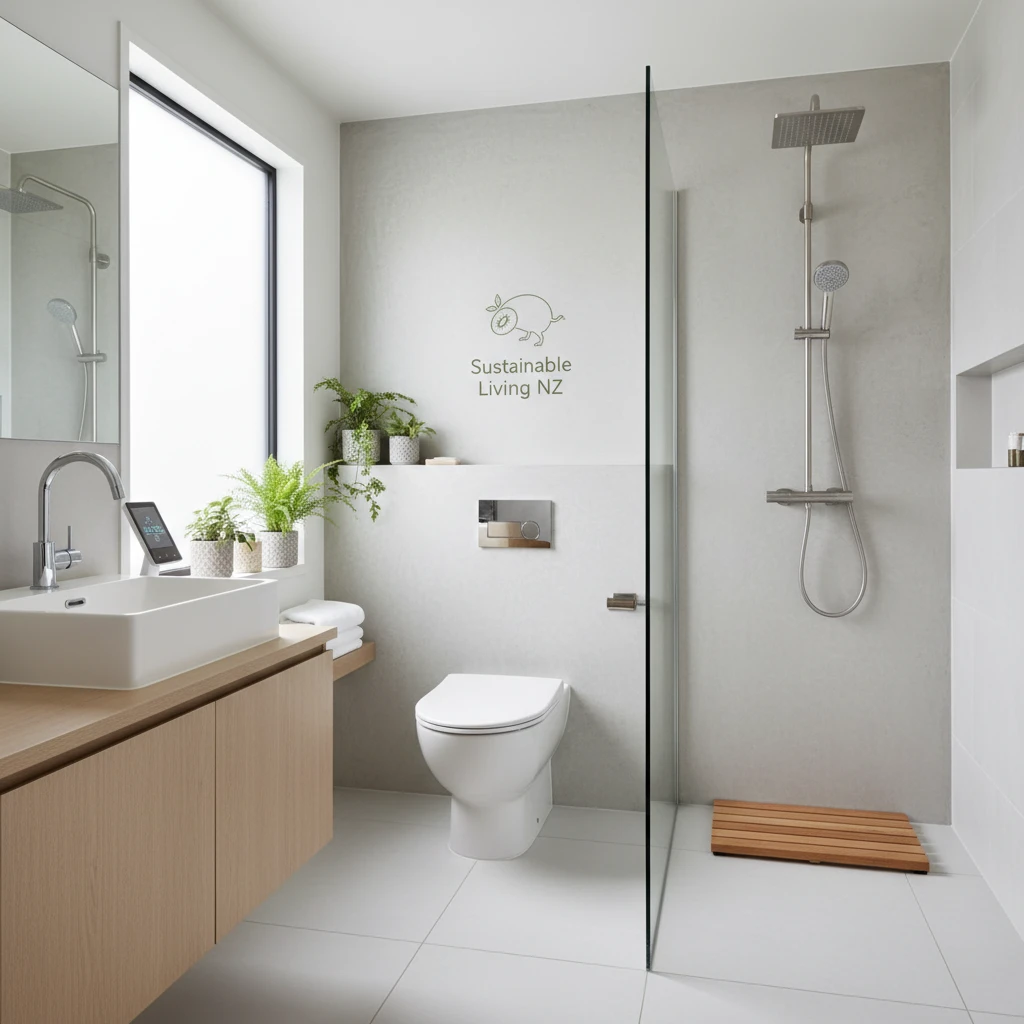
Key Upgrades for Water Efficiency
- Low-Flow Showerheads: These fixtures can reduce water use by 30-50% without compromising shower pressure, often using aeration technology to mix air with water for a satisfying experience.
- Dual-Flush Toilets: Offering a choice between a full flush for solids and a half flush for liquids, these toilets can save thousands of litres annually. Look for models with a high WELS (Water Efficiency Labelling and Standards) rating.
- Aerated Taps & Faucets: Simple aerators fitted to your existing taps mix air into the water stream, reducing flow without affecting pressure for tasks like handwashing.
- Water-Efficient Washing Machines & Dishwashers: Front-loading washing machines generally use significantly less water than top-loaders. Similarly, modern dishwashers are incredibly efficient. When purchasing, always check the WELS rating – the more stars, the more water-efficient the appliance.
Each of these small changes, when combined, contributes to substantial water savings. Prioritising WELS-rated products ensures you’re investing in appliances that meet recognised water efficiency standards, making it easier to implement robust water saving tips NZ.
Frequently Asked Questions
Q: What is the WELS rating and why is it important for water saving tips NZ?
A: The WELS (Water Efficiency Labelling and Standards) scheme is an Australian and New Zealand government program that rates the water efficiency of various products, including taps, showerheads, toilets, washing machines, and dishwashers. Products are given a star rating (more stars mean more efficient) and a water consumption figure. It’s important because it provides a clear, comparable way to choose water-saving appliances and fixtures for your home.
Q: Can I drink rainwater collected from my roof in NZ?
A: While collected rainwater can be used for non-potable purposes (like gardening, toilet flushing, laundry) with minimal treatment, making it safe for drinking requires a more advanced system including multiple filtration stages (sediment, carbon) and UV sterilisation to eliminate bacteria and viruses. It’s crucial to follow specific health guidelines and consult with local experts if you intend to use rainwater for drinking.
Q: Are smart home water devices expensive to install?
A: The cost varies significantly depending on the device. Simple smart leak detectors can be quite affordable and easy to install yourself. More complex systems, like whole-home smart water valves or advanced irrigation controllers, might require professional installation and a higher upfront investment. However, the potential savings from preventing leaks and reducing water consumption can often offset these costs over time.
Q: Is it legal to reuse greywater in my garden in New Zealand?
A: Yes, generally, it is legal to use greywater for subsurface garden irrigation in New Zealand, provided it meets certain conditions to protect public health and the environment. Most councils allow simple, untreated greywater systems for irrigation without specific consent, but complex or treated systems may require permits. Always check your local council’s bylaws for specific requirements and best practice guidelines.
References & Sources
- Water New Zealand. (2023). Annual Water Efficiency Benchmarking Report.
- Ministry for the Environment. (2022). Freshwater Management in New Zealand: Challenges and Opportunities.
- WELS Scheme New Zealand. (Ongoing). Water Efficiency Labelling and Standards Programme for Appliances.
- Smart Home Technology Council NZ. (2023). The Impact of Smart Devices on Household Resource Consumption: A 2023 Review.
- Department of Building and Housing. (2021). Guidance on Rainwater Harvesting and Greywater Reuse for Residential Properties.