Travel Green: Reduce Plastic Waste with Simple Strategies
Explore New Zealand sustainably, one plastic-free choice at a time.

New Zealand, with its breathtaking landscapes and commitment to preserving its natural beauty, offers an unparalleled travel experience. Yet, even in paradise, the environmental impact of tourism, particularly plastic waste, is a growing concern. Every year, millions of plastic items are used once and discarded, often ending up in landfills or polluting our oceans and pristine wilderness.
As conscious travellers, we have the power to make a significant difference. Transitioning to a more sustainable way of exploring isn’t just a trend; it’s a vital step towards protecting the very environments we love to visit. This guide provides simple, actionable strategies to help you reduce your plastic footprint while discovering the wonders of Aotearoa.
“Every single-use item we refuse is a small victory for our planet. When multiplied by millions of travellers, these small victories create a wave of positive change.”
Table of Contents
1. Why Travel Plastic-Free? The New Zealand Context
New Zealand prides itself on its ‘100% Pure’ image, a brand built on stunning natural beauty and a commitment to environmental stewardship. However, the increasing volume of plastic waste, particularly from a thriving tourism sector, poses a significant challenge. Landfills are reaching capacity, and plastic pollution threatens marine life and delicate ecosystems, from our coastlines to our deepest fjords.
Stat Callout:
New Zealanders send approximately 15.5 million tonnes of waste to landfills annually. A significant portion of this is plastic, with an estimated 252,000 tonnes of plastic waste generated each year, much of which is single-use. (Ministry for the Environment, 2023)
By actively choosing to travel green and reduce plastic waste, you contribute directly to preserving New Zealand’s natural heritage. Your choices resonate, supporting local businesses dedicated to sustainability and setting an example for fellow travellers.

2. Essential Gear for a Plastic-Free Journey
The foundation of a plastic-free journey begins before you even leave home. Packing smart with reusable items drastically cuts down on the need for disposable plastics.
2.1. Reusable Water Bottles & Coffee Cups
This is perhaps the simplest and most impactful swap. New Zealand boasts some of the purest tap water in the world, making refilling easy and safe. Many cafes also offer discounts for bringing your own coffee cup.
- Look for: Stainless steel or insulated bottles, collapsible silicone cups.
- Tip: Carry a smaller bottle for day trips and a larger one for refilling at accommodation.
2.2. Eco-Friendly Toiletries & Solid Bars
Those tiny plastic hotel amenity bottles add up quickly. Switch to solid shampoo, conditioner, soap, and even toothpaste tabs.
- Look for: Shampoo/conditioner bars, solid soap, bamboo toothbrushes, reef-safe sunscreen in metal tins.
- Tip: Store solid bars in a reusable tin or fabric wrap to keep them dry.
2.3. Reusable Bags & Produce Sacks
From grocery shopping to souvenir hunting, a sturdy reusable bag is indispensable. Mesh produce sacks are excellent for fresh fruit and vegetables, eliminating those thin plastic bags.
- Look for: Foldable cloth bags, lightweight mesh bags for produce.
- Tip: Keep one folded in your daypack and another in your main luggage.
2.4. Portable Utensil Kits
Picnics, takeaways, or street food often come with single-use plastic cutlery. A compact reusable kit solves this.
- Look for: Bamboo, stainless steel, or lightweight metal cutlery sets in a small pouch.
- Tip: Include a reusable straw and a small cleaning brush if you use one.
2.5. Food Containers & Wraps
Ideal for leftovers, packed lunches, or taking food from a deli. Silicon bags or beeswax wraps are flexible and lightweight alternatives to cling film.
- Look for: Lightweight stainless steel containers, silicone reusable bags, beeswax wraps.
- Tip: A collapsible silicone container can save space when not in use.

3. Smart Habits for Sustainable Exploration
Beyond what you pack, how you interact with your surroundings plays a crucial role in reducing your plastic footprint.
3.1. Shop Local, Avoid Packaged Goods
Farmer’s markets and local delis are fantastic places to find fresh, unpackaged food. Not only does this reduce plastic, but it also supports local communities and offers a taste of authentic New Zealand produce.
- Focus on: Fresh produce, bulk bins (if available and you have your own containers), artisan bread.
- Tip: Ask local vendors about their packaging practices.
3.2. Say No to Single-Use Items
Be proactive. When ordering food or drinks, politely refuse plastic straws, stirrers, and extra napkins. Carry your own cutlery and coffee cup to avoid needing disposables.
- Key Phrases: “No straw, please,” “I have my own cup/bag.”
- Tip: A simple “No thank you, I’m trying to reduce plastic” is usually well-received.
3.3. Pack Smart, Travel Light
Minimizing your luggage not only makes travel easier but also often means less consumption and fewer potential plastic items. Each item you bring should ideally be reusable and multi-purpose.
- Consider: Multi-functional clothing, travel-sized reusables, digital documents.
- Tip: The less you carry, the less potential plastic you’ll encounter and need to dispose of.
3.4. Dispose Responsibly
Despite best efforts, you might encounter some plastic. When you do, ensure it’s disposed of correctly. Familiarize yourself with New Zealand’s recycling symbols and local council guidelines, as they can vary between regions.
- Action: Look for clearly marked recycling bins. When in doubt, take it with you until you find a proper disposal point.
- Tip: Many supermarkets have soft plastic recycling bins.
4. The Ripple Effect: Inspiring Others
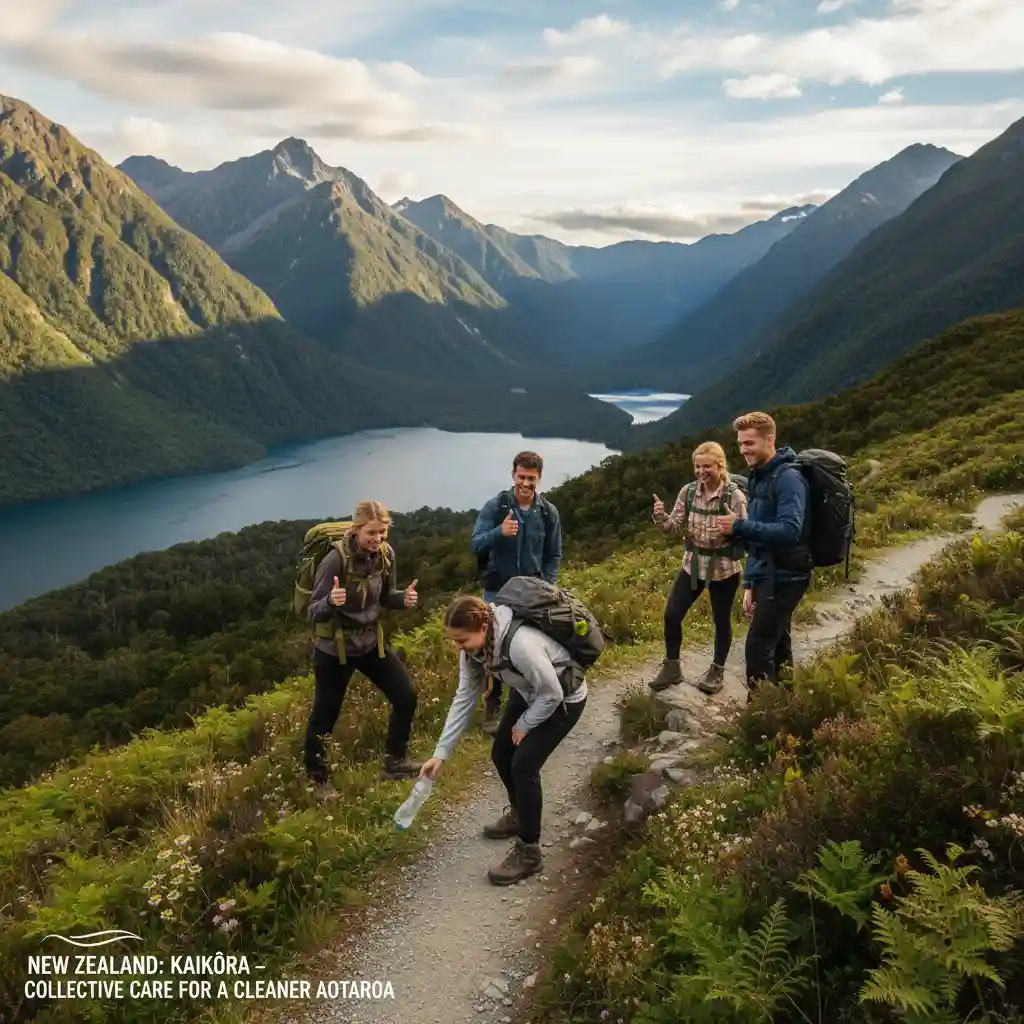
Your commitment to travel green and reduce plastic waste doesn’t just impact your own footprint. It sends a powerful message. When cafes see more travellers bringing reusable cups, they are more likely to offer incentives or improve their sustainable practices. When you politely refuse a plastic bag, you encourage awareness.
Stat Callout:
Studies show that individuals are more likely to adopt sustainable behaviours when they see others doing so, demonstrating the significant impact of leading by example in sustainable tourism. (Journal of Cleaner Production, 2021)
Be an ambassador for mindful travel. Share your tips with friends and family, and highlight places that actively support sustainable practices. Together, we can foster a culture of responsible tourism that protects New Zealand for generations to come.
5. Your Plastic-Free Travel Plan: An Action Checklist
Use this simple checklist to prepare for and maintain your plastic-free travel habits: