Top Sustainable Business Models: Insights from Leading Firms
Navigating the future of commerce in New Zealand and beyond, with a focus on environmental stewardship and social responsibility.
In an era where environmental challenges and social equity are at the forefront of global consciousness, the shift towards sustainable business practices is no longer just a niche trend – it’s an imperative. For businesses in New Zealand and worldwide, embracing sustainability isn’t merely about compliance; it’s a strategic pathway to innovation, resilience, and long-term prosperity.
This article delves into the top sustainable business models that are reshaping industries, offering insights gleaned from leading firms that are successfully integrating purpose with profit. We’ll explore how these models are not only reducing ecological footprints but also creating significant value for stakeholders, customers, and communities.
What Defines a Sustainable Business Model?
At its core, a sustainable business model is designed to create economic value while minimizing negative environmental impacts and fostering positive social outcomes. It transcends traditional profit-centric approaches by integrating environmental, social, and governance (ESG) considerations into every facet of operations.
Key characteristics often include resource efficiency, waste reduction, ethical supply chains, fair labor practices, community engagement, and a commitment to transparency. These models inherently build resilience against future shocks, attract conscious consumers, and often lead to significant cost savings through optimized resource use.
Key Sustainable Business Models to Watch
From startups to established enterprises, businesses are adopting innovative approaches to embed sustainability. Here are some of the most influential models making waves globally and offering valuable lessons for New Zealand firms:
The Circular Economy: Beyond “Take-Make-Dispose”
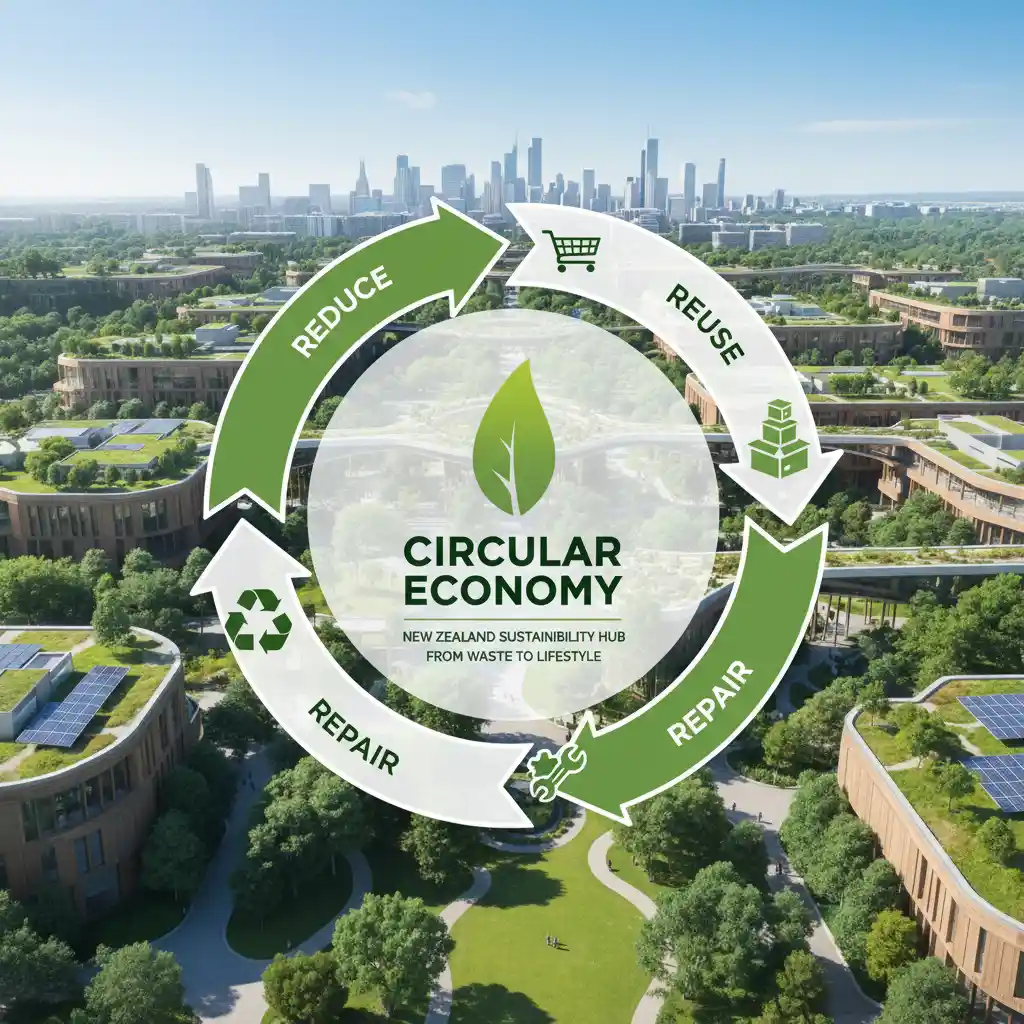
Instead of the linear model, the circular economy focuses on designing out waste and pollution, keeping products and materials in use, and regenerating natural systems. This model includes product-as-a-service, repair, reuse, and recycling strategies. It’s about creating closed loops where resources are constantly valued and re-integrated.
“The circular economy aims to redefine growth, focusing on positive society-wide benefits. It entails gradually decoupling economic activity from the consumption of finite resources, and designing waste out of the system.” – Ellen MacArthur Foundation
Shared Value Creation: Profit with Purpose
Pioneered by Porter and Kramer, shared value focuses on creating economic value in a way that also creates value for society by addressing its needs and challenges. This isn’t philanthropy; it’s about integrating societal benefits directly into a company’s competitive strategy. Think of businesses that improve community health, enhance local education, or reduce environmental impact as core to their operations and profitability.
Regenerative Resource & Eco-Innovation Models
These models prioritize the use of renewable energy, sustainable materials, and processes that restore, rather than deplete, natural ecosystems. Examples include companies using regenerative agriculture, developing biodegradable products, or innovating with bio-based materials. The goal is to leave the environment better than it was found, fostering ecological resilience.
Fair Trade & Ethical Sourcing
This model ensures that products are produced under fair working conditions, with equitable pay, and without exploitation. It often involves direct relationships with producers, transparent supply chains, and adherence to international labor standards. For consumers, it offers peace of mind; for businesses, it builds brand loyalty and reduces reputational risk.
Insights from Leading Firms: Case Studies
Real-world examples demonstrate the power of these models. Here’s how some leading firms are putting sustainability into practice, offering valuable lessons for New Zealand businesses:
Case Study 1: Re-Use Revolution in Retail
Consider a hypothetical New Zealand apparel brand, ‘Kaitiaki Kākahu’ (Guardian Garments), which has successfully implemented a circular model. Instead of solely selling clothes, they offer a subscription service for children’s wear and allow customers to return outgrown items for store credit. These items are then refurbished, sanitised, and re-leased or sold at a lower price, extending their lifespan significantly.
Stat Callout: Kaitiaki Kākahu reports a 70% reduction in textile waste to landfill annually since adopting their circular model, and a 25% increase in customer loyalty due to the convenience and sustainability benefits.
Their success highlights that shifting from product ownership to access can build strong customer relationships and create multiple revenue streams from a single product.
Case Study 2: Tech for Social Good
Another compelling example is a global tech company, ‘EcoVision Solutions’, which develops AI-powered software to optimize resource management for large industries, particularly waste and water. Their core business model is built on helping other companies become more efficient and sustainable, thereby creating shared value.
Stat Callout: EcoVision Solutions’ software has helped clients collectively reduce industrial water consumption by an average of 15% and energy consumption by 10%, leading to significant cost savings and environmental benefits. Their own operations are carbon neutral.
Their approach shows that even high-tech firms can integrate sustainability not just into their internal operations, but as the very product they offer, multiplying their positive impact.
Implementing Sustainable Practices in Your Business
Inspired by these top sustainable business models, New Zealand businesses can start their journey or accelerate existing efforts. Key steps include:
- Conduct a Sustainability Audit: Understand your current environmental and social footprint.
- Set Clear Goals: Define measurable targets for waste reduction, energy efficiency, ethical sourcing, or community impact.
- Engage Stakeholders: Involve employees, suppliers, and customers in your sustainability initiatives.
- Innovate Product & Service Design: Look for opportunities to integrate circularity or regenerative principles.
- Seek Certifications: Explore B Corp certification or other industry-specific sustainability standards.
The Future of Sustainable Business in New Zealand
New Zealand, with its strong connection to nature (Aotearoa) and a growing consumer demand for ethical products, is exceptionally positioned to lead in sustainable business. Government initiatives, a vibrant social enterprise sector, and a collective commitment to protecting ‘kaitiakitanga’ (guardianship) create fertile ground for these models to flourish.
Embracing sustainable business models isn’t just about compliance or mitigating risk; it’s about seizing opportunities for innovation, attracting top talent, and building a resilient, future-proof economy that truly reflects New Zealand’s values.
Frequently Asked Questions (FAQ)
What are the primary benefits of adopting a sustainable business model?
Adopting a sustainable business model offers numerous benefits, including enhanced brand reputation, increased customer loyalty, reduced operational costs through efficiency, improved talent attraction and retention, access to new markets, and greater resilience against resource scarcity and regulatory changes.
Is a sustainable business model only for large corporations?
Absolutely not. Sustainable business models are highly adaptable and can be implemented by businesses of all sizes, from sole traders and small startups to large corporations. Many small and medium-sized enterprises (SMEs) in New Zealand are already finding innovative ways to integrate sustainability into their core operations, often with greater agility than larger firms.
How can I measure the success of my sustainable initiatives?
Success can be measured through various metrics, depending on your goals. This might include reductions in energy consumption, water usage, and waste generation; increases in recycled content or renewable energy use; improved employee engagement scores; positive social impact metrics (e.g., community hours, fair wage indicators); and, of course, financial performance and ROI on sustainable investments.
What is the difference between a ‘green’ business and a ‘sustainable’ business?
While often used interchangeably, ‘green’ typically refers to environmental aspects (e.g., eco-friendly products, reduced emissions). ‘Sustainable’ is a broader term that encompasses environmental, social, and economic factors (the triple bottom line). A truly sustainable business considers its impact on people, planet, and profit, aiming for long-term viability across all dimensions.
References & Sources
- Porter, M. E., & Kramer, M. R. (2011). Creating Shared Value. Harvard Business Review, 89(1/2), 62–77.
- Ellen MacArthur Foundation. (n.d.). What is the circular economy? Retrieved from ellenmacarthurfoundation.org
- New Zealand Ministry for the Environment. (n.d.). Towards a Circular Economy. Retrieved from mfe.govt.nz
- UN Global Compact. (n.d.). The Ten Principles of the UN Global Compact. Retrieved from unglobalcompact.org