Sustainable Insulation & Weatherization Solutions for NZ Homes
Transforming New Zealand homes into healthier, more energy-efficient, and environmentally friendly spaces is at the heart of sustainable living. With a unique climate that often brings cold, damp conditions, selecting the right sustainable insulation & weatherization solutions for NZ homes isn’t just a choice—it’s a necessity for comfort, health, and the planet.
This comprehensive guide will navigate you through the best eco-friendly options available, empowering you to make informed decisions that benefit your family and New Zealand’s environment. From innovative insulation materials to smart weatherization techniques, discover how to create a warmer, drier, and more sustainable home.
Table of Contents
- Why Sustainable Solutions Matter for NZ Homes
- Understanding Insulation: Materials & R-Values
- Key Sustainable Insulation Options for NZ Homes
- Weatherization: Sealing Your Home for Efficiency
- Choosing the Right Solutions for Your NZ Home
- Government Support & Initiatives in NZ
- The Long-Term Benefits of a Sustainable Home
- Frequently Asked Questions (FAQ)
- References & Sources
Why Sustainable Solutions Matter for NZ Homes
New Zealand’s homes face unique challenges: high rates of dampness, mould, and cold temperatures contribute to respiratory illnesses and higher energy bills. Investing in sustainable insulation & weatherization solutions for NZ homes isn’t just about saving money; it’s about creating healthier living environments and reducing our collective carbon footprint.
Sustainable materials offer numerous advantages over conventional options, from reduced embodied energy during manufacturing to biodegradability at the end of their lifecycle. They often provide superior moisture management and air quality benefits, crucial for New Zealand’s climate.
Did you know?
38% of New Zealand households struggle to keep their homes warm in winter. Effective insulation and weatherization can significantly reduce this number, leading to fewer hospital admissions for winter illnesses and substantial energy savings. (Source: EECA)
Understanding Insulation: Materials & R-Values
Insulation works by creating a barrier that slows the transfer of heat. In New Zealand, this means keeping warmth in during winter and heat out during summer. The effectiveness of insulation is measured by its R-value (thermal resistance). A higher R-value indicates better insulating performance.
When choosing sustainable insulation & weatherization solutions for NZ homes, it’s vital to consider not just the R-value, but also the material’s environmental impact, moisture resistance, durability, and health implications.
Key Sustainable Insulation Options for NZ Homes
New Zealand offers a growing range of sustainable insulation choices that perform exceptionally well while minimising environmental harm. Here are some top contenders:
Sheep’s Wool Insulation
Locally sourced and naturally renewable, New Zealand sheep’s wool is an outstanding insulator. It’s breathable, non-toxic, naturally fire-resistant, and has excellent moisture-regulating properties, making it ideal for NZ’s often damp climate. Wool can even absorb and release moisture without losing its thermal performance.
Hemp Fibre Insulation
Derived from the fast-growing hemp plant, this insulation is another fantastic natural option. Hemp fibre is durable, breathable, non-irritating, and has a low embodied energy. It’s gaining popularity for its excellent thermal and acoustic properties.
Recycled Polyester (PET) Insulation
Made from recycled plastic bottles, PET insulation diverts waste from landfills and uses significantly less energy to produce than virgin plastics. It’s non-allergenic, lightweight, moisture-resistant, and provides good thermal performance.
Cellulose Fibre Insulation
Often made from recycled newspaper and cardboard, cellulose is treated with non-toxic borate to be fire and pest resistant. It offers excellent thermal and acoustic insulation and is a cost-effective choice with a strong environmental profile.
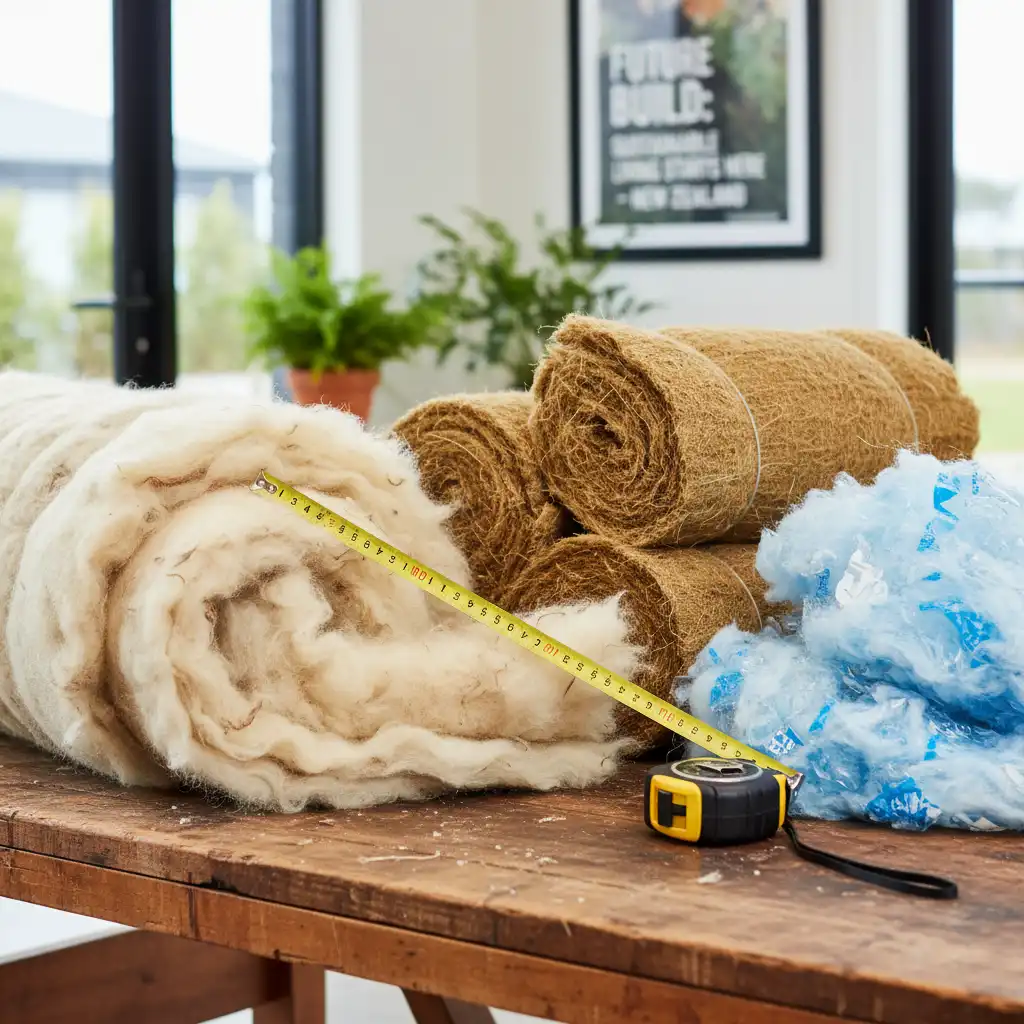
Comparison of Sustainable Insulation Materials
| Material | Key Benefits | R-Value (indicative) | Environmental Impact |
|---|---|---|---|
| Sheep’s Wool | Excellent moisture regulation, natural, renewable, breathable, non-toxic. | ~R2.5 – R3.0 per 100mm | Very low embodied energy, biodegradable, locally sourced (NZ). |
| Hemp Fibre | Durable, breathable, good acoustic properties, naturally pest-resistant. | ~R2.5 – R2.8 per 100mm | Low embodied energy, renewable, carbon-negative during growth. |
| Recycled PET | Non-allergenic, moisture-resistant, pest-resistant, lightweight. | ~R2.2 – R2.7 per 100mm | Diverts plastic from landfill, lower energy than virgin plastic. |
| Cellulose Fibre | Cost-effective, excellent thermal & acoustic, fire/pest resistant (treated). | ~R2.0 – R2.5 per 100mm | High recycled content, low embodied energy. |
Weatherization: Sealing Your Home for Efficiency
Insulation is only half the battle. Even the best insulation won’t perform optimally if your home is riddled with drafts and uncontrolled air leakage. Weatherization is the process of sealing up these gaps and cracks, making your home more airtight, and dramatically improving its energy efficiency and comfort. This is a critical component of sustainable insulation & weatherization solutions for NZ homes.
Draft Proofing
Drafts are notorious energy thieves. Common culprits include gaps around doors and windows, electrical outlets, pipe penetrations, and even cracks in floors. Simple solutions like self-adhesive seals, gap fillers, and door snakes can make a significant difference.
Window & Door Sealing
Old windows and doors are major sources of heat loss. Consider upgrading to double glazing where possible, or at least ensuring existing frames are sealed with high-quality sealants and weather stripping. Draught excluders for doors and insulating curtains can also help.
Moisture Management & Ventilation
While sealing drafts is essential, adequate ventilation is equally important for a healthy home, especially in New Zealand where dampness is prevalent. Balanced ventilation systems, such as heat recovery ventilation (HRV) or positive pressure systems, introduce fresh, filtered air while expelling stale, moist air without significant heat loss.

Choosing the Right Solutions for Your NZ Home
The best sustainable insulation & weatherization solutions for NZ homes depend on several factors: your home’s age and construction, your budget, and your specific climate zone. It’s often beneficial to get a professional home energy assessment to identify the most critical areas for improvement.
“A holistic approach to home energy efficiency, combining sustainable insulation with smart weatherization and ventilation, yields the best long-term results for comfort, health, and the environment.”
Government Support & Initiatives in NZ
The New Zealand government, through initiatives like the Warmer Kiwi Homes programme, provides grants for eligible homeowners to install insulation and heating. These programmes underscore the national commitment to improving housing quality and reducing energy poverty. Always check current eligibility criteria with relevant authorities like EECA (Energy Efficiency and Conservation Authority).

The Long-Term Benefits of a Sustainable Home
- Reduced Energy Bills: Significant savings on heating and cooling costs year-round.
- Improved Health & Comfort: A warmer, drier home reduces instances of mould, condensation, and respiratory illnesses.
- Environmental Impact: Lower carbon emissions due to decreased energy consumption and the use of eco-friendly materials.
- Increased Home Value: Energy-efficient homes are increasingly attractive to buyers.
- Enhanced Durability: Proper moisture management protects your home’s structure.
Choosing sustainable insulation & weatherization solutions for NZ homes is an investment that pays dividends for years to come—for your wallet, your family’s health, and the future of Aotearoa.

Frequently Asked Questions (FAQ)
What is the best sustainable insulation for a New Zealand home?
The ‘best’ option depends on your specific needs, budget, and the area of your home being insulated. Sheep’s wool, hemp fibre, recycled PET, and cellulose are all excellent sustainable choices, each with unique benefits regarding R-value, moisture resistance, and environmental footprint. Consulting with a local insulation expert is recommended.
How much can I save on energy bills with better insulation and weatherization?
Significant savings are possible. Homeowners can typically expect to reduce their heating and cooling costs by 15-30% or more after installing effective insulation and completing comprehensive weatherization. Actual savings will vary based on your home’s original condition, climate, and energy usage habits.
Are there government grants available for insulation in NZ?
Yes, the New Zealand government, through programmes like Warmer Kiwi Homes, offers grants to eligible homeowners for installing insulation and heating. Criteria often include income thresholds and the location of the property. It’s best to check the EECA (Energy Efficiency and Conservation Authority) website for the most current information and eligibility requirements.
What is the difference between insulation and weatherization?
Insulation focuses on slowing heat transfer through walls, ceilings, and floors using materials with high R-values. Weatherization, on the other hand, deals with sealing gaps and cracks in your home’s envelope (like around windows and doors) to prevent uncontrolled air leakage and drafts. Both are crucial for an energy-efficient and comfortable home.
How do sustainable insulation materials impact indoor air quality?
Sustainable insulation materials like sheep’s wool, hemp, and cellulose often contribute to better indoor air quality because they are typically non-toxic, have low VOC (Volatile Organic Compound) emissions, and are breathable. Some, like wool, can even help filter airborne pollutants and regulate humidity, reducing the risk of mould and allergens.
References & Sources
- Energy Efficiency and Conservation Authority (EECA) – www.eeca.govt.nz
- BRANZ (Building Research Association of New Zealand) – www.branz.co.nz
- Ministry for the Environment – environment.govt.nz
- Warmer Kiwi Homes Programme Information (via EECA) – www.eeca.govt.nz/warmer-kiwi-homes
- The New Zealand Green Building Council – www.nzgbc.org.nz