Sustainable Hiking: Low-Impact Techniques & Trail Care
Aotearoa, New Zealand, is a land of breathtaking natural beauty, from towering Southern Alps to pristine coastlines and ancient forests. As adventurers, we are privileged to explore these wonders. But with privilege comes responsibility: the duty to protect these landscapes for future generations. Sustainable hiking is not just a concept; it’s a commitment to preserving the very essence of what makes our trails so special.
This comprehensive guide will equip you with essential low-impact techniques and trail care practices, ensuring your adventures leave nothing but footprints – and take nothing but memories.
Table of Contents
The Essence of Sustainable Hiking
Sustainable hiking goes beyond simply not littering. It’s an active mindset and a set of practices designed to ensure our presence in nature has the absolute minimum negative impact. For New Zealand’s unique and often fragile ecosystems, this is especially critical. Many of our native species are endemic, found nowhere else on Earth, and are particularly vulnerable to disturbance.
“Every step we take on a trail is a choice. Sustainable hiking empowers us to make choices that preserve the beauty and integrity of our natural world, especially in a biodiversity hotspot like New Zealand.”
It involves understanding local regulations, respecting cultural heritage sites, and contributing positively to the conservation efforts that keep our trails open and thriving. Embracing sustainable hiking means becoming a guardian of the wilderness.
Core Principles: Leave No Trace
The cornerstone of sustainable outdoor recreation worldwide is the Leave No Trace (LNT) philosophy. It’s a set of seven principles that guide responsible behaviour in the backcountry. While universally applicable, their importance is magnified in New Zealand’s precious natural environments.
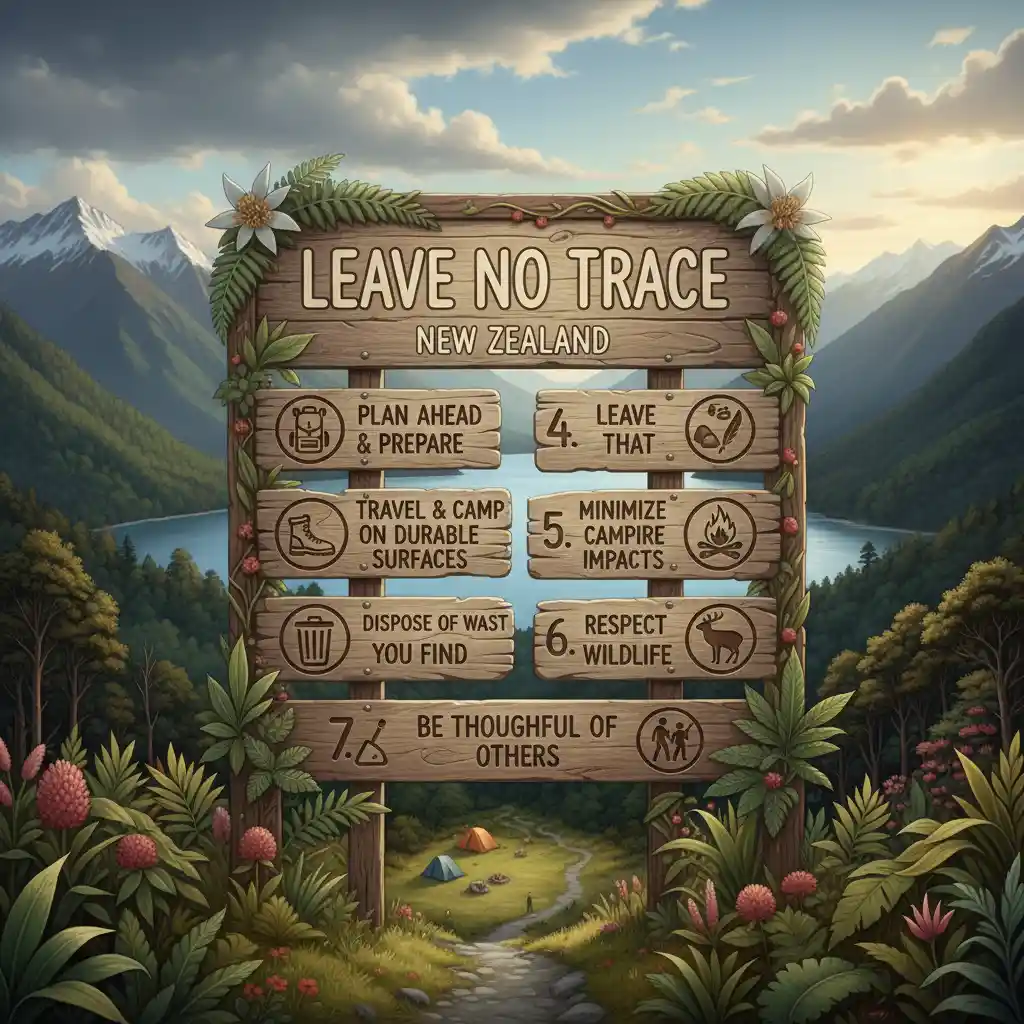
- Plan Ahead and Prepare: Be informed about the area, weather, and regulations.
- Travel and Camp on Durable Surfaces: Stick to trails and established campsites.
- Dispose of Waste Properly: Pack it in, pack it out.
- Leave What You Find: Preserve cultural and natural objects.
- Minimise Campfire Impacts: Use stoves, keep fires small, and use existing rings.
- Respect Wildlife: Observe from a distance, never feed animals.
- Be Considerate of Other Visitors: Share the trails and respect privacy.
Let’s delve deeper into how these principles translate into actionable low-impact techniques for your next New Zealand adventure.
Low-Impact Techniques for the Trail
Mastering these techniques will significantly reduce your ecological footprint and enhance your sustainable hiking experience.
1. Plan Ahead and Prepare
- Know Before You Go: Research your chosen trail, its difficulty, weather patterns, and specific Department of Conservation (DOC) regulations or alerts.
- Proper Gear: Carry appropriate clothing, food, water, navigation tools, and emergency supplies. Be self-sufficient to avoid relying on others or impacting resources.
- Group Size: Keep group sizes small to minimise impact on trails and campsites.
- Share Your Plans: Always leave your intentions with a trusted contact.
2. Travel and Camp on Durable Surfaces
- Stick to Trails: Walk in the middle of the trail, even if it’s muddy, to prevent widening and erosion. Avoid creating new paths.
- Camp Responsibly: Use established campsites. If no site exists, choose a durable surface (rock, dry grass) away from water sources and sensitive vegetation.
- Avoid Sensitive Areas: Steer clear of fragile meadows, riverbanks, and alpine tundras.
3. Dispose of Waste Properly
- Pack It In, Pack It Out: This applies to ALL rubbish, including food scraps, fruit peels, and even toilet paper. Carry a rubbish bag.
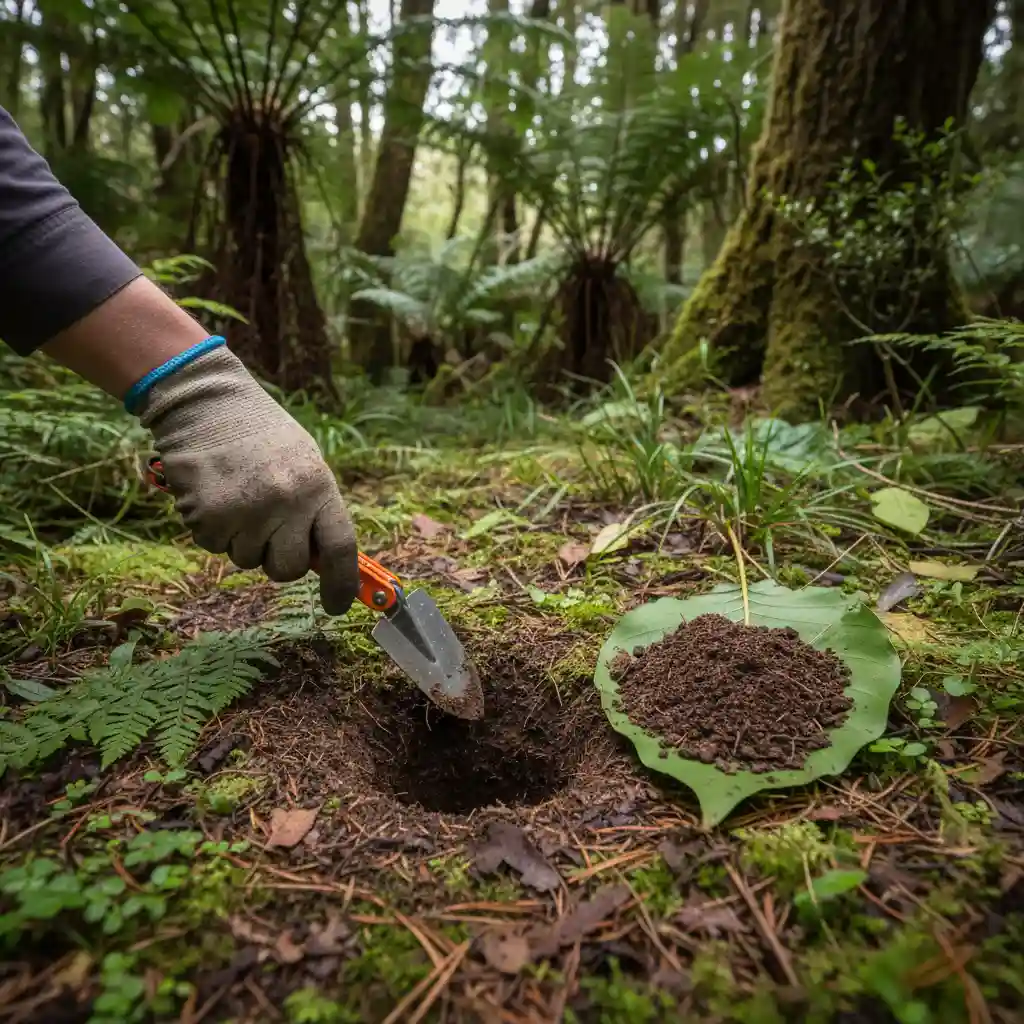
- Human Waste: Dig a cathole 15-20 cm deep and at least 60 metres (200 feet) from water, trails, and campsites. Cover and disguise it. Pack out toilet paper.
- Wash Water: Use minimal soap (biodegradable, if possible) and scatter dishwater well away from water sources.
4. Leave What You Find
- Natural Objects: Resist the urge to collect rocks, flowers, shells, or cultural artefacts. Leave them for others to enjoy and for their natural ecosystem function.
- Historical Sites: Observe and photograph historical or archaeological structures from a distance. Do not touch or disturb them.
5. Minimise Campfire Impacts
- Use Stoves: Camp stoves are more efficient and leave no trace. They are highly recommended, especially in areas with wood restrictions or fire bans.
- Existing Fire Rings: If fires are permitted, use established fire rings. Keep fires small and burn only fallen dead wood.
- Extinguish Completely: Ensure fires are completely out and cold to the touch before leaving.
6. Respect Wildlife
- Observe from a Distance: Never approach, feed, or follow wild animals. Use binoculars for a closer look.
- Protect Pets: If you bring a dog where permitted, keep it on a leash and under control at all times to prevent disturbing wildlife.
- Store Food Securely: Keep food and scented items in sealed containers or hung from trees to prevent animals from accessing them.
7. Be Considerate of Other Visitors
- Yield to Others: Generally, hikers travelling uphill have the right-of-way. Cyclists yield to hikers, and everyone yields to horses.
- Control Noise: Enjoy natural sounds; avoid loud voices and electronic devices.
- Respect Privacy: Give others space and privacy at campsites and viewpoints.
Beyond LNT: Advanced Trail Care
True sustainable hiking extends beyond personal practices to actively contributing to conservation. Consider these advanced trail care actions:
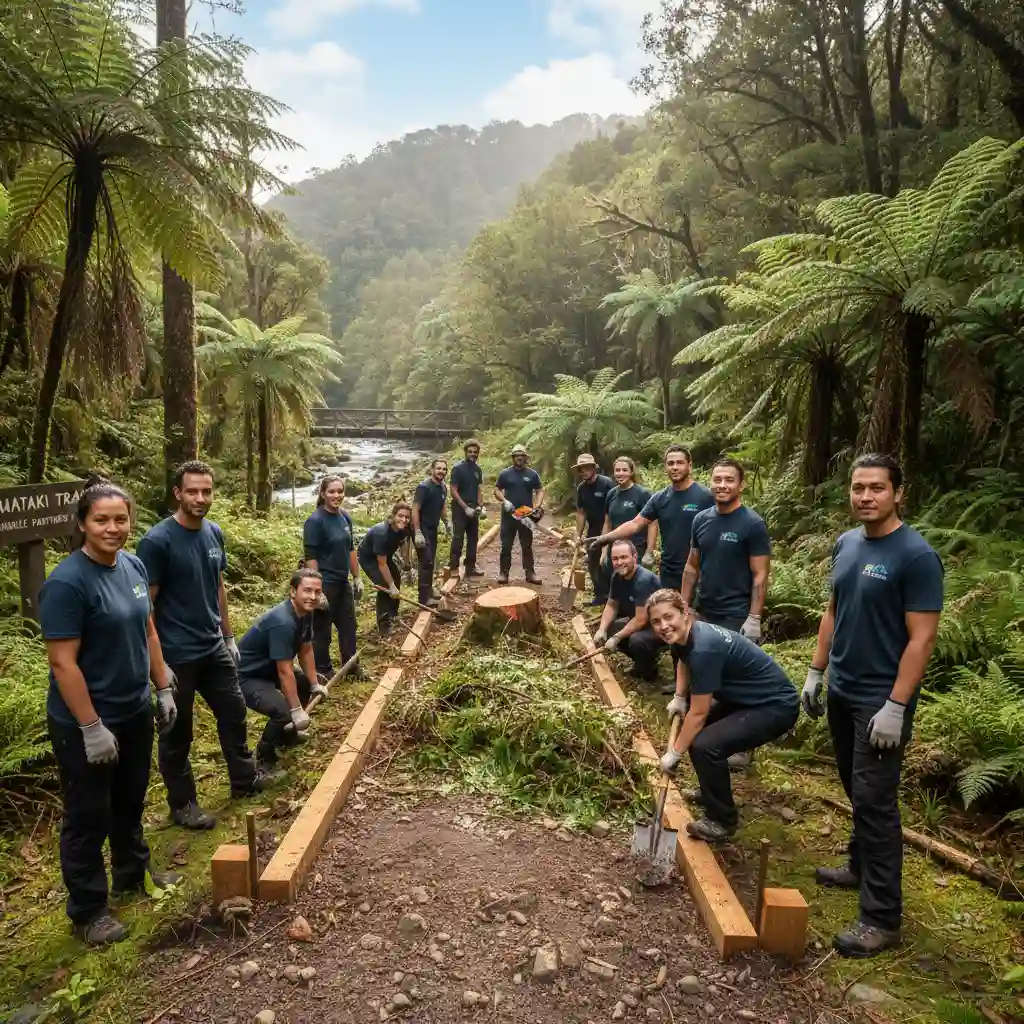
- Volunteer: Join local conservation groups or DOC volunteer programmes for trail maintenance, tree planting, or pest control.
- Report Damage: If you spot significant trail damage, erosion, or invasive species, report it to the relevant authorities (e.g., DOC).
- Choose Eco-Friendly Gear: Support brands that use sustainable materials, ethical manufacturing processes, and contribute to conservation.
Stat Callout: The Department of Conservation (DOC) manages over 13,000 km of walking and tramping tracks in New Zealand. Maintaining this extensive network requires significant resources, highlighting the importance of every hiker’s contribution to trail care.
Your Sustainable Hiking Checklist
Before your next hike, use this quick checklist to ensure you’re prepared for a low-impact adventure:
- ✔ Researched trail, weather, and regulations (DOC website).
- ✔ Packed all rubbish out bag, including for food scraps.
- ✔ Confirmed all gear is in good condition (no dropped items).
- ✔ Planned to stay on marked trails and durable surfaces.
- ✔ Considered using a camp stove instead of a campfire.
- ✔ Understood human waste disposal methods (cathole/pack out).
- ✔ Committed to observing wildlife from a distance.
- ✔ Informed a contact of my route and return time.
- ✔ Reviewed Leave No Trace principles.
- ✔ Packed out any unexpected litter encountered on the trail.
FAQ: Sustainable Hiking
What does ‘low-impact’ mean in hiking?
Low-impact hiking refers to practices and techniques designed to minimise human disturbance to the natural environment. This includes staying on trails, packing out all waste, respecting wildlife, and avoiding damage to vegetation and water sources. The goal is to leave the natural area as undisturbed as possible.
Why is sustainable hiking particularly important in New Zealand?
New Zealand’s ecosystems are incredibly unique and fragile, home to many endemic species found nowhere else on Earth. These species are highly vulnerable to habitat disturbance, introduced pests, and human impact. Practising sustainable hiking helps protect this unique biodiversity and preserves the natural heritage for future generations.
Can I bring my dog on sustainable hikes in New Zealand?
It depends on the specific trail. Many areas managed by the Department of Conservation (DOC) do not permit dogs to protect sensitive wildlife, particularly ground-nesting birds and native species vulnerable to predators. Always check DOC guidelines for the specific track before bringing a dog. Where permitted, dogs must be kept on a leash and under strict control.
Is it okay to bury food scraps like apple cores or banana peels?
No, it is generally not okay to bury food scraps. While they are biodegradable, they decompose very slowly, can attract wildlife, introduce non-native plant species, and take away from the wilderness experience for others. The ‘pack it in, pack it out’ principle applies to all food waste, including seemingly harmless organic items.
How can I contribute to trail care beyond my personal hiking habits?
You can contribute by volunteering with local conservation groups or Department of Conservation (DOC) programmes for trail maintenance, pest control, or planting native trees. You can also report significant trail damage or sightings of invasive species to the authorities, and support organisations dedicated to environmental protection.