Renewable Energy in Sustainable Home Design: A Guide
In New Zealand, the dream of a sustainable lifestyle is becoming a tangible reality, especially when it comes to our homes. Moving beyond traditional resource management, we’re now empowering homeowners to integrate cutting-edge renewable energy solutions directly into their living spaces. This guide illuminates the path to designing a home that not only minimises its environmental footprint but also offers long-term benefits for your wallet and well-being.
Whether you’re building new or renovating, understanding the options for renewable energy in sustainable home design is the first crucial step. Join us as we explore how you can harness the power of nature to create an energy-efficient, resilient, and truly green home in Aotearoa.
Table of Contents
- Why Embrace Renewable Energy in Your Home?
- Key Renewable Energy Technologies for Homes
- Integrating Renewable Energy into Your Home Design: A Step-by-Step Guide
- The New Zealand Context: What to Consider
- Beyond Energy: Holistic Sustainable Design
- Taking the Next Steps Towards a Greener Home
- Frequently Asked Questions (FAQ)
- References & Sources
Why Embrace Renewable Energy in Your Home?
Choosing to incorporate renewable energy in sustainable home design offers a myriad of benefits, extending far beyond simply reducing your carbon footprint. It’s an investment in a more resilient, cost-effective, and comfortable future.
- Environmental Stewardship: By utilising natural resources like sun, wind, and geothermal heat, you significantly decrease reliance on fossil fuels, contributing directly to a healthier planet.
- Reduced Energy Bills: Generating your own power or heat can drastically cut down, or even eliminate, your monthly energy expenses, leading to substantial long-term savings.
- Energy Independence & Security: Lessen your vulnerability to grid outages and fluctuating energy prices. Renewable systems provide a reliable, often local, source of power.
- Increased Property Value: Sustainable features, especially integrated renewable energy systems, are increasingly attractive to potential buyers, adding significant value to your home.
Stat Callout:
According to the International Energy Agency (IEA), homes equipped with solar panels can see an average 3-4% increase in resale value, making renewable energy a smart financial decision.
Key Renewable Energy Technologies for Homes
New Zealand’s diverse landscape and climate offer various opportunities for harnessing renewable power. Here are the primary technologies suitable for residential integration:
1. Solar Photovoltaic (PV) Systems
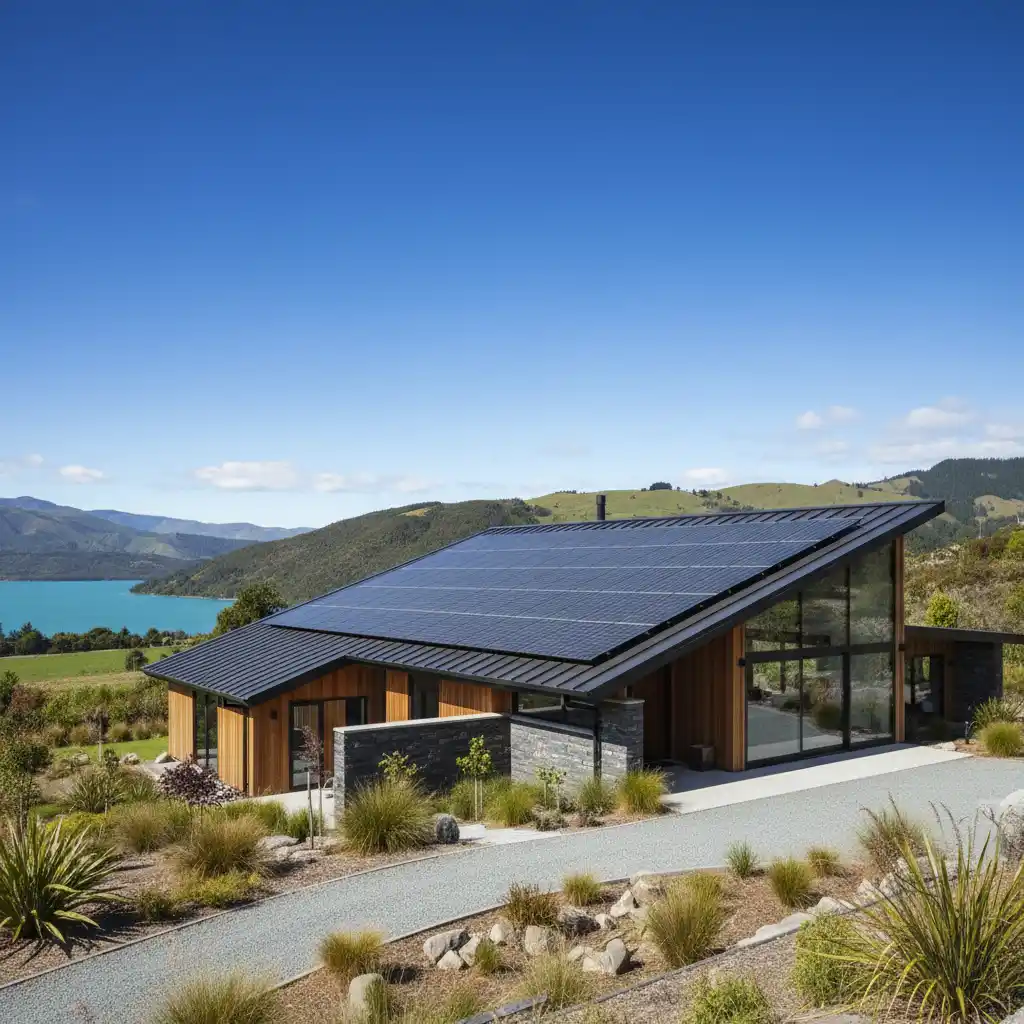
Solar PV panels convert sunlight directly into electricity. They are arguably the most popular and accessible form of home renewable energy. Advances in technology mean they are more efficient and aesthetically pleasing than ever, often integrating seamlessly into rooflines.
“Solar power is often the most straightforward entry point for homeowners looking to embrace renewable energy, offering excellent returns in New Zealand’s sunny regions.”
2. Solar Thermal (Hot Water) Systems
Unlike PV, solar thermal systems use sunlight to directly heat water for your home, significantly reducing the energy needed for conventional water heating. This is particularly effective given that water heating often accounts for a large portion of household energy consumption.
3. Residential Wind Turbines
For homes in consistently windy locations, small-scale wind turbines can be an excellent option for generating electricity. While less common than solar in urban settings, they can provide substantial power in rural or coastal areas.
4. Geothermal Heating and Cooling
Geothermal heat pump systems utilise the stable temperature of the earth to provide highly efficient heating and cooling for your home. While requiring a more significant initial installation, they offer exceptional long-term energy savings and comfort.
Integrating Renewable Energy into Your Home Design: A Step-by-Step Guide
Successful integration of renewable energy in sustainable home design requires careful planning and collaboration. Follow these steps for an effective implementation:
1. Assess Your Site and Needs
Begin by understanding your property’s specific characteristics. What are its sun exposure patterns? Is it windy? What are your current and projected energy demands? A professional energy audit can provide invaluable data for this crucial first step.

2. Prioritise Energy Efficiency First
Before adding renewable generation, ensure your home is as energy-efficient as possible. This includes excellent insulation, double glazing, draught sealing, and energy-efficient appliances. Reducing demand first means your renewable system can be smaller and more cost-effective.
3. Choose Your Technologies Wisely
Based on your site assessment and energy needs, select the renewable energy solutions that offer the best return and fit for your lifestyle. Often, a combination (e.g., solar PV with solar thermal) provides the most comprehensive solution.
4. Work with Accredited Experts
Engage qualified architects, builders, and renewable energy installers who specialise in sustainable design. They can ensure optimal system sizing, correct installation, compliance with local regulations, and aesthetic integration.
5. Plan for Future Expansion and Storage
Consider making provisions for future additions, like battery storage to enhance energy independence, or the capacity to add more panels. Design for flexibility allows your home to evolve with technology and your changing needs.
The New Zealand Context: What to Consider
New Zealand presents unique opportunities and considerations for renewable energy adoption:
- Climate Diversity: From the sub-tropical north to the alpine south, local climate dictates the most effective renewable solutions. Solar is strong across many regions, while wind can be excellent in exposed areas.
- Building Regulations: Stay informed about local council requirements and national building codes related to renewable energy installations. Accredited installers will guide you through this.
- Incentives and Funding: While specific government grants fluctuate, organisations like EECA (Energy Efficiency and Conservation Authority) often provide information and sometimes subsidies for energy efficiency and renewable projects. Research local council initiatives too.
Stat Callout:
New Zealand already generates over 80% of its electricity from renewable sources, but home-based generation further empowers individuals and strengthens our collective sustainability goals. (Source: Ministry of Business, Innovation & Employment).
Beyond Energy: Holistic Sustainable Design
While renewable energy is a cornerstone, a truly sustainable home integrates broader principles:
- Passive Design: Maximise natural light and ventilation, and optimise thermal mass for heating and cooling, reducing the need for active systems.
- Sustainable Materials: Choose recycled, locally sourced, low-VOC, and durable materials for construction and fit-out.
- Water Efficiency: Install low-flow fixtures, rainwater harvesting systems, and greywater recycling to conserve water.
- Waste Management: Design for easy waste separation and composting, and choose products with minimal packaging.
Taking the Next Steps Towards a Greener Home
Ready to embark on your sustainable home journey? Here’s an actionable checklist to guide you:
Action Checklist:
- Research Local Installers: Seek out reputable, certified renewable energy specialists in your region of New Zealand.
- Get an Energy Audit: Understand your current energy usage and identify areas for efficiency improvements.
- Explore Financing Options: Investigate green loans, government incentives (if available), and other financing for renewable energy installations.
- Visit Show Homes/Open Days: See sustainable homes with renewable energy systems in action to inspire your design.
- Connect with Sustainable Communities: Join local groups or online forums focused on sustainable living for advice and shared experiences.
Frequently Asked Questions (FAQ)
What are the most common renewable energy sources for homes in NZ?
The most common sources are solar photovoltaic (PV) for electricity generation and solar thermal for hot water. Small-scale wind turbines and geothermal heat pumps are also used, particularly in suitable regional locations or for more extensive systems.
Is installing solar panels worth it in New Zealand?
Yes, for most New Zealand homes, installing solar panels is a sound investment. With decreasing costs, increasing electricity prices, and excellent solar irradiance across much of the country, solar PV offers significant long-term savings, energy independence, and adds property value.
How does geothermal heating work for a residential property?
Residential geothermal heating (and cooling) systems use a ground-source heat pump. They exchange heat with the earth, which maintains a relatively constant temperature year-round. In winter, heat is extracted from the ground and transferred indoors; in summer, heat is extracted from the indoors and transferred to the ground.
Can I go completely off-grid with renewable energy in NZ?
Yes, going completely off-grid is achievable in New Zealand, primarily with a robust solar PV system combined with battery storage. Wind energy can complement this in suitable areas. However, it requires careful planning, a significant initial investment, and a commitment to managing your energy consumption efficiently.
What government incentives are available for renewable energy installations in NZ?
While specific national grants for residential renewable energy installations can vary and have been less direct than in some other countries, homeowners should check the EECA (Energy Efficiency and Conservation Authority) website for current programmes, information, and potential subsidies related to energy efficiency. Some local councils or energy retailers may also offer their own incentives or schemes.
References & Sources
- Energy Efficiency and Conservation Authority (EECA) – eeca.govt.nz
- Ministry of Business, Innovation & Employment (MBIE) – mbie.govt.nz (for energy statistics and policy)
- BRANZ (Building Research Association of New Zealand) – branz.co.nz (for sustainable building practices)
- International Energy Agency (IEA) – iea.org
- Local Council Building Consent Information (e.g., Auckland Council, Wellington City Council)