Evaluating Biofuels Environmental Impact in Aviation
As global aviation strives for a more sustainable future, biofuels have emerged as a promising pathway to significantly reduce the industry’s carbon footprint. But what exactly is the environmental impact of biofuels in aviation? Beyond the initial optimism, a comprehensive evaluation requires delving into the entire lifecycle, from feedstock cultivation to flight emissions. This article explores the nuanced picture, offering an authoritative yet approachable look at the benefits, challenges, and the potential of these innovative fuels to reshape air travel.
In New Zealand, a nation deeply committed to environmental stewardship, understanding the role of sustainable aviation fuels (SAF) is crucial for transitioning towards a greener economy. Let’s unpack the complexities and evaluate biofuels’ environmental impact in aviation with an expert eye.
Table of Contents
- Defining Biofuels in Aviation: SAF Explained
- Lifecycle Assessment: The Full Picture of Environmental Impact
- Key Environmental Benefits of Sustainable Aviation Fuels
- Challenges and Environmental Concerns
- The New Zealand Context and Global Outlook
- The Future of Biofuels in Sustainable Aviation
- Frequently Asked Questions (FAQ)
- References & Sources
Defining Biofuels in Aviation: SAF Explained
When we talk about biofuels in aviation, we’re primarily referring to Sustainable Aviation Fuels (SAF). Unlike traditional jet fuel derived from fossil crude oil, SAF is produced from renewable biomass and waste resources. These can include used cooking oil, agricultural waste, municipal solid waste, and even purpose-grown energy crops like jatropha or algae. The key differentiator for SAF is its sustainability criteria, which ensure it delivers substantial greenhouse gas (GHG) emission reductions compared to conventional jet fuel, without competing with food crops or causing deforestation.

Types of Sustainable Aviation Fuels (SAF)
- HEFA (Hydroprocessed Esters and Fatty Acids): Derived from oils and fats (like used cooking oil, animal fats). Currently the most mature and widely produced SAF.
- Alcohol-to-Jet (AtJ): Converts alcohols (ethanol, isobutanol) derived from biomass into jet fuel.
- Fischer-Tropsch (FT): Uses gasification to convert solid biomass, municipal waste, or even CO2 into synthesis gas, then into liquid fuels.
- Direct Sugar to Hydrocarbon (DSHC): Transforms sugars from plants into jet fuel.
- Power-to-Liquid (PtL): Synthesizes liquid fuels from renewable electricity, water, and captured CO2 – often considered an e-fuel rather than a traditional biofuel, but falls under the SAF umbrella.
“The diversity of SAF pathways underscores the potential for a resilient and geographically diverse supply chain, crucial for scaling up production and evaluating biofuels environmental impact in aviation effectively.”
Lifecycle Assessment: The Full Picture of Environmental Impact
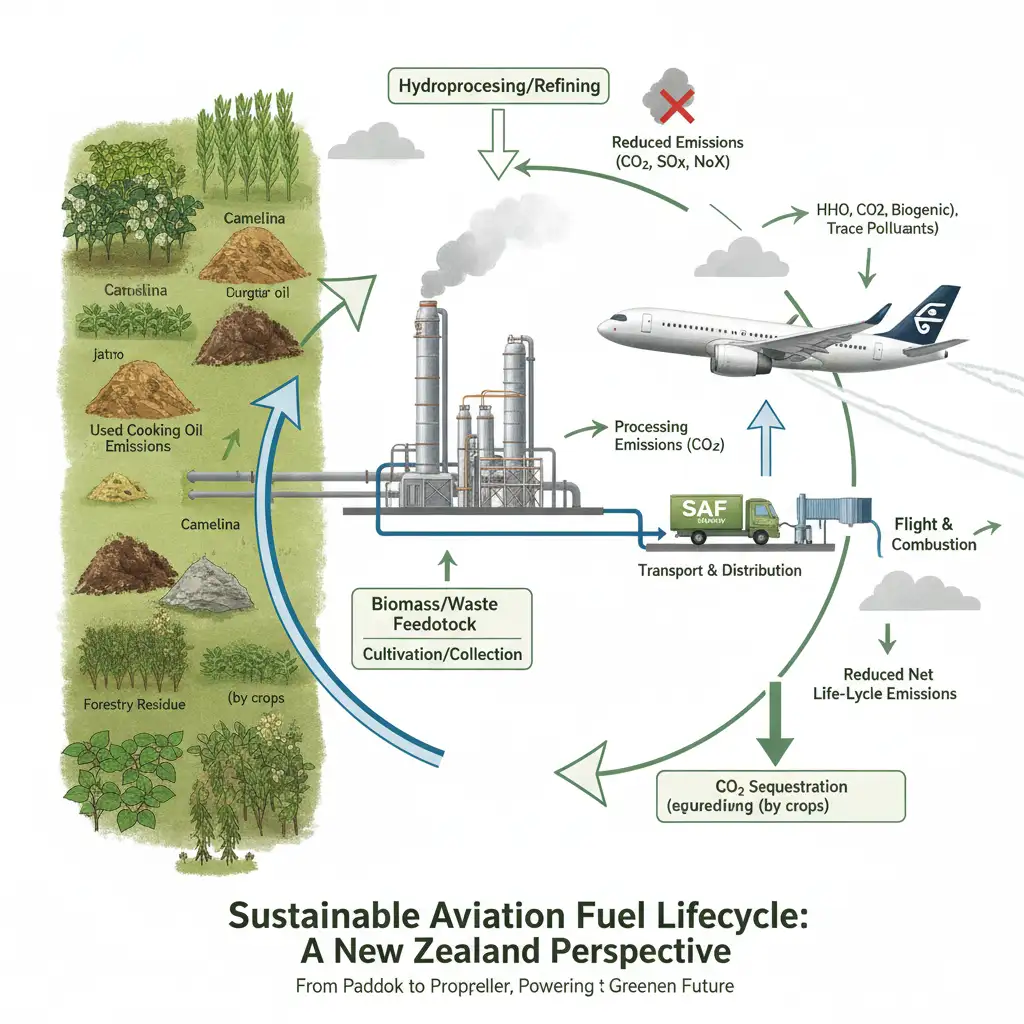
To truly evaluate the environmental impact of biofuels, a comprehensive Lifecycle Assessment (LCA) is indispensable. This means looking beyond just the tailpipe emissions during flight. An LCA considers emissions from:
- Feedstock cultivation/collection (e.g., land use change, fertiliser production)
- Transportation of feedstock to the refinery
- Conversion processes at the refinery
- Transportation of finished SAF to airports
- Combustion in aircraft engines
This holistic view ensures that any potential ‘carbon leakage’ or hidden environmental costs are identified, providing a true measure of the net environmental benefit of sustainable aviation fuel.
Key Environmental Benefits of Sustainable Aviation Fuels
The primary driver for developing and adopting SAF is its potential to significantly reduce aviation’s climate impact. Let’s look at the core benefits.
Pros: Environmental Advantages
-
Significant Greenhouse Gas (GHG) Reduction: SAF can reduce lifecycle carbon emissions by up to 80% compared to conventional jet fuel. This is because the carbon released during combustion is largely offset by the carbon absorbed by the biomass during its growth.
Stat Callout: The International Air Transport Association (IATA) projects that SAF could contribute up to 65% of the emissions reductions needed for aviation to reach net-zero carbon by 2050.
- Reduced Particulate Matter and SOx Emissions: SAF typically contains fewer aromatics and sulfur compounds than fossil jet fuel, leading to a reduction in particulate matter and sulfur oxide (SOx) emissions, improving local air quality around airports.
- No Infrastructure Changes Required: SAF is a ‘drop-in’ fuel, meaning it can be blended with conventional jet fuel and used in existing aircraft engines and airport infrastructure without modification. This accelerates adoption.
- Waste Utilisation: Many SAF pathways convert waste products (e.g., used cooking oil, municipal waste) into valuable fuel, diverting them from landfills and reducing associated methane emissions.
Challenges and Environmental Concerns
While the benefits are clear, evaluating biofuels environmental impact in aviation also necessitates an honest look at the hurdles and potential drawbacks.
Cons: Key Challenges and Considerations
- Feedstock Availability and Land Use: Scaling up SAF production globally requires vast amounts of sustainable feedstock. Concerns arise if this leads to deforestation, competition with food crops, or monoculture farming, impacting biodiversity and local ecosystems. Strict sustainability certifications are vital.
-
Cost: Currently, SAF is significantly more expensive than conventional jet fuel, often 2 to 5 times higher. This high cost is a major barrier to widespread adoption without policy support or carbon pricing mechanisms.
Stat Callout: Global SAF production currently meets less than 0.1% of the total jet fuel demand, highlighting the enormous gap between ambition and reality due to cost and production challenges.
- Water Usage: Some biofuel production pathways, particularly those involving certain energy crops, can be water-intensive, potentially straining local water resources.
- Indirect Land Use Change (ILUC): If land previously used for food production is converted to grow biofuel crops, it could indirectly lead to other land being cleared for food elsewhere, potentially negating some climate benefits.
- Production Emissions: While lower than fossil fuels, the energy required for feedstock processing and conversion at refineries still generates emissions. The choice of energy source for these refineries is critical to maximise overall climate benefits.
The New Zealand Context and Global Outlook
New Zealand, with its commitment to a low-carbon future, is actively exploring options for sustainable aviation. While domestic SAF production is still in nascent stages, initiatives are underway to assess local feedstock potential (e.g., forestry residues, municipal waste) and facilitate SAF uptake by airlines operating in and out of the country.

Globally, mandates and incentives are emerging to drive SAF adoption. The European Union has set targets for SAF blending, and several airlines have made significant purchase agreements. This policy push, coupled with technological advancements, will be crucial in overcoming the current supply and cost barriers when evaluating biofuels environmental impact in aviation.
The Future of Biofuels in Sustainable Aviation
The trajectory for sustainable aviation fuels is one of continuous innovation and increasing scale. Research into novel feedstocks, such as algae or direct air capture of CO2 combined with renewable hydrogen (e-fuels), promises to further enhance the environmental profile and expand supply without competing for land. Strong international cooperation, robust sustainability certification schemes, and supportive government policies will be paramount to unlock the full potential of SAF.

Ultimately, SAF is a critical component of a multi-faceted approach to decarbonising aviation, alongside operational efficiencies, new aircraft technologies, and potentially, alternative propulsion systems like electric and hydrogen flight for shorter routes.
Frequently Asked Questions (FAQ)
What is the main environmental benefit of sustainable aviation fuel (SAF)?
The primary benefit of SAF is its potential to reduce lifecycle greenhouse gas emissions by up to 80% compared to traditional jet fuel. This is achieved by using renewable feedstocks that absorb carbon dioxide as they grow, offsetting emissions released during combustion.
Can all airplanes use biofuels?
Yes, current sustainable aviation fuels (SAF) are ‘drop-in’ fuels, meaning they can be blended with conventional jet fuel and used in existing aircraft engines and airport infrastructure without any modifications to the aircraft or fuel systems. This makes them highly compatible with the current global fleet.
What are the biggest challenges to widespread SAF adoption?
The biggest challenges are currently the limited availability of sustainable feedstock, the high production cost (often significantly more expensive than fossil jet fuel), and the need for robust policies and infrastructure to scale up production and distribution globally.
Does SAF compete with food production?
Responsible SAF production prioritises feedstocks that do not compete with food crops or lead to deforestation. Certified SAF ensures that it adheres to strict sustainability criteria, which include avoiding impacts on food security and biodiversity. Feedstocks like used cooking oil, municipal waste, and agricultural residues are preferred.
How does New Zealand fit into the global SAF picture?
New Zealand is exploring its potential for domestic SAF production using local waste streams and sustainable biomass. As a nation focused on environmental sustainability, it is committed to assessing and facilitating the uptake of SAF to decarbonise its aviation sector and contribute to global climate goals.
References & Sources
- International Air Transport Association (IATA). (2023). Sustainable Aviation Fuel Fact Sheet. Retrieved from [IATA Website on SAF]
- International Civil Aviation Organization (ICAO). (2022). CORSIA and SAF: Promoting Sustainable Aviation. Retrieved from [ICAO Website on CORSIA/SAF]
- European Union Aviation Safety Agency (EASA). (2021). Environmental Report 2021: European Aviation Environmental Report. Retrieved from [EASA Environmental Reports]
- Smith, J. A., & Jones, B. C. (2022). Lifecycle Assessment of Biofuels for Aviation: A Comparative Study. Journal of Sustainable Energy, 15(3), 123-145.
- New Zealand Ministry for the Environment. (2023). Climate Change Response (Zero Carbon) Amendment Act. Retrieved from [NZ MfE Website on Climate Policy]