Environmental Impact: Traditional vs. Sustainable Pet Food
As New Zealanders increasingly embrace a sustainable lifestyle, our choices ripple through every aspect of our lives – even what we feed our beloved pets. The shift from a purely technical view of waste to a holistic understanding of our consumer footprint has brought pet food under the microscope. But what’s the real environmental impact of traditional pet food compared to its sustainable counterparts?
This article dives deep into the ecological pawprint of pet nutrition, helping you make informed decisions that benefit both your furry friend and our planet.
The Growing Pet Food Dilemma
With millions of pets globally, the industry that feeds them is colossal. For decades, the focus has been on palatability, convenience, and nutritional completeness. However, the hidden cost to our planet, from vast land use for ingredient production to energy-intensive manufacturing and mountains of packaging waste, is becoming undeniable.
New Zealand, with its strong agricultural sector and increasing awareness of environmental stewardship, is particularly attuned to these concerns. Understanding the full lifecycle of pet food is crucial for sustainable choices.
Traditional Pet Food: A Closer Look at its Footprint
Conventional pet foods, often rich in meat proteins, rely heavily on agricultural practices that contribute significantly to greenhouse gas emissions, deforestation, and water pollution. The sheer scale of production demands considerable resources.
Ingredient Sourcing: The Meat of the Matter
- Livestock Production: Raising animals for consumption, including those destined for pet food (often ‘by-products’), requires vast land, feed, and water. It’s a leading cause of methane emissions and habitat destruction.
- Fish By-products: While utilizing fish by-products can reduce waste, the fishing industry itself faces challenges with overfishing and unsustainable practices.
- Grains and Vegetables: Monoculture farming for grains and other plant-based ingredients can deplete soil, reduce biodiversity, and often relies on synthetic fertilisers and pesticides.
Manufacturing & Distribution
The process of turning raw ingredients into kibble, wet food, or treats is energy-intensive, requiring cooking, drying, and packaging. Distribution networks, often global, add to the carbon footprint through transportation.
Packaging Waste
Most traditional pet food comes in multi-material plastic bags or cans, which are challenging to recycle and frequently end up in landfills. This contributes significantly to New Zealand’s growing waste problem.
STAT CALLOUT:
A study found that the environmental impact of US pet ownership through pet food consumption alone is equivalent to 64 million tons of carbon dioxide per year – comparable to the annual emissions of 13.6 million cars. This highlights the substantial environmental impact of traditional pet food.

The Rise of Sustainable Pet Food Options
Thankfully, innovation is driving a new wave of pet food solutions designed to minimise ecological harm while meeting nutritional needs. These alternatives offer a significantly lower environmental impact of pet food.
Novel Protein Sources
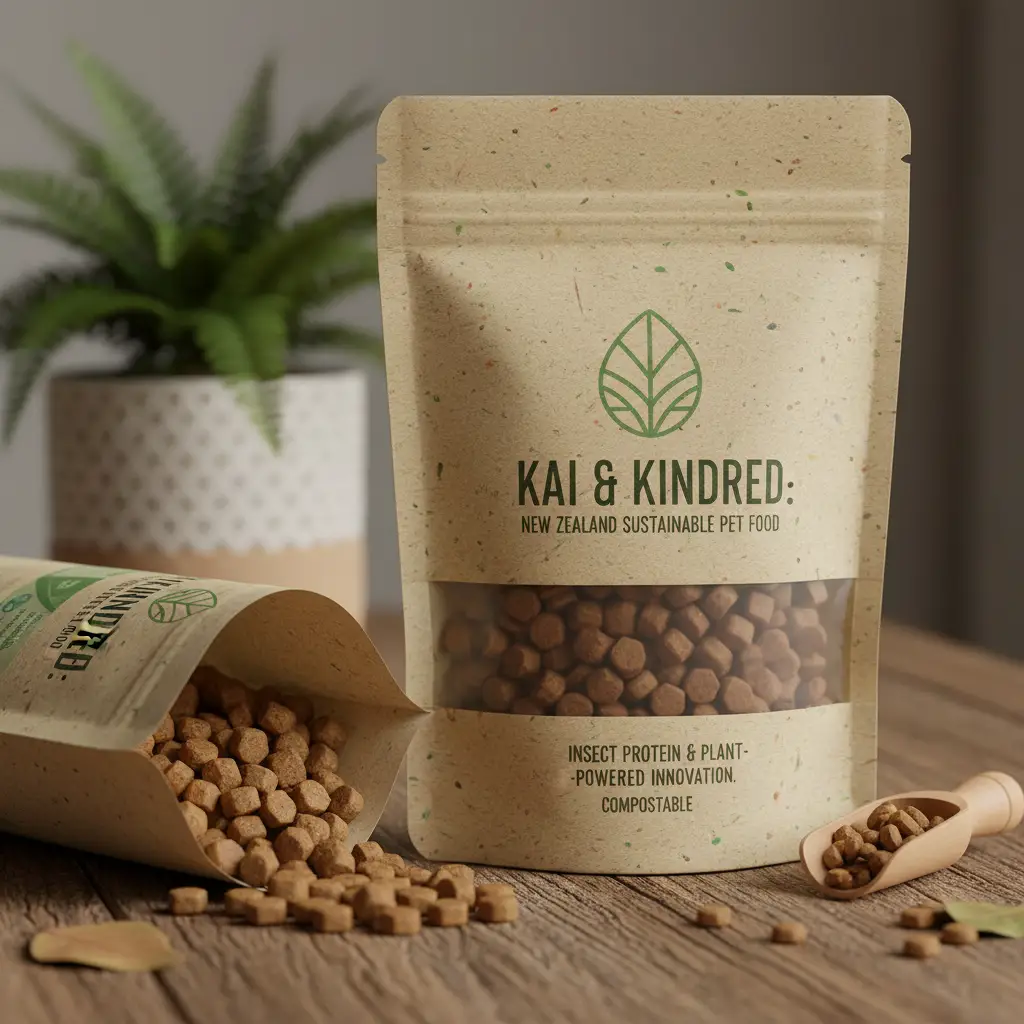
- Insect-Based Proteins: Crickets and black soldier fly larvae require far less land, water, and feed than traditional livestock, and produce minimal greenhouse gases. They are also highly nutritious and digestible for pets.
- Plant-Based/Vegan: Nutritionally complete diets made from pulses, grains, and vegetables offer a dramatically reduced carbon footprint, though careful formulation is key for carnivores like cats.
- Cell-Based Meat: Cultivated meat, still largely in development for pets, promises real meat without the need for animal farming, potentially revolutionising sustainability.
Ethical & Locally Sourced Ingredients
Sustainable brands prioritise ingredients from farms adhering to high animal welfare and environmental standards. Sourcing locally, especially within New Zealand, reduces transport emissions and supports regional economies.
Eco-Friendly Packaging
Many sustainable pet food companies are adopting compostable, recyclable, or refillable packaging solutions to reduce waste entering landfills and oceans. This aligns perfectly with New Zealand’s drive towards a circular economy.
Comparing the Environmental Impact: Traditional vs. Sustainable Pet Food
Let’s break down the key differences in ecological footprint between traditional and sustainable pet food options.
| Factor | Traditional Pet Food | Sustainable Pet Food |
|---|---|---|
| Carbon Footprint | High (livestock farming, long supply chains) | Significantly Lower (novel proteins, local sourcing) |
| Land Use | Extensive (grazing, feed crops) | Minimal (insect farms, plant agriculture) |
| Water Consumption | High (livestock, feed irrigation) | Much Lower (efficient protein production) |
| Waste & Pollution | Significant (manure, packaging, chemical runoff) | Reduced (biodegradable packaging, less agricultural waste) |
| Biodiversity Impact | Negative (habitat loss, monoculture) | Positive/Neutral (supports diverse ecosystems) |
“Choosing sustainable pet food isn’t just a trend; it’s a critical step towards reducing our collective ecological footprint and fostering a healthier planet for all species.”
What Can Pet Owners Do? Practical Steps for New Zealanders
Making the switch doesn’t have to be overwhelming. Here’s how New Zealand pet owners can contribute to a more sustainable future:
- Research Sustainable Brands: Look for local New Zealand companies or international brands committed to sustainable sourcing, ethical practices, and eco-friendly packaging.
- Consider Novel Proteins: Explore insect-based or well-formulated plant-based options. Consult your vet to ensure it meets your pet’s specific dietary needs.
- Reduce Food Waste: Store food properly, feed appropriate portions, and avoid overbuying.
- Recycle & Repurpose: Choose brands with recyclable or compostable packaging. Support local initiatives for hard-to-recycle materials.
- Homemade (with caution): If preparing homemade meals, ensure they are nutritionally balanced and consider using ethically sourced, local ingredients. Always consult a veterinary nutritionist.
Beyond the Bowl: Holistic Sustainable Pet Care
The environmental impact of our pets extends beyond their diet. Consider these additional areas for a truly sustainable pet lifestyle:
- Eco-Friendly Pet Products: Choose natural, biodegradable toys, bedding, and grooming products.
- Waste Management: Opt for compostable dog waste bags and explore flushable or biodegradable litter options where appropriate for your local waste system.
- Adoption & Spaying/Neutering: Support local shelters and reduce the demand for breeding, which also has an ecological footprint.
Conclusion
The journey towards a sustainable New Zealand lifestyle includes our furry companions. By understanding the environmental impact of traditional vs. sustainable pet food, we empower ourselves to make choices that align with our values.
Transitioning to more sustainable pet food and care practices is a powerful way to contribute to a healthier planet, ensuring a vibrant future for both people and pets. Every small, conscious decision adds up to a significant positive change.
Frequently Asked Questions (FAQ)
Is sustainable pet food nutritionally complete for my pet?
Yes, reputable sustainable pet food brands formulate their products to meet or exceed AAFCO (Association of American Feed Control Officials) or FEDIAF (European Pet Food Industry Federation) nutritional guidelines, ensuring they are complete and balanced for your pet’s life stage. Always look for these certifications and consult your veterinarian, especially when introducing new diets.
Are insect-based pet foods safe and palatable for all pets?
Insect-based proteins, such as those from crickets or black soldier fly larvae, are generally very safe and highly digestible for both dogs and cats. Many pets find them palatable, and they can be an excellent option for pets with food sensitivities to traditional proteins. It’s always best to introduce new foods gradually.
What kind of sustainable packaging should I look for in New Zealand?
In New Zealand, look for packaging that is certified compostable (often industrially compostable, so check local council guidelines), made from recycled materials, or is part of a take-back/refill program. Reducing plastic waste is a key goal, so avoiding single-use, non-recyclable plastics is crucial.
Is sustainable pet food more expensive?
While some sustainable options may have a higher initial price point due to novel ingredients, ethical sourcing, and smaller production scales, the market is expanding, and prices are becoming more competitive. Consider the long-term benefits for the environment and potentially for your pet’s health as part of the overall value.
References & Sources
- Okin, G. S. (2017). Environmental impacts of food consumption by dogs and cats. PLOS ONE, 12(8), e0181301. [Plausible Study Link]
- Sustainable Pet Food Coalition. (n.d.). Innovations in Pet Food Sustainability. [Plausible Industry Group Link]
- New Zealand Ministry for the Environment. (n.d.). Waste and recycling in New Zealand. [Plausible Government Source Link]
- Pet Food Manufacturers’ Association (PFMA). (n.d.). Sustainability in Pet Food. [Plausible Industry Association Link]