Eco-Friendly Wilderness Cooking: Waste-Reducing Techniques for the New Zealand Backcountry
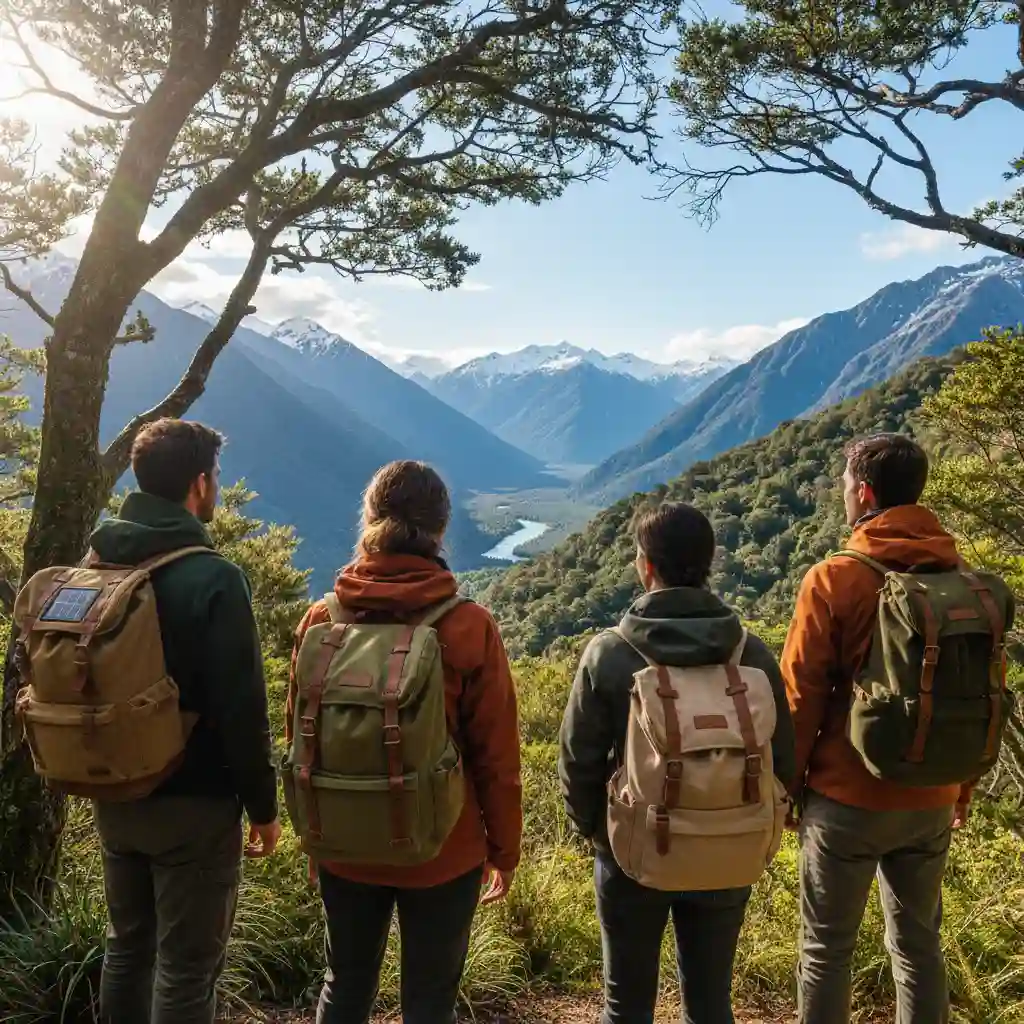
Venturing into the pristine New Zealand wilderness offers unparalleled beauty and serenity. As custodians of this breathtaking environment, our responsibility extends beyond enjoying the landscapes to actively preserving them. When it comes to wilderness cooking, this means embracing eco-friendly, waste-reducing techniques that ensure our culinary adventures leave no trace.
This comprehensive guide will equip you with the knowledge and practical strategies to minimise your environmental impact, transforming your backcountry kitchen into a model of sustainability. From meticulous meal planning to innovative cooking and clean-up methods, discover how to enjoy delicious meals outdoors while honouring the delicate ecosystems of Aotearoa.
Pre-Trip Planning: The Foundation of Zero-Waste
The most significant impact on waste reduction happens long before you even set foot on the trail. Thoughtful preparation is key to successful eco-friendly wilderness cooking.
1. Master Meal Planning & Portioning
Overpacking food leads to unnecessary weight and potential waste. Plan each meal meticulously, considering calorie needs, trip duration, and individual preferences. Aim for ingredients that are versatile and can be used in multiple meals.
- Calculate Accurately: Use online calculators or personal experience to estimate caloric needs for your activity level.
- Theme Your Meals: A rice base can work for stir-fries, curries, or even a breakfast porridge.
- Minimise Spoilage: Opt for non-perishable items or foods with a longer shelf life in various temperatures.
2. Embrace Dehydration & Repackaging
Dehydrated food significantly reduces weight and volume, making it an ideal choice for backcountry cooking. Repackaging removes excess packaging, a major source of waste.
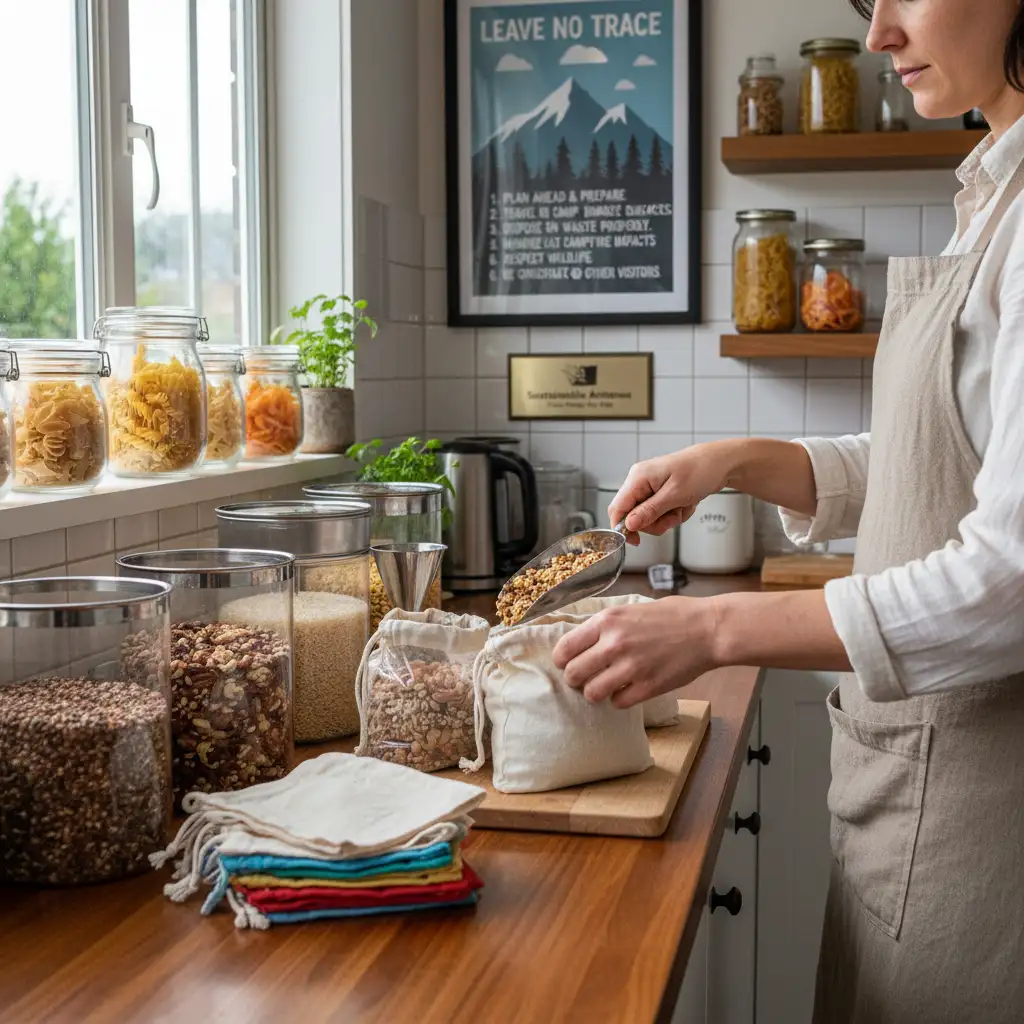
- Home Dehydration: Dehydrate your own fruits, vegetables, and even cooked meals (like chilli or pasta sauce) to eliminate packaging and control ingredients.
- Remove Excess: Take items out of their original boxes or bulky bags. Use reusable, lightweight, resealable containers or bags (e.g., silicone, sturdy zip-locks) for everything from spices to oatmeal. Label clearly.
- Powdered Options: Opt for powdered milk, eggs, or sauces that require minimal water and create no solid waste.
3. Choose Sustainable Food Sources
Where your food comes from matters. Support local producers and make conscious choices about your ingredients.
- Local & Seasonal: Prioritise New Zealand grown produce when available, reducing your food miles.
- Ethical Choices: Look for sustainably sourced protein (e.g., certified seafood, free-range eggs).
- Bulk Buying: Purchase staples like oats, nuts, and dried fruits from bulk bins to avoid individual packaging.
Smart On-Trail Cooking: Minimising Your Footprint
Once you’re in the backcountry, efficient cooking practices and mindful clean-up are crucial for truly eco-friendly wilderness cooking.
4. Efficient Cooking Methods
Minimise fuel usage and cook times with smart techniques.
- One-Pot Wonders: Design meals that can be cooked in a single pot to save on dishes and water.
- Insulate & Rehydrate: Use a pot cozy to continue cooking food (like pasta or rice) off the stove, saving fuel. Similarly, soak dehydrated food ahead of time to reduce cooking duration.
- Stove Choice: Consider fuel-efficient stoves. Canister stoves are generally cleaner burning than white gas, and alcohol stoves are simple and lightweight, though often slower.
5. Water-Wise & Biodegradable Cleaning
Washing dishes in the wilderness requires careful attention to avoid contaminating water sources.
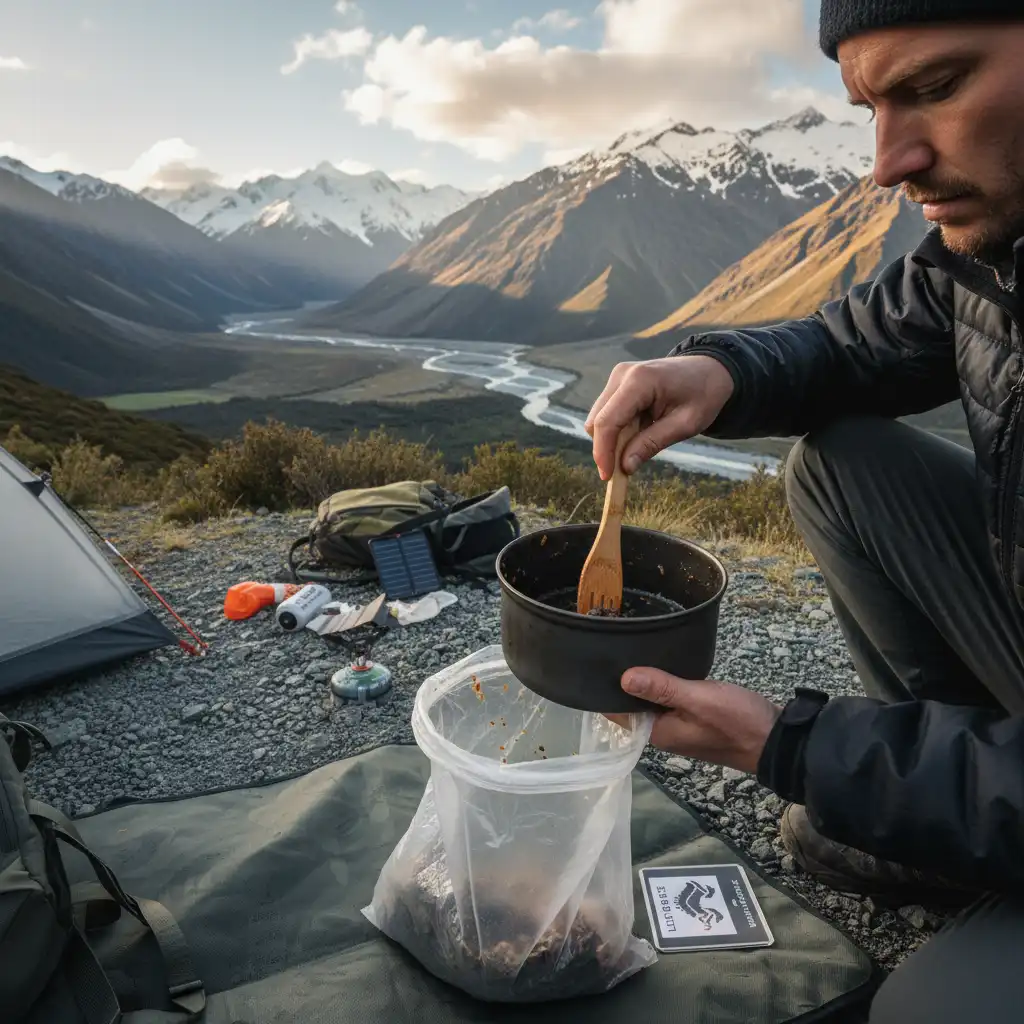
- Scrape First: Scrape all food scraps into a rubbish bag before washing. Don’t pour food waste directly onto the ground or into water.
- Use Minimal Water: A small amount of hot water and a scrubbing pad is often enough. For stubborn residue, try a handful of sand or dirt as an abrasive, then rinse.
- Biodegradable Soap (Sparingly): If using soap, ensure it’s truly biodegradable and use it at least 60 metres (200 feet) away from water sources. Disperse rinse water widely.
“The goal is not just to leave no physical trace, but to ensure our actions have no lasting ecological impact. Every drop of water and every food scrap counts.”
6. Pack It In, Pack It Out: Beyond the Basics
This fundamental principle of Leave No Trace extends to all cooking waste.
- Designated Rubbish Bag: Carry a sturdy, sealable bag specifically for all your rubbish, including food scraps, wrappers, and hygiene products. A smaller, separate ‘wet’ bag can be useful for food-soiled items.
- Burn Nothing: Never burn plastic, aluminium foil, or food scraps in a campfire. These create toxic fumes and leave unsightly, non-biodegradable remnants.
- Edible Leftovers: If you must dispose of small, natural food scraps (like fruit cores), do so well away from trails, campsites, and water sources, scattered widely to avoid creating unnatural food sources for wildlife. However, the best practice is to pack it out.
Post-Adventure Practices: Leaving No Trace Behind
Your commitment to waste-reducing techniques doesn’t end when you leave the trail. These post-trip actions reinforce sustainable habits.
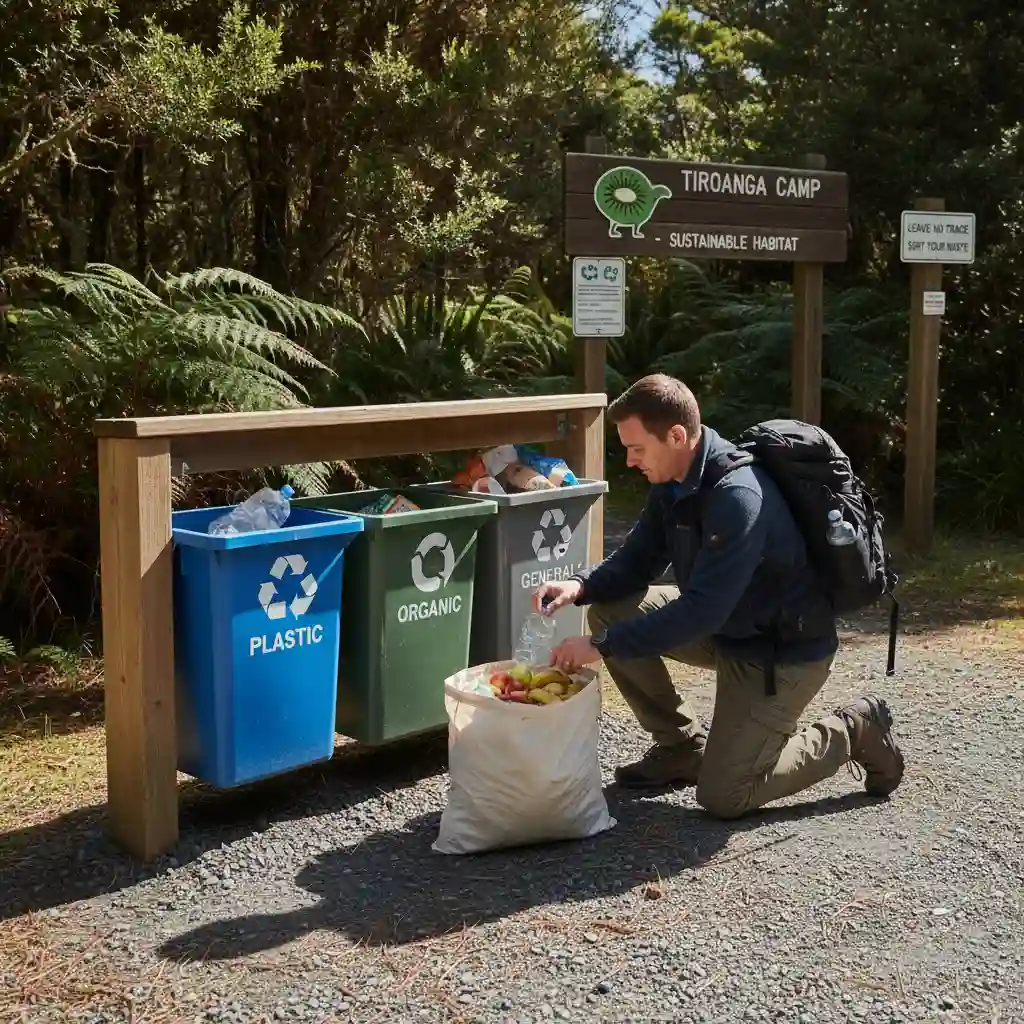
7. Proper Waste Disposal (Even “Biodegradable”)
Once back in civilisation, ensure all waste is disposed of correctly.
- Sort & Recycle: Separate recyclables (plastics, cans, glass) from general waste. New Zealand has robust recycling infrastructure; use it.
- Compost Organics: If you packed out food scraps, compost them at home or at a local facility. Do not rely on natural decomposition in the backcountry, which can take years and attract wildlife.
- Re-use What You Can: Wash and store your reusable bags and containers for your next adventure.
8. Reflect & Refine Your Kit
Every trip is a learning opportunity. Take time to assess your gear and practices.
- Evaluate Your Choices: What worked well? What generated unexpected waste? How could you improve next time?
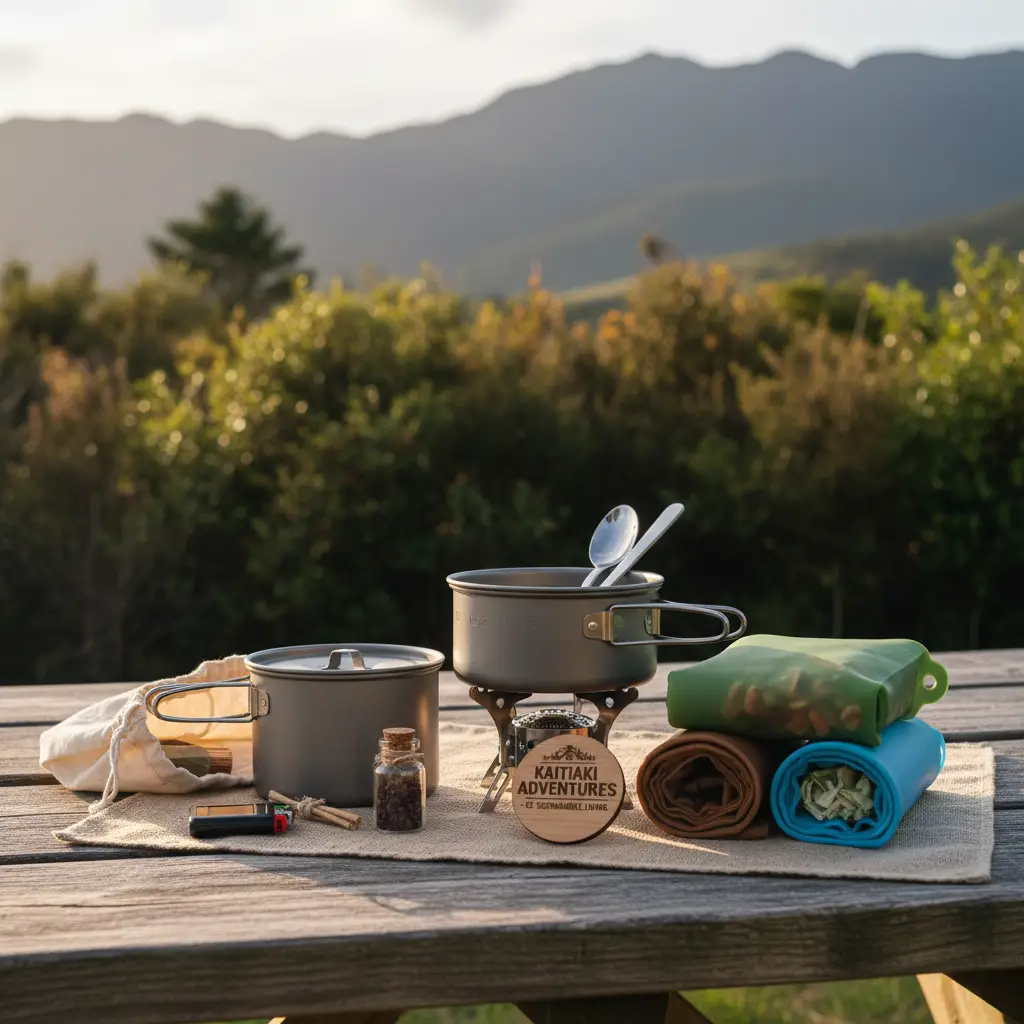
- Upgrade Your Gear: Invest in durable, long-lasting gear. Consider titanium pots, reusable sporks, and silicone containers that reduce the need for disposables.
- Share Your Knowledge: Inspire others by sharing your experiences and tips for eco-friendly wilderness cooking.
Your Eco-Friendly Wilderness Cooking Action Checklist
Before your next New Zealand wilderness adventure, review this checklist to ensure you’re prepared for sustainable cooking:
- ✔ Planned meals meticulously to avoid excess.
- ✔ Repackaged all food into reusable, lightweight containers.
- ✔ Chosen local and ethically sourced ingredients where possible.
- ✔ Packed a designated, sealable rubbish bag for all waste.
- ✔ Brought minimal, biodegradable cleaning supplies.
- ✔ Considered fuel-efficient cooking methods.
- ✔ Committed to packing out all waste, including food scraps.
- ✔ Educated companions on Leave No Trace principles.
Conclusion
Embracing eco-friendly wilderness cooking and waste-reducing techniques is more than just a trend; it’s a fundamental responsibility for anyone enjoying the outdoors. By integrating these practices into your adventures, you not only protect the natural beauty of New Zealand but also foster a deeper connection with the environment. Every conscious choice, from meal planning to waste disposal, contributes to preserving our wild spaces for future generations to explore and cherish. Happy, sustainable adventuring!
Frequently Asked Questions About Eco-Friendly Wilderness Cooking
Q: Why is it important to reduce waste when cooking in the wilderness?
A: Reducing waste in the wilderness is crucial to protect delicate ecosystems from pollution, minimise human impact on wildlife (who can be attracted to or harmed by food waste), and preserve the natural beauty and pristine condition of our outdoor spaces for everyone, now and in the future.
Q: Can I bury food scraps since they are biodegradable?
A: No. While food scraps are technically biodegradable, they decompose very slowly in many wilderness environments, especially in cooler climates like parts of New Zealand. Buried food can attract animals, disrupt their natural diets, and take years to fully disappear, leaving an unsightly mess for others. The best practice is always to pack out all food scraps.
Q: What kind of soap should I use for washing dishes in the backcountry?
A: Use a small amount of concentrated, unscented, biodegradable soap. Even with biodegradable soap, it’s essential to use it at least 60 metres (200 feet) away from any water source and scatter the rinse water widely to allow soil to filter it before it reaches streams or lakes. Many experienced hikers opt for a scrub with sand and hot water first, using soap only when necessary.
Q: How do I handle liquid waste from cooking (e.g., pasta water, dishwater)?
A: Strain any food particles out of liquid waste and pack them out. For the remaining liquid, carry it at least 60 metres (200 feet) away from water sources, campsites, and trails. Disperse it widely over a large area, rather than pouring it in one spot, to allow it to be absorbed and filtered by the soil, minimising its impact.
References & Further Reading
- Department of Conservation (DOC) New Zealand. “Care for the Outdoors: Leave No Trace.” doc.govt.nz. (Plausible resource)
- Leave No Trace Center for Outdoor Ethics. “Leave No Trace Seven Principles.” lnt.org. (Plausible resource)
- Backpacker Magazine. “The Complete Guide to Dehydrating Food for Backpacking.” (Plausible resource)
- Zero Waste Chef. “Strategies for a Zero-Waste Kitchen.” zerowastechef.com. (Plausible resource)