Eco-Friendly Waste Management & Recycling in Green Hospitals
Hospitals are pillars of community health, but their operations often come with a significant environmental footprint, particularly concerning waste. The sheer volume and diverse nature of medical waste present unique challenges, making effective waste management a critical component of any sustainable healthcare strategy. Transitioning towards a green hospital model isn’t just an aspirational goal; it’s an urgent necessity for both planetary health and operational efficiency.
This comprehensive guide explores the principles, strategies, and immense benefits of implementing eco-friendly waste management and recycling practices within healthcare settings, providing actionable insights for hospitals looking to lead the charge in sustainability.
Table of Contents
- The Imperative for Green Hospitals: More Than Just Healing
- Key Pillars of Eco-Friendly Waste Management in Hospitals
- Implementing Change: An Action Checklist for Hospitals
- The New Zealand Context: Leading the Way in Sustainable Healthcare
- Benefits Beyond the Bottom Line: A Holistic View
- Conclusion: Healing Our Planet, One Hospital at a Time
- Frequently Asked Questions (FAQ)
- References & Sources
The Imperative for Green Hospitals: More Than Just Healing
Healthcare facilities worldwide generate staggering amounts of waste daily, ranging from general refuse to highly infectious and hazardous materials. Without proper management, this waste can lead to serious environmental contamination, public health risks, and significant financial burdens. Adopting eco-friendly waste management & recycling in green hospitals is not merely an environmental statement; it’s a strategic imperative that yields multiple benefits:
- Environmental Stewardship: Reducing landfill contributions, conserving resources, and mitigating pollution.
- Public Health Protection: Minimising exposure to harmful chemicals and infectious agents for healthcare workers and the community.
- Economic Efficiency: Lowering disposal costs, generating revenue from recycling, and improving resource utilisation.
- Enhanced Reputation: Demonstrating corporate social responsibility and attracting environmentally conscious patients and staff.
- Regulatory Compliance: Meeting increasingly stringent environmental regulations and standards.
Key Pillars of Eco-Friendly Waste Management in Hospitals
Effective waste management is multifaceted, requiring a holistic approach that integrates reduction, reuse, recycling, and responsible disposal.
Waste Segregation at Source
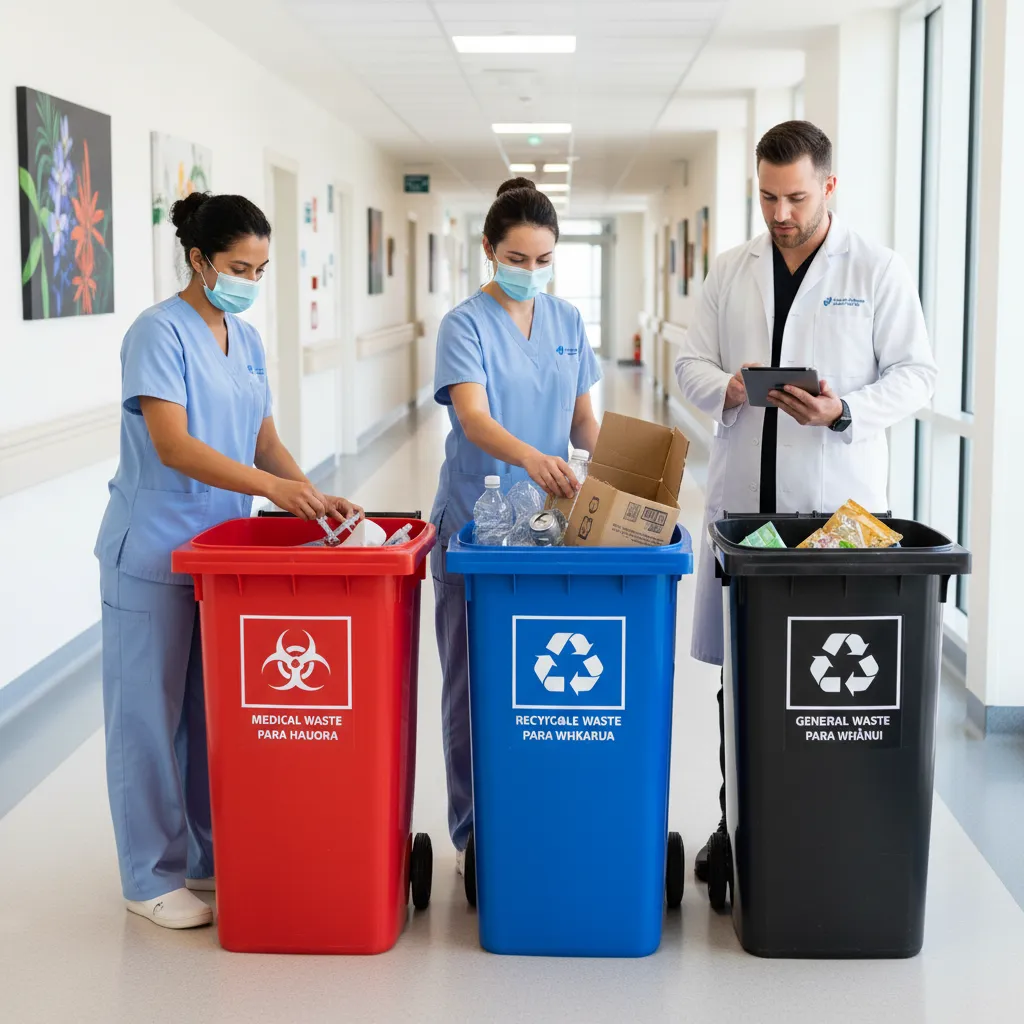
This is the cornerstone of any successful eco-friendly waste management & recycling program. By separating waste types (general, recyclable, hazardous, clinical, pharmaceutical) at the point of generation, hospitals prevent contamination, simplify processing, and reduce overall disposal costs for regulated waste.
“Proper waste segregation can reduce the volume of hazardous medical waste by up to 70-80%, drastically cutting disposal costs and environmental impact.”
Reduction and Reuse Strategies
The best waste is the waste that’s never created. Hospitals can significantly decrease their waste footprint by:
- Opting for reusable medical instruments, gowns, and linens where clinically appropriate.
- Minimising packaging from suppliers and choosing products with recycled content.
- Implementing digital record-keeping to reduce paper waste.
- Donating surplus or expired (but safe) medical supplies to charities or developing nations.
Advanced Recycling Programs
Beyond general office recycling, green hospitals can implement advanced recycling streams for:
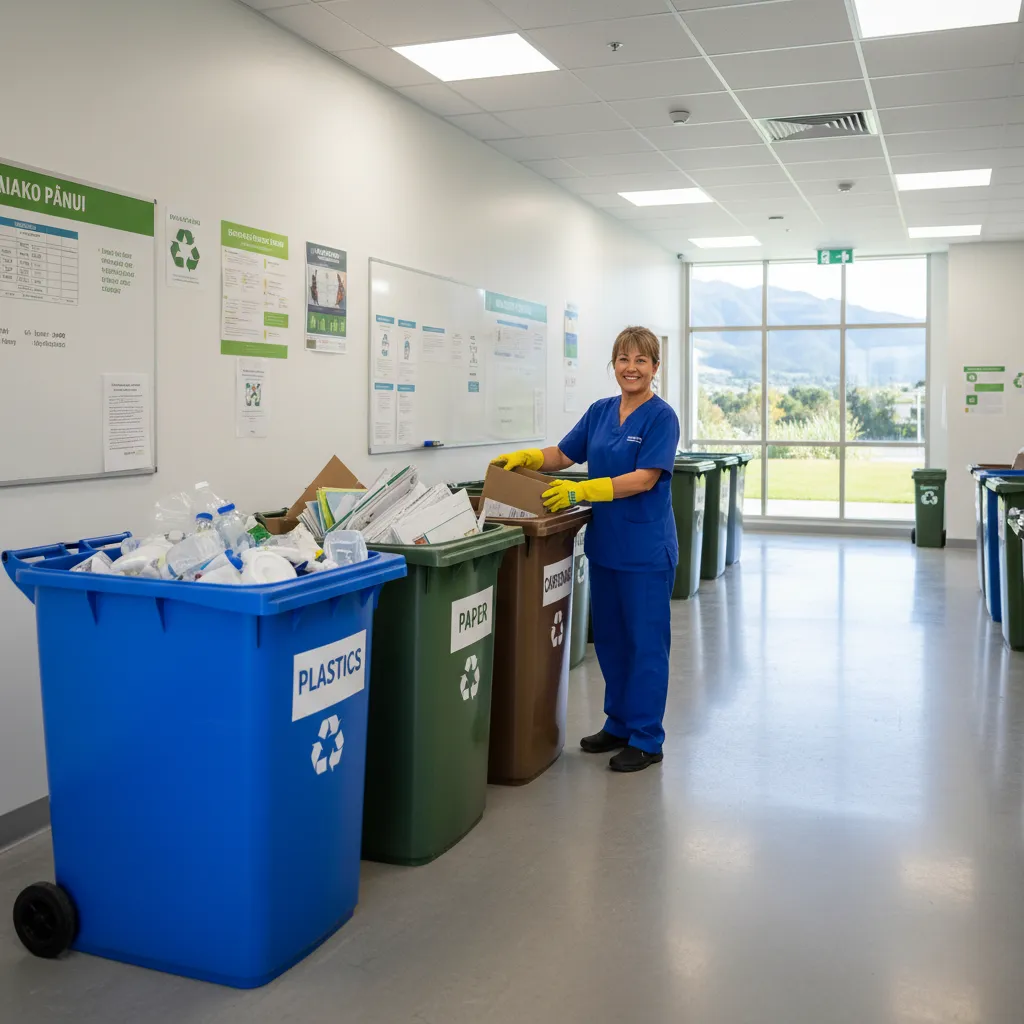
- Plastics: Sterilised rigid plastics (e.g., sterile wrap, certain instrument trays) can be recycled.
- Metals: Surgical instruments, single-use devices, and even some equipment components.
- Electronics (E-waste): Computers, monitors, diagnostic equipment, and batteries contain valuable materials and hazardous substances that require specialised recycling.
- Organic Waste: Composting food waste from cafeterias and patient meals.
Safe and Sustainable Disposal of Hazardous Waste
For waste that cannot be reduced or recycled, safe and sustainable disposal is paramount. This includes clinical waste, sharps, pathological waste, and pharmaceutical waste. Modern approaches prioritise non-incineration technologies like autoclaving, microwave treatment, and chemical disinfection to render waste non-infectious before landfilling or further processing, significantly reducing air pollution.
Energy Efficiency in Waste Processing
The processes involved in waste management, from collection to treatment, consume energy. Green hospitals integrate energy-efficient equipment (e.g., compactors, sterilizers) and optimise logistics to minimise fuel consumption for waste transportation. Exploring waste-to-energy solutions for non-recyclable clinical waste can also be a viable option in some contexts, turning waste into a resource.
Implementing Change: An Action Checklist for Hospitals
Transitioning to eco-friendly waste management & recycling in green hospitals requires a systematic approach. Here’s an actionable checklist to guide your hospital’s journey:
-
Form a Green Team or Sustainability Committee
Involve representatives from all departments (nursing, facilities, procurement, administration) to foster organisation-wide buy-in and expertise.
-
Conduct a Comprehensive Waste Audit
Understand what types of waste are generated, in what quantities, and from where. This data is crucial for setting baselines and targets.
-
Develop a Clear Waste Management Policy & Procedures
Establish clear guidelines for segregation, collection, storage, and disposal of all waste streams, aligning with national and local regulations.
-
Invest in Appropriate Infrastructure
Provide adequate, clearly labelled bins for different waste streams at all points of generation. Consider compactors, balers, and on-site treatment technologies.
-
Implement Regular Staff Training & Awareness Programs
Continuous education is vital to ensure compliance and cultivate a culture of sustainability among all employees.
-
Engage with Sustainable Suppliers & Waste Haulers
Partner with vendors who share your commitment to sustainability and can provide eco-friendly products and responsible disposal services.
-
Monitor, Evaluate, and Report Progress
Track waste generation rates, recycling volumes, and disposal costs. Share successes and areas for improvement to maintain momentum and transparency.

The New Zealand Context: Leading the Way in Sustainable Healthcare
New Zealand, with its strong emphasis on environmental protection and a clean, green image, is uniquely positioned to champion sustainable healthcare. Kiwi hospitals are increasingly adopting practices that align with national sustainability goals, from reducing plastic use to exploring innovative waste-to-resource solutions.
The move towards broader consumer topics in sustainable living resonates deeply within the healthcare sector, where the health of the environment directly impacts community wellbeing. Implementing robust eco-friendly waste management & recycling in green hospitals contributes directly to New Zealand’s commitment to a circular economy and a healthier future for all.
Benefits Beyond the Bottom Line: A Holistic View
While financial savings are a significant driver, the advantages of green waste management extend far beyond economics:
- Improved Patient Outcomes: A cleaner, healthier environment within the hospital reduces infection risks and promotes healing.
- Enhanced Staff Morale: Employees take pride in working for an organisation committed to sustainability, leading to better recruitment and retention.
- Community Health: Less pollution from healthcare waste means healthier air and water for the surrounding communities.
- Innovation and Leadership: Green hospitals often become pioneers, inspiring other sectors and facilities to adopt similar sustainable practices.
Studies indicate that hospitals implementing comprehensive waste reduction and recycling programs can achieve a 25-40% reduction in overall waste volume and realise significant annual savings in disposal costs, often exceeding hundreds of thousands of dollars.

Conclusion: Healing Our Planet, One Hospital at a Time
The journey towards becoming a truly green hospital is continuous, but the benefits are undeniable. By embracing eco-friendly waste management & recycling, healthcare facilities not only reduce their environmental footprint but also enhance operational efficiency, safeguard public health, and solidify their role as responsible community leaders. It’s time for hospitals to heal not just patients, but also the planet we all share.
Frequently Asked Questions (FAQ)
What defines a ‘green hospital’ in terms of waste?
A green hospital actively implements strategies to minimise its environmental impact across all operations, with a strong focus on waste. This includes reducing waste generation, maximising recycling and reuse, safely disposing of hazardous materials, and opting for sustainable procurement to reduce waste upstream.
Why is waste segregation so crucial for eco-friendly waste management in hospitals?
Waste segregation at the source is critical because it prevents recyclable and general waste from being contaminated by hazardous or infectious materials. This significantly reduces the volume of waste requiring expensive, specialised treatment and increases the feasibility and effectiveness of recycling programs.
Can all medical waste be recycled?
No, not all medical waste can be recycled, especially highly infectious or pathological waste. However, a significant portion of healthcare waste, including certain plastics (like sterile wraps, IV bags), cardboard, paper, glass, metals, and e-waste, can be safely recycled if properly segregated and decontaminated.
What are the primary challenges hospitals face in implementing eco-friendly waste practices?
Key challenges include initial investment costs for new infrastructure or technologies, staff training and buy-in, ensuring regulatory compliance, finding reliable recycling partners for diverse waste streams, and managing the vast volume and complexity of healthcare waste.
How do eco-friendly waste management practices benefit patient health directly?
By reducing exposure to harmful chemicals and infectious agents through proper disposal, minimising air and water pollution from waste treatment, and fostering a cleaner overall hospital environment, these practices directly contribute to safer conditions and better health outcomes for patients.
References & Sources
- World Health Organization (WHO). (2017). Safe management of wastes from health-care activities.
- Healthcare Without Harm. (Various publications). Transforming Healthcare: Promoting Public Health and Environmental Justice.
- Practice Greenhealth. (Ongoing reports). Environmental Excellence Awards & Best Practices.
- Ministry for the Environment (New Zealand). (Ongoing policies). Waste Management and Minimisation.
- Journal of Cleaner Production. (Selected articles on sustainable healthcare waste management).