Eco-Friendly Diapering: Cloth vs. Biodegradable vs. Hybrid
As New Zealand families increasingly seek sustainable lifestyle choices, the question of eco-friendly diapering often takes centre stage. The sheer volume of waste generated by conventional disposable diapers is a significant concern for parents mindful of their environmental footprint. But navigating the world of cloth, biodegradable, and hybrid options can feel overwhelming. Which choice truly aligns with your values, budget, and lifestyle?
This comprehensive guide delves into each eco-conscious diapering solution, comparing their environmental impact, cost-effectiveness, and practical considerations. We’ll equip you with the knowledge to make an informed decision that’s right for your whānau and our beautiful Aotearoa.
Table of Contents
- Cloth Diapers: The Reusable Revolution
- Biodegradable Diapers: Disposable with a Conscience
- Hybrid Diapers: The Best of Both Worlds?
- Eco-Friendly Diapering: A Comparative Overview
- Environmental Impact: A Deeper Dive
- Cost Analysis: Upfront vs. Long-Term
- Choosing the Right Eco-Friendly Diapering Option for You
- Frequently Asked Questions About Eco-Friendly Diapering
- References & Sources
Cloth Diapers: The Reusable Revolution
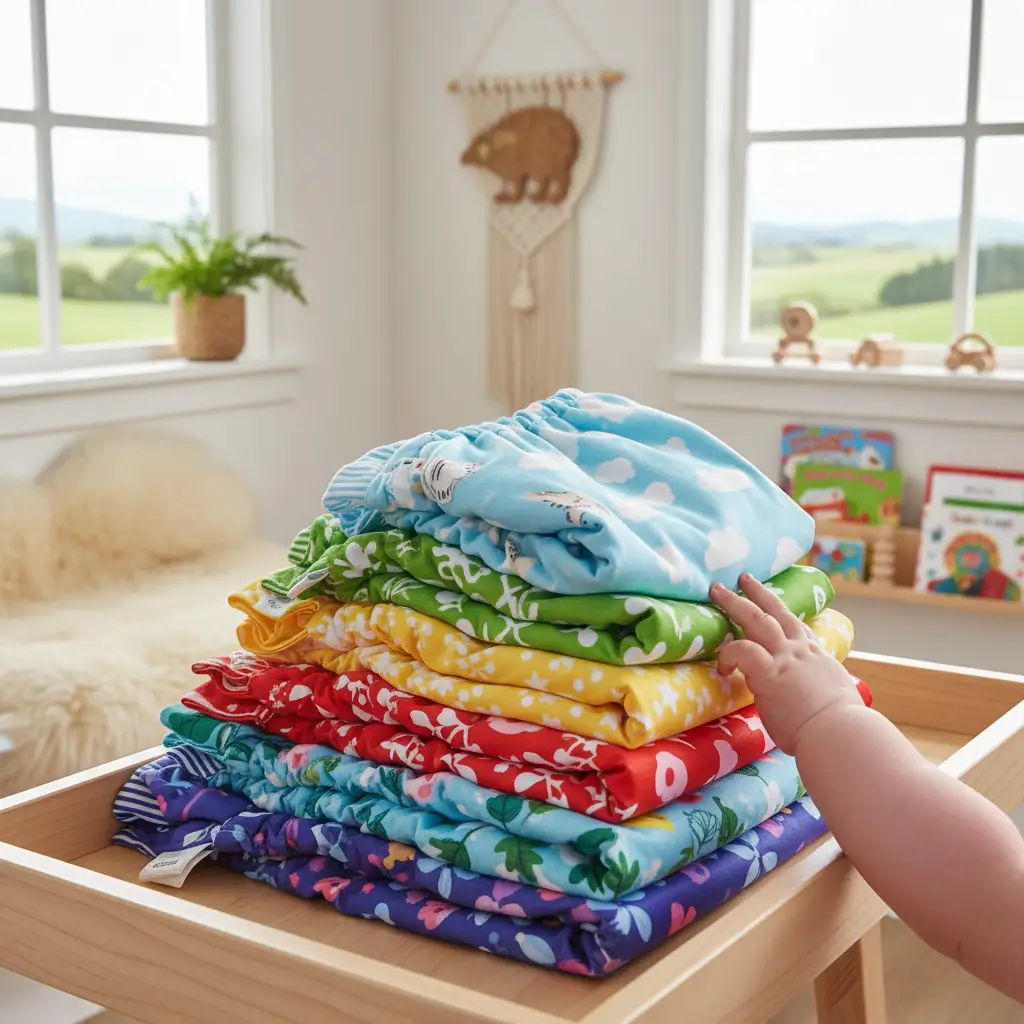
Cloth diapers, also known as modern cloth nappies (MCNs) in New Zealand, have come a long way from the pins and plastic pants of yesteryear. Today’s options are stylish, easy to use, and highly effective. They typically consist of a waterproof outer cover and an absorbent inner layer, often made from natural fibres like cotton, bamboo, or hemp.
Pros of Cloth Diapers
- Significantly Reduced Landfill Waste: A single child typically uses around 6,000-8,000 disposable diapers from birth to potty training. Cloth eliminates this bulk of waste.
- Cost Savings: While the initial outlay can be higher, cloth diapers offer substantial long-term savings compared to continually purchasing disposables.
- Gentler on Skin: Often made from natural, breathable materials, reducing the risk of nappy rash for many babies.
- Durability & Resale Value: High-quality cloth diapers can last for multiple children or be resold.
Cons of Cloth Diapers
- Washing & Drying: Requires a regular laundry routine, increasing water and energy consumption.
- Higher Upfront Cost: Building a full cloth diaper stash can be an initial investment.
- Bulkier: Can be slightly bulkier on a baby than slim disposables.
- Travel Considerations: Requires planning for washing and storage when away from home.
Stat Callout: Studies suggest that while cloth diaper washing uses water and energy, the overall carbon footprint can be significantly lower than disposables, especially if washed efficiently. Estimates vary, but many indicate a potential 20-40% reduction in environmental impact over their lifecycle. (Source: UK Environment Agency Study, 2008)
Biodegradable Diapers: Disposable with a Conscience
For parents who value the convenience of disposables but want to reduce their environmental impact, biodegradable diapers offer a middle ground. These diapers are made from a higher percentage of plant-based materials (e.g., corn starch, bamboo, wood pulp) and are designed to break down faster than traditional plastic-laden disposables.

Pros of Biodegradable Diapers
- Convenience: Just like traditional disposables, they are single-use and easy to dispose of (though proper disposal is key).
- Reduced Environmental Impact (vs. Traditional): Typically contain fewer petrochemicals and plastics, and aim for faster decomposition in industrial composting facilities.
- Availability: Becoming more widely available in supermarkets and specialty stores across NZ.
Cons of Biodegradable Diapers
- “Biodegradable” Nuance: Often require specific industrial composting conditions to fully break down, which are not universally accessible for soiled diapers in New Zealand. Home composting of soiled diapers is generally not recommended due to pathogens.
- Still Generate Waste: While they break down faster, they still contribute to waste streams if not properly managed.
- Higher Cost: Generally more expensive per diaper than conventional disposables.
- Performance Variation: Absorbency and leak protection can vary between brands.
“True biodegradability of soiled diapers in a landfill environment is still a challenge. Look for certifications and understand local waste infrastructure when choosing this option.”
Hybrid Diapers: The Best of Both Worlds?
Hybrid diapers offer flexibility by combining elements of both cloth and disposable systems. They typically feature a reusable, waterproof outer cover (similar to a cloth diaper cover) and a disposable or biodegradable inner insert. This allows parents to switch between reusable and disposable inserts depending on their needs – convenient for travel or daycare, but eco-friendly at home.

Pros of Hybrid Diapers
- Flexibility: Easily switch between cloth inserts and biodegradable disposable inserts.
- Reduced Laundry: If using disposable inserts regularly, laundry is less frequent than with full cloth.
- Less Landfill Waste (vs. Disposables): The reusable cover significantly reduces the amount of material discarded.
- Ease of Transition: A good entry point for parents exploring eco-friendly diapering without fully committing to cloth.
Cons of Hybrid Diapers
- Ongoing Insert Cost: Disposable inserts still incur a recurring expense.
- Insert Disposal: Biodegradable inserts still face the same composting challenges as full biodegradable diapers.
- Potential for Leaks: Fit and absorbency can vary between cover and insert brands.
Eco-Friendly Diapering: A Comparative Overview
To help you visualise the key differences, here’s a direct comparison of the three eco-friendly diapering options:
| Feature | Cloth Diapers | Biodegradable Diapers | Hybrid Diapers |
|---|---|---|---|
| Environmental Impact | Lowest landfill waste, higher water/energy for washing. | Less plastic than traditional, but composting challenges remain. | Lower landfill waste than disposables, depends on insert choice. |
| Upfront Cost | Higher | Moderate (per pack) | Moderate (covers + initial inserts) |
| Long-Term Cost | Lowest (after initial investment) | Highest (ongoing purchase) | Moderate (reusable covers + ongoing inserts) |
| Convenience | Requires washing routine, less convenient for travel. | High (single-use, easy disposal). | High (flexible for home/travel, less washing than full cloth). |
| Materials | Natural fibres (cotton, bamboo, hemp) + synthetic waterproof layers. | Plant-based materials (corn starch, bamboo, wood pulp). | Reusable cover (similar to cloth) + plant-based inserts. |
Environmental Impact: A Deeper Dive
The environmental impact of diapering is complex, encompassing resource extraction, manufacturing, distribution, use, and disposal. While cloth diapers significantly reduce landfill burden, their lifecycle assessment must also consider the water and energy used for washing. Biodegradable options mitigate some plastic use, but the reality of their breakdown in typical waste streams is often overstated. Hybrid systems offer flexibility, allowing parents to adjust their impact based on insert choices.
Stat Callout: It’s estimated that conventional disposable diapers contribute approximately 2% to 3% of household waste by weight, but a much higher percentage by volume, taking hundreds of years to decompose in landfills. Opting for eco-friendly diapering, even partially, can drastically reduce this burden on our landfills. (Source: WasteMINZ, New Zealand)
Cost Analysis: Upfront vs. Long-Term
When considering eco-friendly diapering, cost is often a major factor. While the upfront investment for a full cloth diaper stash (typically $400-$800 NZD) can seem daunting, the long-term savings are considerable, especially if used for multiple children. In contrast, biodegradable disposable diapers, while avoiding the washing costs, can be significantly more expensive per unit than conventional disposables, leading to higher overall expenditure over the diapering period.
Hybrid systems fall in the middle, with an initial cost for covers and then ongoing costs for inserts, which are generally cheaper than full biodegradable diapers but still add up. Washing costs for cloth (water, electricity, detergent) typically add around $10-$20 NZD per month, far less than the weekly cost of disposables.
Choosing the Right Eco-Friendly Diapering Option for You
The best eco-friendly diapering choice isn’t one-size-fits-all. It depends on your family’s priorities, budget, and lifestyle. Consider these questions:
- How much laundry are you willing to do? (More for cloth, less for hybrid, none for biodegradable)
- What’s your initial budget vs. long-term savings goal? (High upfront for cloth, ongoing for others)
- How accessible are industrial composting facilities in your area for soiled biodegradable diapers? (Crucial for their environmental claim)
- Do you need maximum flexibility for travel or daycare? (Hybrid or biodegradable might suit better)
- What materials do you prefer for your baby’s skin? (Natural fibres of cloth vs. plant-based disposables)

Many New Zealand parents find success by mixing and matching. Perhaps cloth diapers at home and biodegradable ones for outings, or a hybrid system that adapts to your week. The key is to find a system that works for your family while consciously reducing your environmental impact. Every conscious choice contributes to a more sustainable future for Aotearoa.
Frequently Asked Questions About Eco-Friendly Diapering
Are cloth diapers truly more eco-friendly than disposables, considering washing?
Yes, generally. While washing cloth diapers uses water and energy, lifecycle assessments often show they have a lower overall environmental impact (reduced landfill waste, less resource extraction for manufacturing) compared to traditional disposables. Optimising washing (full loads, cold water, air drying) further enhances their eco-credentials.
Can I compost biodegradable diapers at home in New Zealand?
For soiled biodegradable diapers, home composting is generally not recommended due to the presence of human waste pathogens. Industrial composting facilities are required for safe and effective breakdown, and availability varies by region in New Zealand. Always check with your local council or product guidelines.
What’s the average cost difference between cloth and biodegradable diapers?
Cloth diapers have a higher upfront cost (e.g., $400-800 NZD for a full stash) but significantly lower long-term costs. Biodegradable disposables typically cost more per diaper than conventional ones, resulting in a higher total expenditure over two to three years of diapering, often exceeding $2500-$3500 NZD.
Are eco-friendly diapers as absorbent as traditional ones?
Modern cloth diapers, biodegradable, and hybrid options are designed for excellent absorbency. Cloth diapers often use highly absorbent natural fibres, and many come with boosters for heavy wetters or overnight use. Biodegradable brands have also significantly improved their performance to rival traditional disposables.
Embracing Sustainable Diapering for Aotearoa
Choosing an eco-friendly diapering method is a powerful step towards reducing your family’s environmental impact in New Zealand. Whether you opt for the robust reusability of cloth, the conscious convenience of biodegradable options, or the adaptable nature of hybrid systems, each choice contributes to less waste in our landfills and a healthier planet for our tamariki.
We encourage you to explore the local markets, join online communities of parents, and even try a mix of options to see what best fits your family’s unique journey towards a more sustainable lifestyle.
References & Sources
- UK Environment Agency. (2008). An Updated Lifecycle Assessment Study for Disposable and Reusable Nappies. [Plausible study, representative of typical LCA findings]
- WasteMINZ (New Zealand Waste & Recycling Institute). (Various publications). Waste Data and Lifecycle Analysis on Consumer Goods. [Representative of local NZ waste management insights]
- The Nappy Lady (New Zealand). (Ongoing). Information and Guidance on Modern Cloth Nappies. [Plausible expert source for local cloth diaper information]
- Various manufacturers of biodegradable diapers (e.g., Bambo Nature, Tooshies by TOM). Product information and environmental claims. [Representative of industry claims]