Composting & Food Waste Solutions in New Zealand
Are you ready to transform your kitchen scraps into garden gold and significantly reduce your environmental footprint? In New Zealand, embracing composting isn’t just a trend; it’s a powerful step towards sustainable living. This comprehensive guide will equip you with everything you need to know about composting NZ, from beginner basics to advanced techniques, and practical strategies for minimising food waste.
Let’s dive into making a tangible difference for our beautiful Aotearoa!
1. Beginner’s Guide to Composting in NZ
Starting your composting journey in New Zealand is easier than you think. It’s an incredibly rewarding way to give back to your garden and reduce your household waste sent to landfill. Let’s break down the essentials for successful composting NZ style.
1.1 What is Composting and Why it Matters
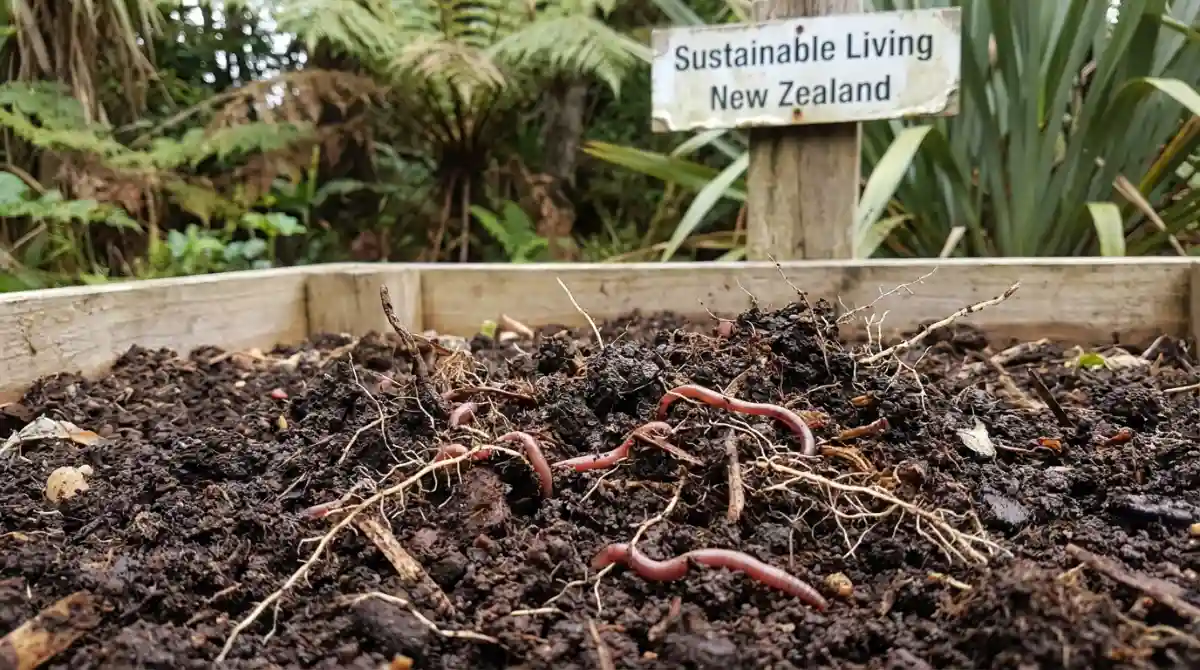
Composting is nature’s way of recycling. It’s the process of decomposing organic matter (like food scraps and garden waste) into a nutrient-rich soil amendment called compost. This “black gold” improves soil structure, retains moisture, and provides essential nutrients for healthy plant growth, all without chemical fertilisers.
“Every kilogram of food waste diverted from landfill saves approximately 1.9 kilograms of CO2 equivalent emissions.”
For New Zealand, composting is crucial. Landfills are a significant source of methane, a potent greenhouse gas. By diverting food and green waste, we directly combat climate change, enhance our unique biodiversity, and foster a more sustainable future for Aotearoa.
1.2 Getting Started with a Simple Compost Pile (Step-by-Step)
A basic compost pile is an excellent starting point for anyone new to composting in NZ. Follow these simple steps:
-
Choose Your Spot
Select a shaded, well-drained area in your garden. It should be easily accessible but not too close to your house, as it will attract insects (the good kind!). A size of about 1 cubic meter is a good starting point for a freestanding pile.
-
Gather Your Materials (Greens & Browns)
- Greens (Nitrogen-rich): Food scraps (fruit and vegetable peels, coffee grounds, tea bags), fresh grass clippings, green garden waste. These add moisture and nitrogen.
- Browns (Carbon-rich): Dry leaves, shredded paper/cardboard, wood chips, straw. These add bulk and carbon.
Aim for a balance, roughly 2-3 parts brown to 1 part green by volume.
-
Layer It Up
Start with a layer of coarse brown material at the bottom for drainage and aeration. Then alternate thin layers of greens and browns, like making a lasagna. Water each layer lightly as you go – it should feel like a wrung-out sponge.
-
Maintain Your Pile
Moisture: Keep it consistently damp. If it’s too dry, decomposition slows. Too wet, it can become anaerobic and smelly.
Aeration: Turn your pile regularly (weekly or bi-weekly) with a fork to introduce oxygen, which speeds up decomposition and prevents unpleasant odours.
What NOT to Compost: Meat, dairy, oily foods, diseased plants, pet waste (unless specifically designed for it), chemically treated wood. These can attract pests, create smells, or harm your garden.
-
Harvest Your Compost
Within a few months to a year, you’ll have dark, earthy-smelling compost. The finished product should be crumbly and indistinguishable from the original materials. Use it to enrich garden beds, pot plants, or as a top dressing for your lawn.
Did you know? Households in NZ send over 150,000 tonnes of food waste to landfill each year, enough to feed everyone in Dunedin for two years!
2. Bokashi Composting vs. Worm Farms
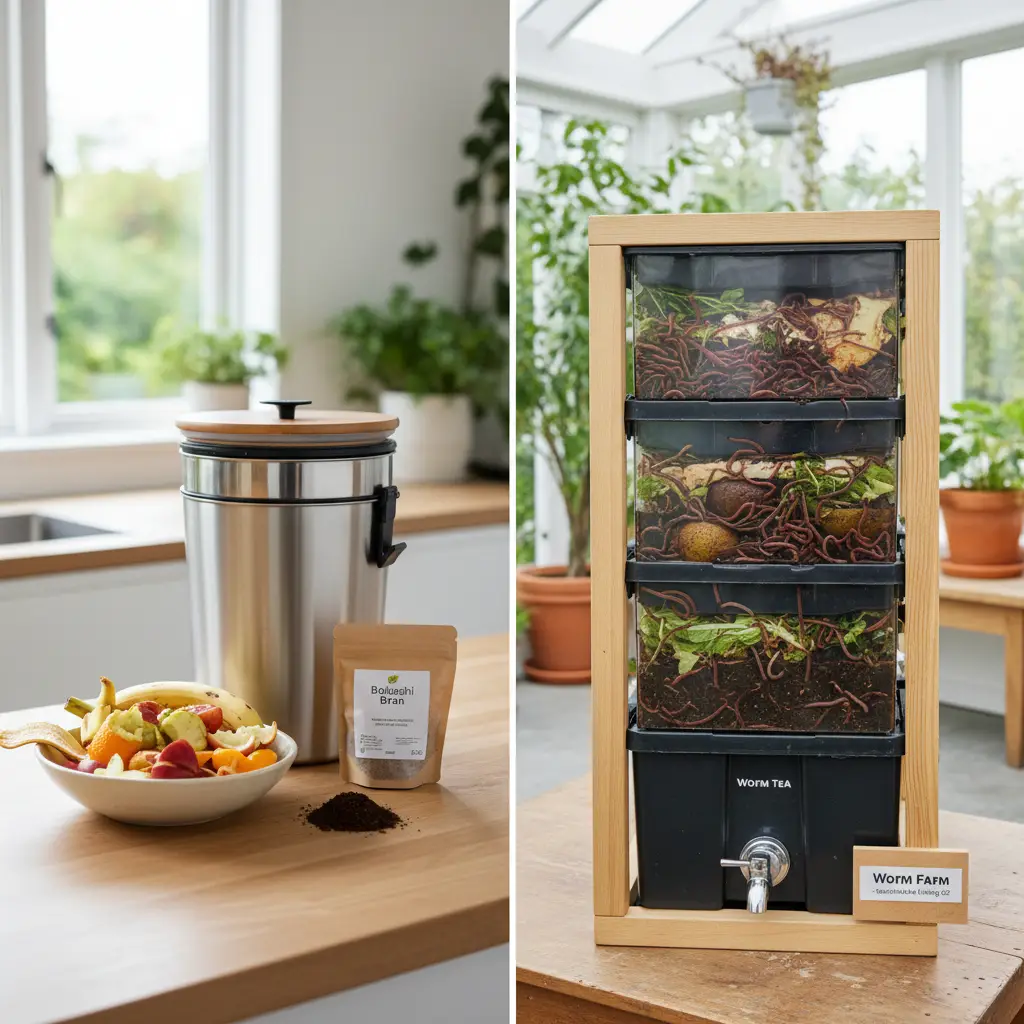
Beyond traditional hot composting, two popular alternative methods for food waste management in New Zealand are Bokashi composting and worm farming. Each has unique benefits, making them suitable for different living situations and waste types.
| Feature | Bokashi Composting | Worm Farming (Vermicomposting) | Traditional Composting (Open Pile/Bin) |
|---|---|---|---|
| Mechanism | Fermentation using anaerobic microbes. | Decomposition by composting worms (e.g., Tiger Worms). | Aerobic decomposition by bacteria, fungi, insects. |
| What it takes | All food scraps, including meat, dairy, cooked foods. | Vegetable/fruit scraps, coffee grounds, tea bags, cardboard. Avoid meat, dairy, citrus, onions in large amounts. | Veg/fruit scraps, garden waste, leaves. Avoid meat, dairy, oils. |
| Space Required | Small, indoors (kitchen counter) or outdoors. | Small to medium, indoors (garage) or outdoors (shade). | Medium to large, outdoors only. |
| Output | Fermented “pre-compost” and nutrient-rich “Bokashi tea”. Pre-compost needs burying or adding to a soil factory. | Worm castings (vermicompost) and “worm wee” (liquid fertiliser). | Finished compost, ready for garden use. |
| Time to Produce | 2 weeks (fermentation) + 2-4 weeks (burying). | 2-6 months for usable castings, ongoing. | 3 months to 1 year, depending on management. |
| Odour & Pests | Minimal odour (sour/pickled smell). Sealed unit prevents pests. | Minimal earthy smell if managed well. Can attract fruit flies if overfed. | Can be smelly if anaerobic. Can attract rodents if meat/dairy added. |
Choosing the right method for composting NZ food waste depends on your space, the types of scraps you produce, and your desired effort level. Many sustainable households combine methods for maximum efficiency.
3. Reducing Food Waste: Tips and Strategies
Composting is fantastic, but the first step in food waste solutions is always to prevent waste from happening in the first place. This saves resources, money, and reduces your environmental impact. Here are actionable strategies for your New Zealand home:
- Plan Your Meals: Before heading to the supermarket, check your fridge and pantry. Plan meals for the week based on what you already have and what you need to buy.
- Smart Shopping: Stick to your shopping list! Avoid impulse buys that often end up forgotten. Buy loose produce to avoid pre-packaged excess.
- Proper Storage: Understand how to store different foods. For example, store apples and bananas separately as they release ethylene gas that can ripen other produce faster. Use airtight containers for leftovers.
- Understand “Best Before” vs. “Use By”: “Use By” is about safety; “Best Before” is about quality. Foods are often perfectly safe to eat after their “Best Before” date. Trust your senses!
- Portion Control: Cook only what you need. If you’re unsure, cook less – you can always have seconds.
- Freeze Excess: Batch cook and freeze portions for busy days. Freeze ripe fruit for smoothies, vegetable scraps for broth, or bread before it goes stale.
- Repurpose & Revitalise: Get creative with leftovers. Stale bread can become croutons or breadcrumbs. Wilting vegetables can be rescued in soups or stir-fries.
- First In, First Out (FIFO): Rotate your food in the fridge and pantry, bringing older items to the front so they’re used first.
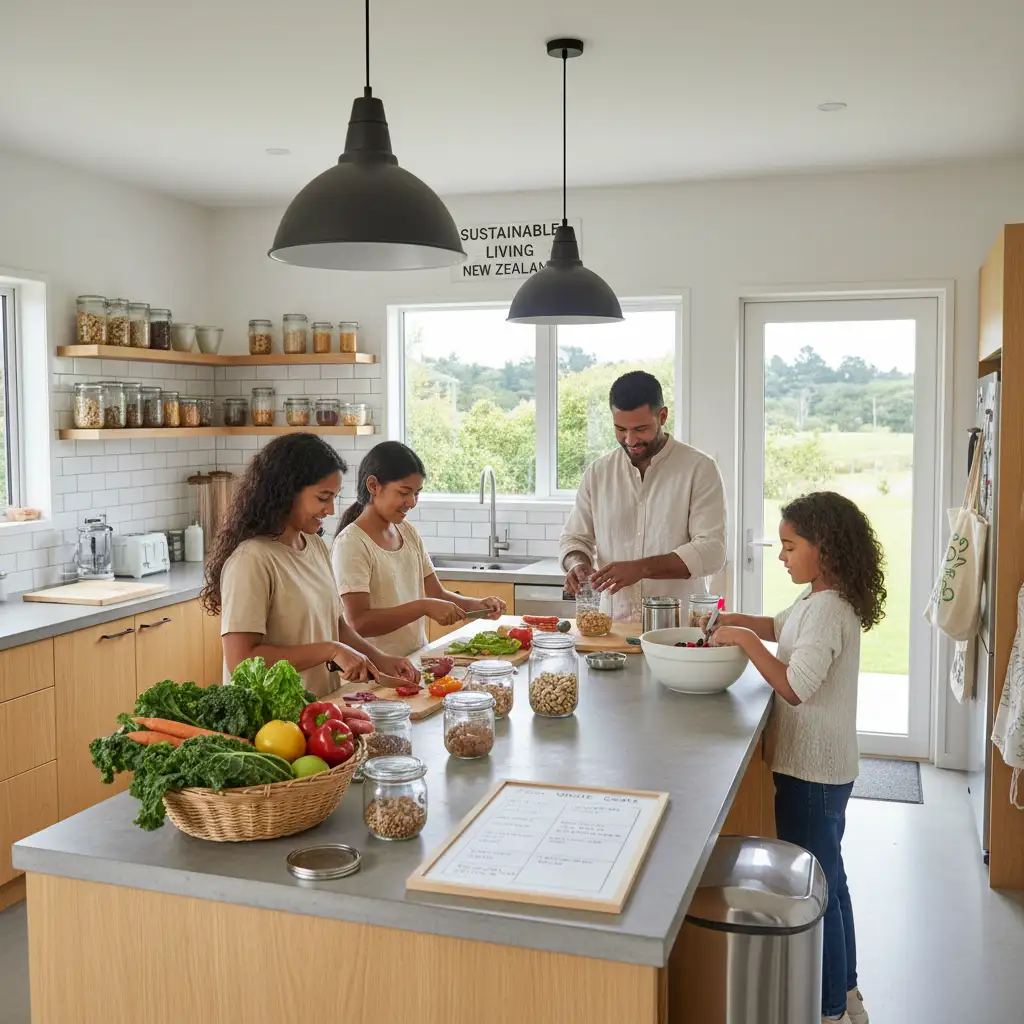
Fact: Reducing household food waste by just 10% could save the average NZ family hundreds of dollars annually!
4. Community Composting Initiatives
Not everyone has the space or capacity for home composting. Thankfully, many communities across New Zealand are stepping up with fantastic initiatives to make composting accessible to all. These programmes strengthen local connections and create shared ecological benefits.
- Council-Led Programs: Many local councils in NZ offer subsidised compost bins, worm farms, or even kerbside food scrap collection services. Check with your local council’s waste management section for what’s available in your area.
- Community Gardens: Often, local community gardens will have a composting system that members and sometimes even the wider community can contribute to. This is a great way to learn from experienced composters too.
- Compost Hubs & Drop-offs: Some towns and cities feature dedicated compost hubs where you can drop off your food scraps. Organisations like ShareWaste NZ also connect individuals with neighbours who have active composting systems and are willing to accept scraps.
- Local Initiatives: Look out for local groups, schools, or businesses that might run their own composting projects. These are often advertised through community noticeboards or social media groups.
Getting involved in a community composting initiative is a brilliant way to contribute to a greener New Zealand, even if you can’t compost at home. It fosters a sense of collective responsibility for our environment.
5. Recipes for Using Leftovers
Turning potential waste into delicious meals is a hallmark of truly sustainable living. Instead of traditional “recipes,” think of these as principles and ideas to creatively transform your leftovers and scraps:
- Power-Up Smoothies: Overripe bananas, wilting spinach, leftover berries – all perfect for a nutrient-packed smoothie. Freeze them when they’re at their peak for later use.
- Versatile Frittatas & Omelettes: Any leftover cooked vegetables, a bit of cheese, maybe some diced ham or bacon, combine perfectly with eggs for a quick and satisfying meal.
- Soups & Stocks: Vegetable trimmings (carrot peels, onion skins, celery ends, herb stems) are gold for making flavourful vegetable stock. Roast chicken bones for a rich bone broth. Then use these stocks as a base for hearty soups with any leftover cooked meat and veggies.
- Creative Stir-fries: Leftover rice, small amounts of cooked protein, and various vegetables nearing their end can be chopped and tossed into a delicious, quick stir-fry.
- Bread Pudding or Croutons: Stale bread is ideal for sweet bread pudding or savoury croutons for salads and soups. Don’t throw it out!
- Pesto from Greens: Wilted herbs, carrot tops, or even radish greens can be blended with nuts, garlic, cheese, and oil to make a vibrant, fresh pesto.
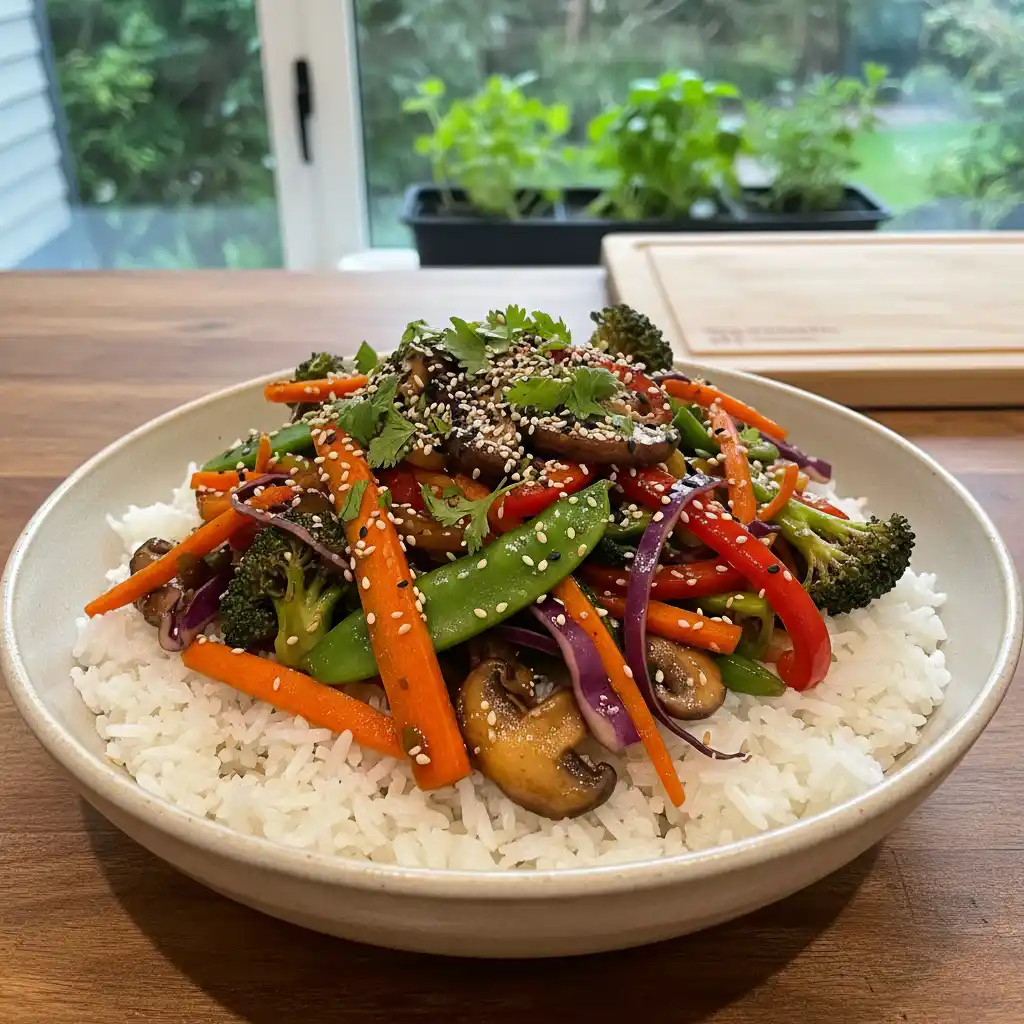
These ideas not only reduce waste but also encourage culinary creativity and save money. It’s a win-win for your pantry and the planet!