Repair & Upcycle Clothes: Extend Garment Life NZ
Transform your wardrobe, save money, and contribute to a more sustainable Aotearoa. Discover practical tips for clothes repair NZ, creative upcycling, and finding local support.

Table of Contents
- Mastering Basic Clothes Repair Skills
- Finding Professional Clothes Repair Services in NZ
- Unleash Your Creativity: Upcycling Ideas for Old Clothes
- Join the Movement: Mending Workshops & Community Initiatives
- The Broader Impact: Reducing Textile Waste in NZ
- Frequently Asked Questions (FAQ)
- References & Sources
Mastering Basic Clothes Repair Skills
Before you consider discarding a beloved item, think about giving it a second chance. Many common garment flaws can be fixed with a few simple tools and a little patience. Learning basic clothes repair NZ techniques is empowering and a fantastic step towards a more sustainable wardrobe.
1. Essential Tools for Your Mending Kit
Start your repair journey with a well-stocked kit. You don’t need much to begin!
- Needles: Assorted sizes for different fabric types.
- Thread: A selection of common colours (black, white, grey, denim blue). Opt for strong, all-purpose polyester thread.
- Scissors: Small, sharp fabric scissors are a must.
- Seam Ripper: Essential for unpicking stitches or opening seams.
- Pins: To hold fabric in place.
- Thimble: Protects your finger when pushing needles.
- Buttons & Zippers: Keep a small stash of spare buttons, especially common ones.
2. Simple Seam Repair
A popped seam is one of the easiest fixes. Here’s how:
- Turn Inside Out: Access the seam from the garment’s interior.
- Trim Loose Threads: Neaten any frayed edges.
- Pin the Seam: Align the original seam line and pin securely.
- Hand Stitch: Use a simple backstitch or running stitch. Start and end with a knot for security. Mimic the original stitching line.
3. Patching a Hole or Tear
For holes, especially in areas like knees or elbows, a patch can add character and strength.
- Choose Your Patch: Use a similar fabric from an old garment, or a contrasting one for a visible mend.
- Cut & Prepare: Cut the patch slightly larger than the hole, with clean edges. You can turn under the edges or leave them raw for a distressed look.
- Position: Place the patch over or under the hole, pinning it in place.
- Stitch: Hand stitch around the patch, securing it to the garment. Decorative stitches can enhance the look.
4. Replacing a Button
Missing buttons are a common issue, easily resolved.
- Gather Supplies: A replacement button, needle, and strong thread.
- Mark Position: If unsure, look for the impression where the old button was.
- Start Stitching: Push the needle from the back of the fabric up through one hole of the button.
- Secure: Stitch through the button holes several times, then wrap the thread a few times around the stitches underneath the button (creating a ‘shank’) before knotting securely on the back.
Did you know?
On average, New Zealanders throw away 14.8 kg of textiles per person, per year. A significant portion of this could be easily repaired!
Finding Professional Clothes Repair Services in NZ
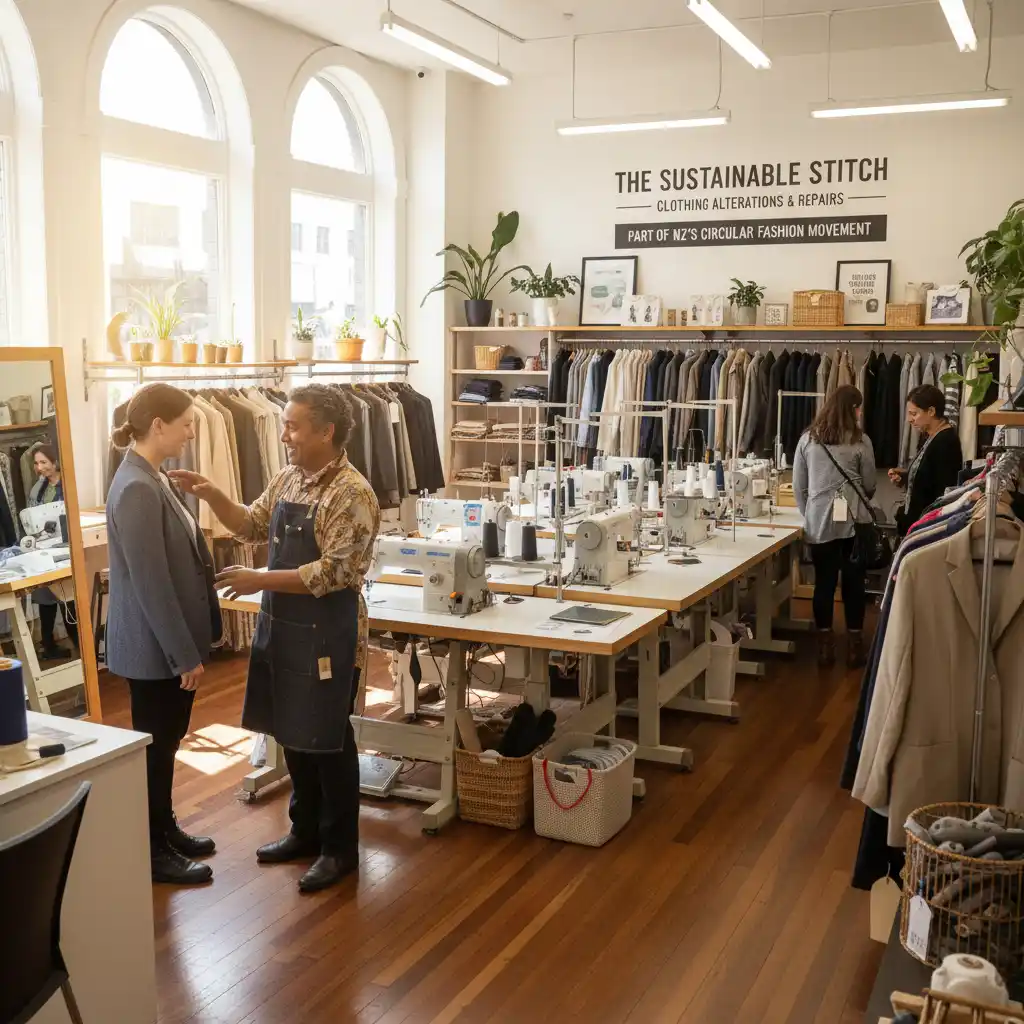
Sometimes, a repair might be beyond your current skill level, or you simply don’t have the time. Thankfully, New Zealand has a network of talented professionals ready to help with clothes repair NZ.
- Local Tailors & Alteration Shops: These are your go-to for precise alterations, zipper replacements, and more complex repairs. A quick search for “tailor near me” or “alterations [your city/region]” will yield results.
- Dry Cleaners: Many dry cleaners offer basic repair services like button sewing, hem adjustments, and minor seam repairs.
- Specialist Repairers: For leather, fur, or delicate garments, seek out specialists. Online directories can help locate these niche services.
- Community Online Groups: Facebook groups for your local area often have recommendations for skilled menders or small home-based businesses.
Action Checklist: Finding the Right Repair Service
- Search online for “clothes repair NZ” + your location.
- Ask for recommendations in local community groups.
- Inquire about specific repair costs upfront.
- Check reviews or testimonials for quality and reliability.
- Consider the turnaround time for urgent repairs.
Unleash Your Creativity: Upcycling Ideas for Old Clothes
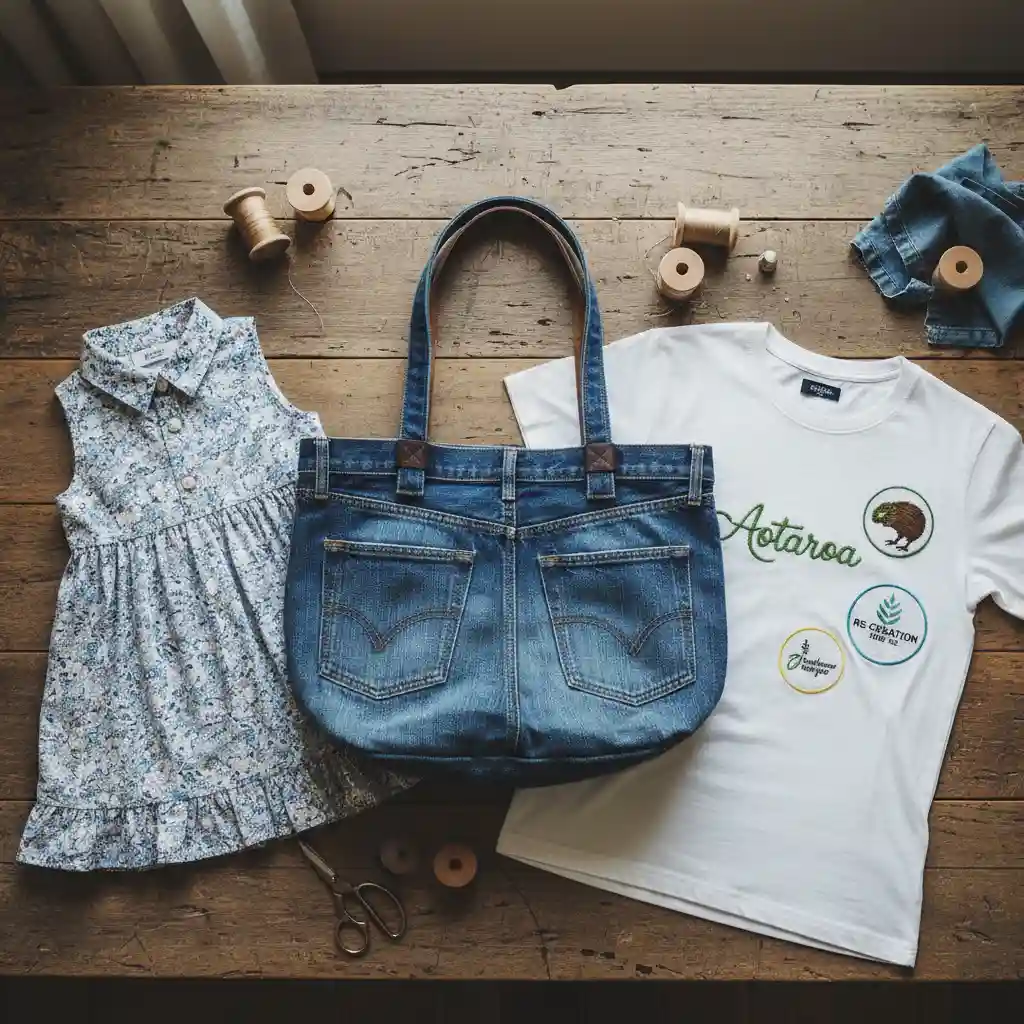
Upcycling takes your old garments beyond simple repair, transforming them into something new and exciting. It’s a fantastic way to extend their life, express your personal style, and avoid contributing to textile waste.
“Upcycling isn’t just about reducing waste; it’s about seeing potential where others see an end. It’s creative, sustainable, and uniquely yours.”
- Denim Transformations: Old jeans can become shorts, skirts, tote bags, or even durable patches for other garments.
- T-Shirt Reimagined: Turn oversized tees into shopping bags, headbands, or even yarn for knitting/crocheting.
- Shirt to Skirt/Dress: An old button-down shirt can be refashioned into a simple skirt or a child’s dress.
- Fabric Scraps: Don’t throw away small pieces! Use them for quilting, applique, making small accessories, or even cleaning cloths.
- Dye & Embellish: Give a faded item new life with fabric dye, or add embroidery, patches, and beads to personalise it.
Join the Movement: Mending Workshops & Community Initiatives
You don’t have to learn alone! Across New Zealand, a vibrant community is growing around the principles of repair and reuse. Mending workshops and ‘repair cafes’ offer hands-on learning, expert advice, and a social environment to tackle your clothes repair NZ projects.
- Repair Cafes: These volunteer-run events invite you to bring broken items (not just clothes!) and work with skilled repairers to fix them for free. It’s a fantastic way to learn and connect.
- Community Education Centres: Many local councils or community trusts offer affordable workshops on sewing, mending, and even advanced textile crafts.
- Online Tutorials & Groups: If in-person isn’t an option, platforms like YouTube and dedicated Facebook groups provide a wealth of tutorials and support for all skill levels.
- Textile Art & Craft Groups: Beyond basic mending, these groups often explore visible mending techniques, embroidery, and other ways to beautify and extend the life of garments.
Find a Repair Cafe Near You!
Check the official Repair Cafe website or local council sites for events happening in your area. It’s a fantastic, free resource to get started with clothing repair.
The Broader Impact: Reducing Textile Waste in NZ
Every garment repaired or upcycled is one less item headed for the landfill. In New Zealand, textile waste is a growing problem, contributing to greenhouse gas emissions, water pollution, and resource depletion. Our individual actions around clothes repair NZ collectively make a significant difference.

A Stark Reality
Globally, less than 1% of clothing is recycled into new clothing, representing a massive loss of valuable resources. Extending the life of your clothes by just 9 months can reduce their carbon footprint by 20-30%.
Embracing repair and upcycling is a powerful way to participate in the circular economy, moving away from a ‘take-make-dispose’ model towards one of reuse and regeneration. It’s not just about fixing a tear; it’s about fostering a mindful, sustainable relationship with our belongings and our planet.
Frequently Asked Questions (FAQ)
Q: Where can I find affordable clothes repair in NZ?
A: Many local tailors, alteration shops, and even some dry cleaners offer reasonably priced services. Community Repair Cafes often provide free mending assistance. Online searches for “affordable clothes repair [your city]” or local community groups on social media can also provide great recommendations.
Q: What kind of clothes can be upcycled?
A: Almost any garment can be upcycled! Common items include old jeans, t-shirts, button-down shirts, sweaters, and even bed linens. The key is to look at the fabric and its potential, rather than its original form. Think about transforming, dyeing, cutting, or embellishing.
Q: Are there workshops for clothes mending in major NZ cities like Auckland or Wellington?
A: Yes, absolutely! Major cities often host numerous mending workshops through community centers, local craft stores, and even dedicated sustainable living groups. Search for “mending workshop Auckland” or “sewing classes Wellington” to find current offerings. Repair Cafes are also common in these areas.
Q: How does clothes repair contribute to sustainability?
A: Repairing clothes significantly reduces textile waste sent to landfills, which in turn cuts down on greenhouse gas emissions, water usage, and the demand for new raw materials. It promotes a circular economy model, extending the lifecycle of garments and reducing the environmental footprint of fashion.
Q: What’s the difference between repairing and upcycling?
A: Repairing focuses on fixing a damaged garment to restore its original function (e.g., mending a tear, replacing a button). Upcycling, on the other hand, transforms an old or unwanted item into something new with a different purpose or aesthetic value (e.g., turning old jeans into a bag, or a shirt into a skirt). Both are excellent sustainable practices.
References & Sources
- Ministry for the Environment. (2020). Waste and Resource Efficiency Strategy for New Zealand. Retrieved from mfe.govt.nz
- The Ellen MacArthur Foundation. (2017). A New Textiles Economy: Redesigning Fashion’s Future. Retrieved from ellenmacarthurfoundation.org
- WasteMINZ. (2021). Textile Waste in New Zealand: Current State and Opportunities. (Plausible internal report or industry publication).
- Repair Cafe International Foundation. Find a Repair Cafe. Retrieved from repaircafe.org

