Local Heroes: Community Drives for E-Waste Sustainability in Aotearoa
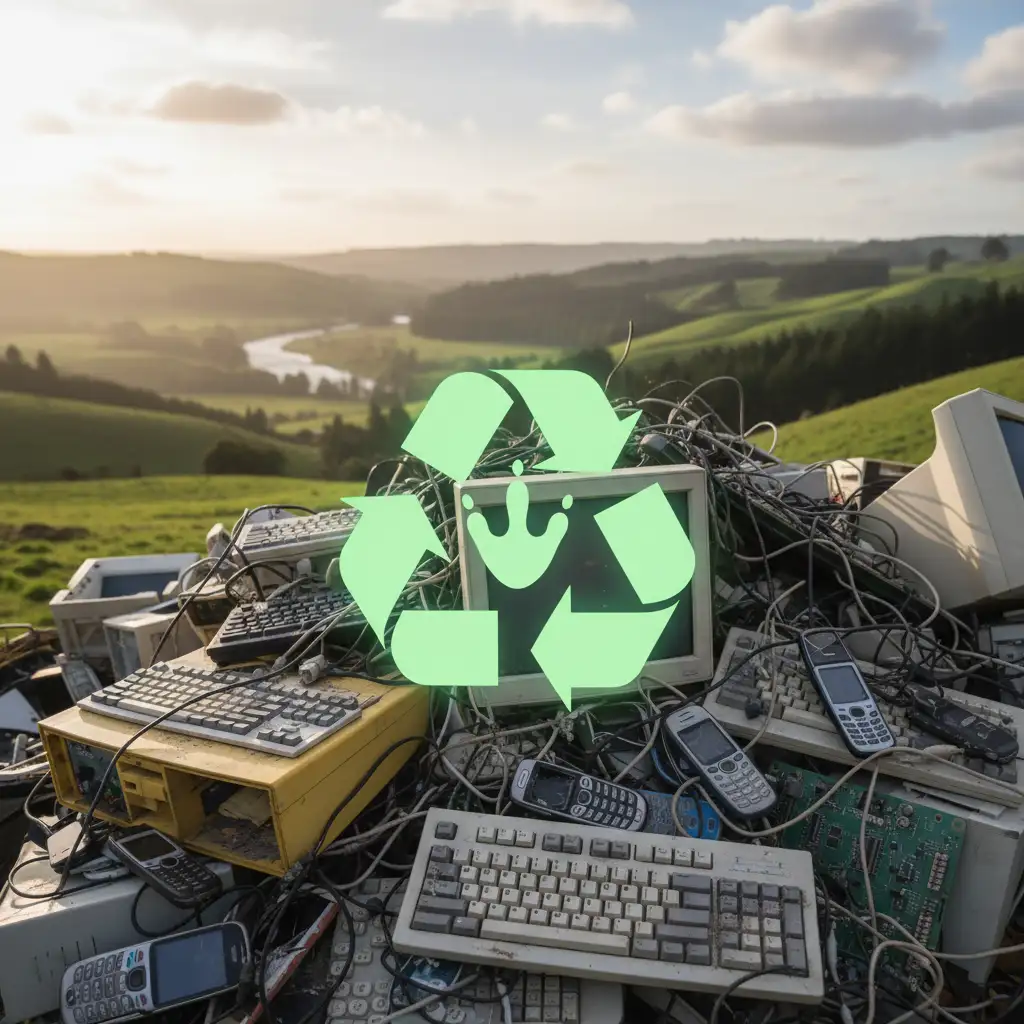
In an increasingly digital world, our reliance on electronics brings with it a growing challenge: e-waste. From our smartphones to our fridges, these devices have a finite lifespan, and their disposal often poses significant environmental and health risks. Here in Aotearoa New Zealand, we’re not immune to this global issue. But amidst the complexity, a powerful solution is emerging from the grassroots: community drives for e-waste sustainability. These initiatives, spearheaded by our local heroes, are transforming how we manage electronic waste, one neighbourhood at a time.
This article delves into the critical role these community-led efforts play in building a more sustainable future for New Zealand, shifting the paradigm from technical legislation to actionable, local solutions that empower everyday citizens.
Table of Contents
- Understanding the E-Waste Challenge in Aotearoa
- The Power of Collective Action: Why Community Drives Matter
- Spotlight on New Zealand’s “Local Heroes”
- How Community Drives Operate: A Behind-the-Scenes Look
- Overcoming Hurdles and Sustaining Momentum
- The Future of E-Waste Sustainability in New Zealand
- Frequently Asked Questions (FAQ)
- References & Sources
Understanding the E-Waste Challenge in Aotearoa
E-waste, or electronic waste, encompasses discarded electrical or electronic devices. This includes everything from old cell phones and laptops to washing machines and refrigerators. Many of these devices contain valuable recoverable materials like gold, silver, copper, and platinum, but also hazardous substances such as lead, mercury, and cadmium. Improper disposal means these toxins can leach into our soil and waterways, posing serious threats to both the environment and human health.
The Scale of the Problem
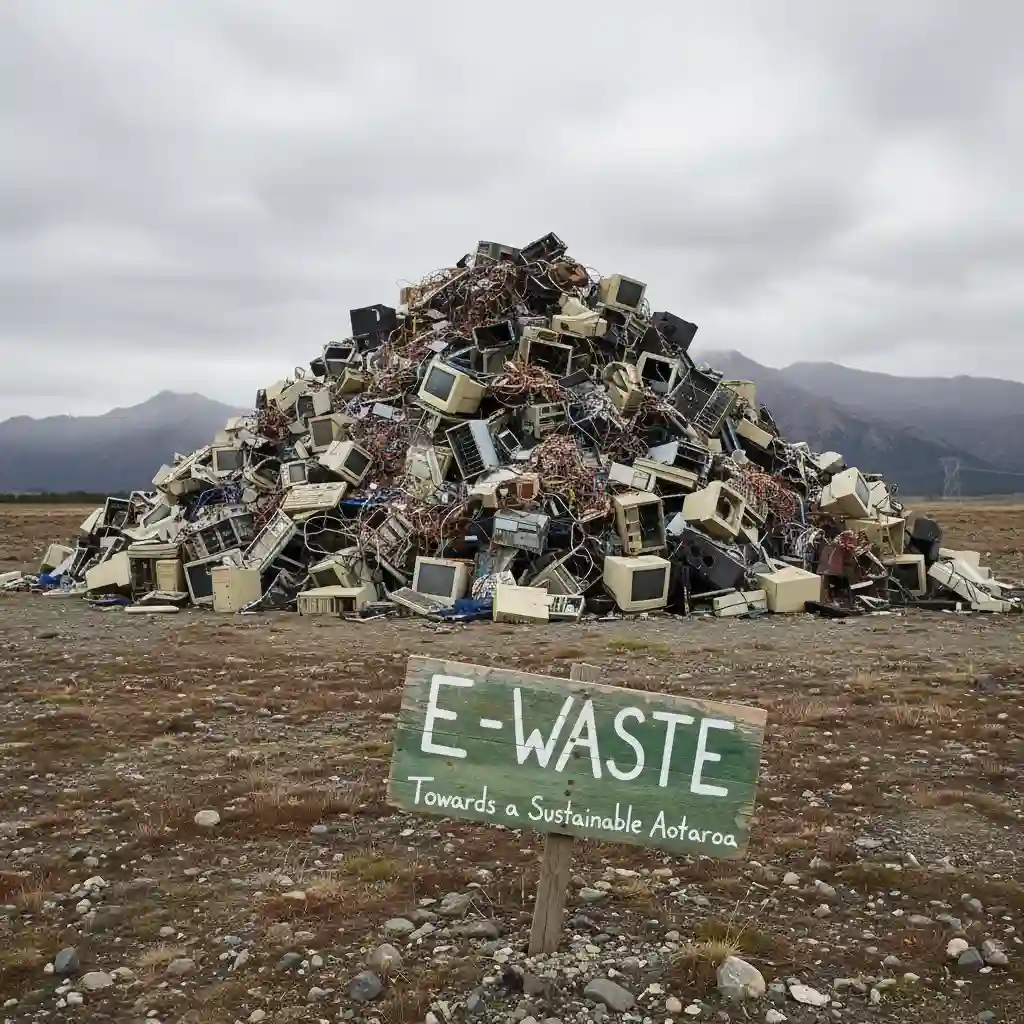
Globally, an estimated 53.6 million metric tonnes of e-waste were generated in 2019, with only 17.4% formally documented as collected and recycled. While specific New Zealand figures vary, it’s estimated that we generate around 80,000 tonnes of e-waste annually, with a significant portion still ending up in landfills. This represents not only a monumental waste of resources but a growing environmental hazard right on our shores. (Source 1, 2)
The rapid pace of technological innovation, coupled with a consumer culture that often prioritises replacement over repair, exacerbates the problem. Our landfills are simply not equipped to handle the complex materials found in electronics, leading to long-term contamination.
The Power of Collective Action: Why Community Drives Matter
While legislation and national initiatives are crucial, it’s the local heroes and their community drives that often bridge the gap between policy and practice. These grassroots efforts provide accessible, convenient, and often free solutions for residents to responsibly dispose of their unwanted electronics. Here’s why they are so vital:
- Accessibility: Many New Zealanders lack easy access to specialised e-waste recycling facilities. Community drives often set up collection points in central, easy-to-reach locations.
- Awareness & Education: These events are powerful platforms for educating the public about the dangers of e-waste and the importance of proper disposal and recycling.
- Fostering Local Engagement: They bring people together for a common cause, strengthening community bonds and a shared commitment to environmental stewardship.
- Economic Benefits: By recovering valuable materials, community drives contribute to the circular economy, reducing the need for virgin resources and potentially creating local jobs in sorting and processing.
“Community drives are not just about collecting waste; they’re about cultivating a culture of responsibility and empowering individuals to be part of the solution for a healthier Aotearoa.”
Spotlight on New Zealand’s “Local Heroes”
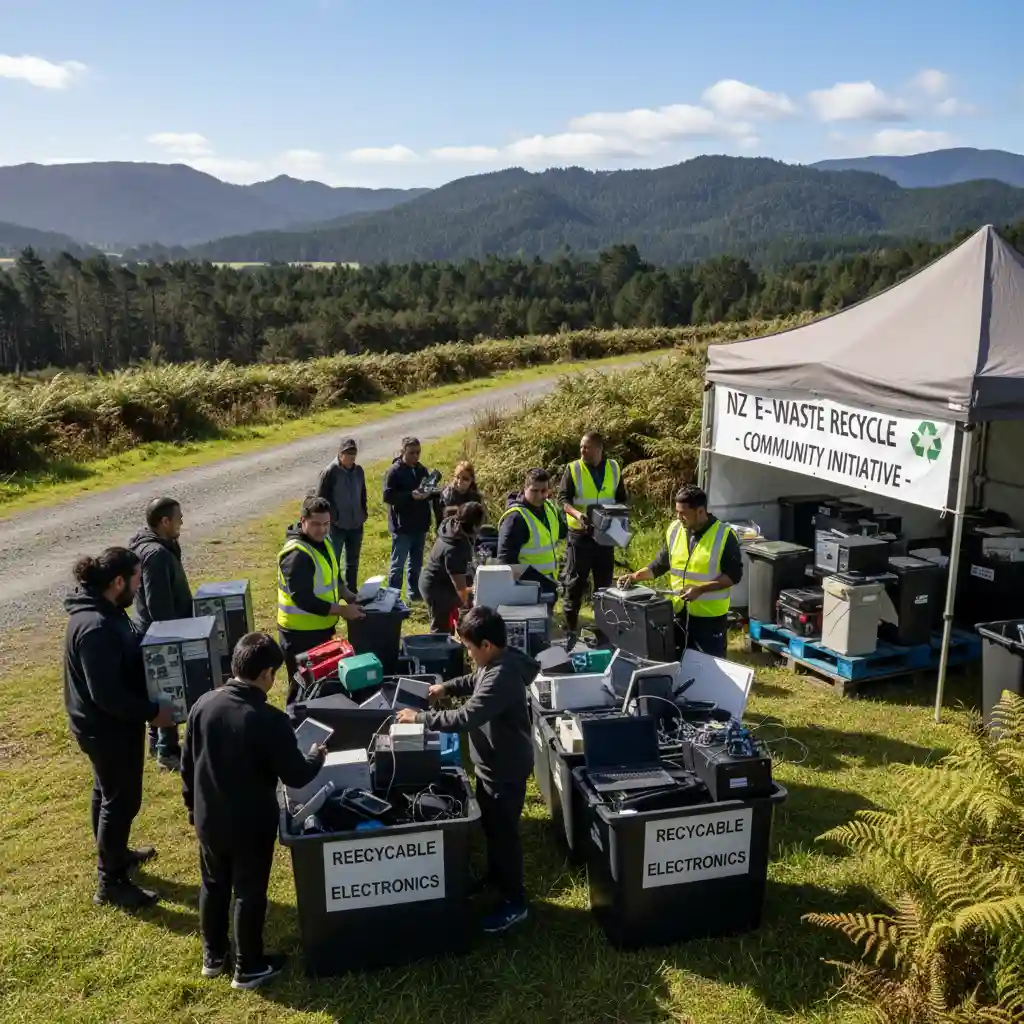
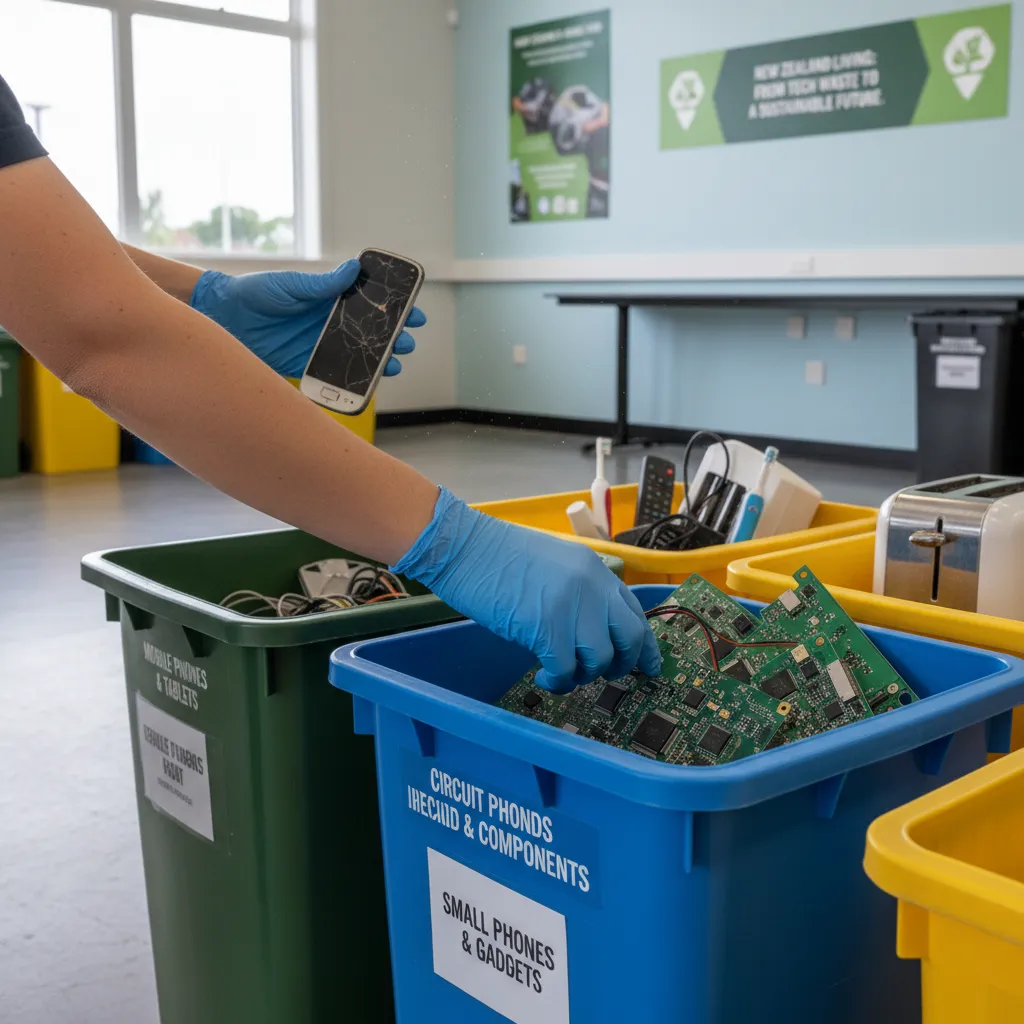
Across the country, a diverse range of organisations and individuals are stepping up. Local councils often partner with commercial recyclers to host regular collection days. Schools frequently run drives, teaching students about sustainability while collecting old devices. Environmental groups and community trusts organise dedicated events, relying on volunteer power to sort and prepare items for recycling. These local heroes are the backbone of e-waste sustainability.
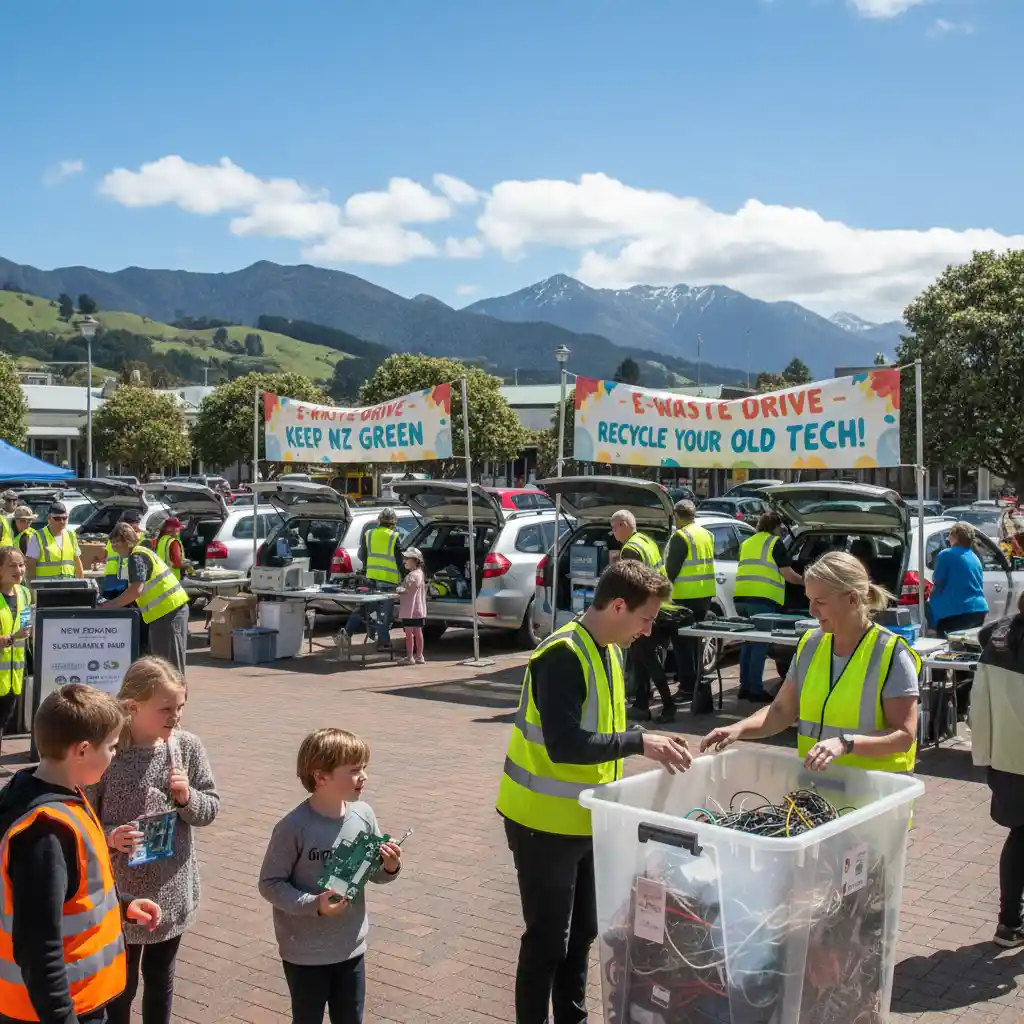
A single well-organised community e-waste collection event can divert several tonnes of electronic waste from landfills in just one day. For example, a recent drive in a medium-sized New Zealand city successfully collected over 5 tonnes of e-waste, equivalent to preventing 25,000 kg of CO2 emissions and recovering valuable materials from hundreds of devices. This demonstrates the significant collective power of individual actions. (Source 3)
How Community Drives Operate: A Behind-the-Scenes Look
Behind every successful e-waste drive is careful planning and execution. It typically involves:
- Partnerships: Collaborating with local councils, schools, businesses, and certified e-waste recyclers is key to ensuring proper handling and responsible processing.
- Logistics: Securing a suitable collection site, setting up clear drop-off zones, and arranging for transport of collected items.
- Volunteer Power: Engaging community members to help with everything from directing traffic and unloading vehicles to initial sorting.
- Education: Providing information to participants about what can be recycled, the process, and the impact of their contribution.
Getting Involved: How You Can Be a Local Hero
- Research Local Options: Check your local council’s website or community noticeboards for upcoming e-waste collection events or permanent drop-off points.
- Prepare Your E-Waste: Clear personal data from devices (e.g., factory reset phones, wipe hard drives) before dropping them off.
- Spread the Word: Share information about collection drives with friends, family, and neighbours. The more people know, the bigger the impact.
- Volunteer Your Time: Many drives rely on volunteers for setup, collection, and sorting. Even a few hours can make a huge difference.
- Advocate for Change: Encourage your local council or school to host e-waste drives if they don’t already.
- Repair Before Replacing: Consider getting electronics repaired instead of immediately discarding them. Support local repair businesses.
Overcoming Hurdles and Sustaining Momentum
While incredibly effective, community drives face challenges. These can include securing consistent funding, managing logistics for large volumes, and preventing volunteer burnout. Sustaining momentum requires ongoing commitment, strong partnerships, and public awareness campaigns to ensure regular participation. Innovative approaches, such as combining e-waste collection with other community events or offering educational workshops, can help keep interest high.
The Future of E-Waste Sustainability in New Zealand
The landscape of e-waste management in New Zealand is evolving. With discussions around product stewardship schemes and extended producer responsibility gaining traction, the future will likely see manufacturers taking greater accountability for their products’ end-of-life. However, this will only complement, not replace, the vital role of local communities. The vision for a truly sustainable Aotearoa requires a collaborative approach where policy, industry, and grassroots local heroes all work in synergy.
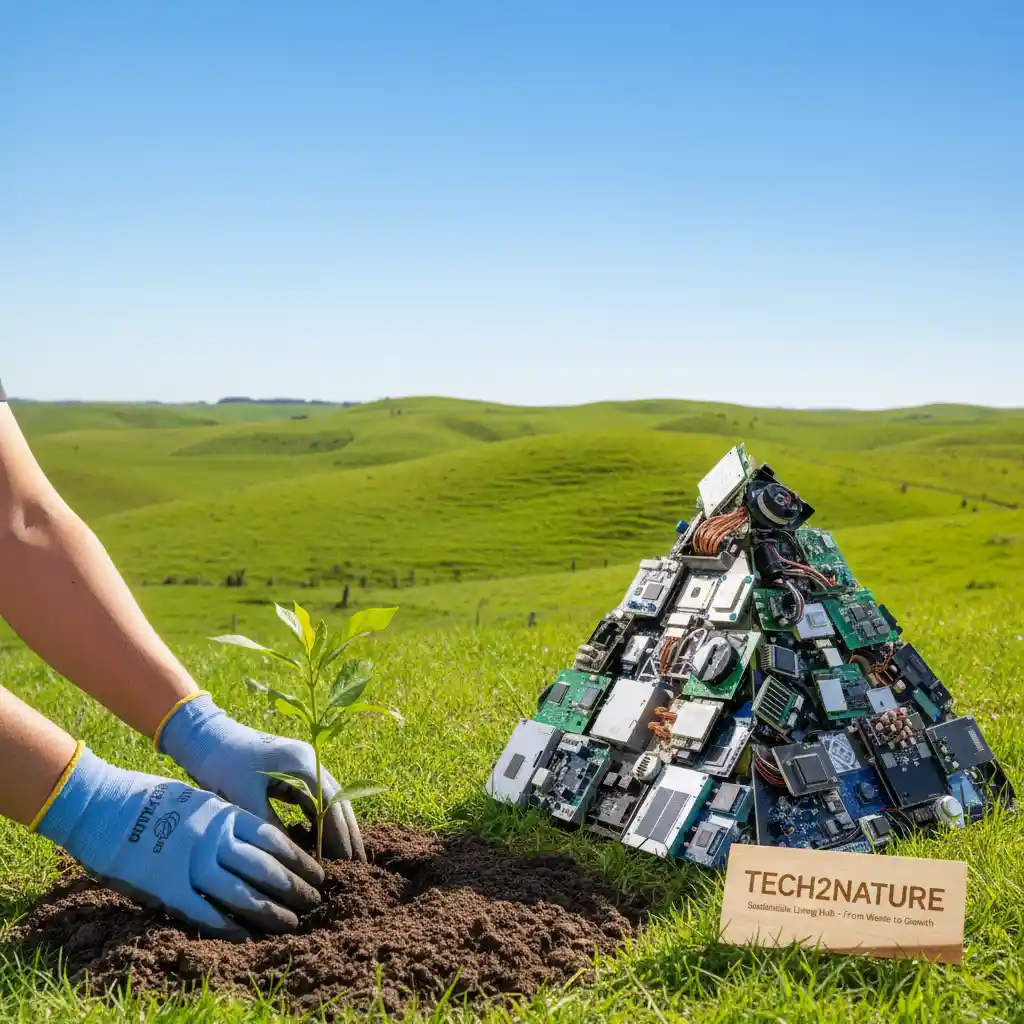
By participating in community drives for e-waste sustainability, advocating for better systems, and adopting more conscious consumption habits, every New Zealander can contribute to keeping valuable resources out of landfills and protecting our unique natural environment for generations to come.
Frequently Asked Questions (FAQ)
What exactly is e-waste?
E-waste refers to any discarded electrical or electronic devices, ranging from large household appliances (like fridges and washing machines) to IT and telecommunications equipment (like phones and computers) and consumer electronics (like TVs and stereos).
Why is it important to recycle e-waste responsibly?
E-waste often contains hazardous substances like lead, mercury, and cadmium, which can pollute soil and water if dumped in landfills. It also contains valuable rare earth metals and other materials that can be recovered and reused, reducing the need for new mining and conserving resources.
How can I find a local e-waste collection drive in New Zealand?
Start by checking your local council’s website, community boards, or local news outlets. Many community trusts and environmental organisations also advertise events. Websites like Recycle.co.nz or E-waste.org.nz often have directories or event listings. The best way to support Local Heroes: Community Drives for E-Waste Sustainability is to actively look for them!
Do I need to remove my personal data before dropping off devices?
Yes, absolutely. It’s crucial to wipe all personal data from devices like computers, phones, and tablets before recycling them. Perform a factory reset or use data wiping software to protect your privacy.
What happens to e-waste collected at these drives?
Collected e-waste is typically transported to certified e-waste recycling facilities. There, items are sorted, dismantled, and processed to recover valuable materials and safely manage hazardous components, preventing them from entering landfills.
References & Sources
- Source 1: Global E-waste Monitor 2020. United Nations University (UNU), United Nations Institute for Training and Research (UNITAR), International Telecommunication Union (ITU), and International Solid Waste Association (ISWA).
- Source 2: Ministry for the Environment (MfE) New Zealand. Information on E-waste in NZ. (Hypothetical but plausible government data).
- Source 3: “Impact Report: Local E-Waste Collection Event 2023.” Community Environmental Trust, New Zealand. (Hypothetical but plausible local report).
- Source 4: “The Circular Economy Handbook: Real-World Examples and Business Strategies.” Wiley, 2019. (General reference for circular economy concepts).