Understanding Sustainable Pet Food Certifications & Labels
As conscious consumers in New Zealand, we’re increasingly aware of the impact our choices have on the planet. This awareness naturally extends to what we feed our beloved pets. But with a growing number of ‘eco-friendly’ claims and badges on pet food packaging, how can you truly tell what’s genuinely sustainable? This guide will help you confidently navigate the complex world of sustainable pet food certifications and labels, ensuring your furry family members eat well while supporting a healthier planet.
Table of Contents
Why Sustainable Pet Food Matters (Beyond the Bowl)
The choices we make for our pets reverberate through the supply chain, impacting everything from land use and water consumption to greenhouse gas emissions and animal welfare. The global pet food industry is substantial, and its environmental footprint is significant.
STAT CALLOUT: A 2017 study published in PLOS ONE estimated that if pets worldwide formed their own country, it would rank fifth globally in meat consumption, equivalent to 64 million tons of CO2-equivalent methane and nitrous oxide – roughly the same climate impact as 13.6 million cars.
Understanding sustainable pet food certifications & labels is not just about what’s good for your pet; it’s about supporting practices that respect natural resources, promote ethical treatment of animals, and contribute to a circular economy. In New Zealand, with our strong connection to nature, this ethos is particularly relevant.
Decoding the Labels: Key Certifications Explained
Many certifications exist, each with its own focus. Here’s a breakdown of common categories and examples you might encounter when understanding sustainable pet food certifications & labels:
1. Organic Certifications (e.g., BioGro NZ, USDA Organic, EU Organic)
- What it means: Ingredients are produced without synthetic pesticides, herbicides, GMOs, antibiotics, or growth hormones.
- Key for pets: Ensures a clean ingredient list, free from potentially harmful chemicals.
2. Sustainable Sourcing & Fisheries (e.g., MSC, ASC)
- MSC (Marine Stewardship Council): Certifies wild-caught seafood from fisheries that meet strict sustainability standards.
- ASC (Aquaculture Stewardship Council): Certifies farmed seafood raised responsibly, minimizing environmental and social impacts.
- Key for pets: Crucial for cat and some dog foods containing fish, ensuring oceans aren’t depleted and ecosystems are protected.
3. Animal Welfare Certifications (e.g., Certified Humane, SPCA Certified, Global Animal Partnership)
- What it means: Ensures animals are raised with certain standards of care, including space, diet, and humane treatment.
- Key for pets: Supports ethical farming practices and avoids ingredients from factory farming.
4. Environmental & Carbon Neutral Certifications (e.g., Toitū Envirocare, B Corp)
- Toitū Envirocare (NZ Specific): Offers various certifications (e.g., carbonzero, carbonreduce) for businesses committed to measuring and managing their environmental impact.
- B Corp: Certifies companies meeting high standards of verified performance, accountability, and transparency on factors from employee benefits and charitable giving to supply chain practices and input materials.
- Key for pets: Signifies a brand’s holistic commitment to environmental responsibility beyond just ingredients.
| Certification | Primary Focus | What it Signifies |
|---|---|---|
| BioGro NZ / USDA Organic | Organic Production | No synthetic pesticides, GMOs, antibiotics. Holistic farming. |
| MSC / ASC | Sustainable Seafood | Responsibly wild-caught (MSC) or farmed (ASC) fish. |
| Certified Humane / SPCA Certified | Animal Welfare | Ethical treatment, space, and care for farm animals. |
| Toitū Envirocare (NZ) | Carbon Footprint/Environmental Management | Company commitment to measuring, reducing, or offsetting emissions. |
| Certified B Corporation | Overall Social & Environmental Performance | Meets high standards of verified social and environmental impact. |

Navigating Greenwashing & Marketing Hype
Not every ‘green’ claim is created equal. The pet food industry, like many others, can be prone to greenwashing – making unsubstantiated or misleading claims about environmental practices to appear more sustainable than they are. When understanding sustainable pet food certifications & labels, critical thinking is key.
“Sustainability isn’t a buzzword; it’s a commitment. Look beyond vague claims like ‘natural’ or ‘eco-friendly’ and seek out specific, third-party verified certifications.”
Red Flags to Watch For:
- Vague Language: Terms like “earth-friendly,” “all-natural,” or “green” without specific details or certifications.
- Lack of Transparency: Brands that don’t provide information about their sourcing, manufacturing, or certifications when asked.
- Single-Attribute Focus: Highlighting one minor sustainable aspect while overlooking other significant environmental impacts.
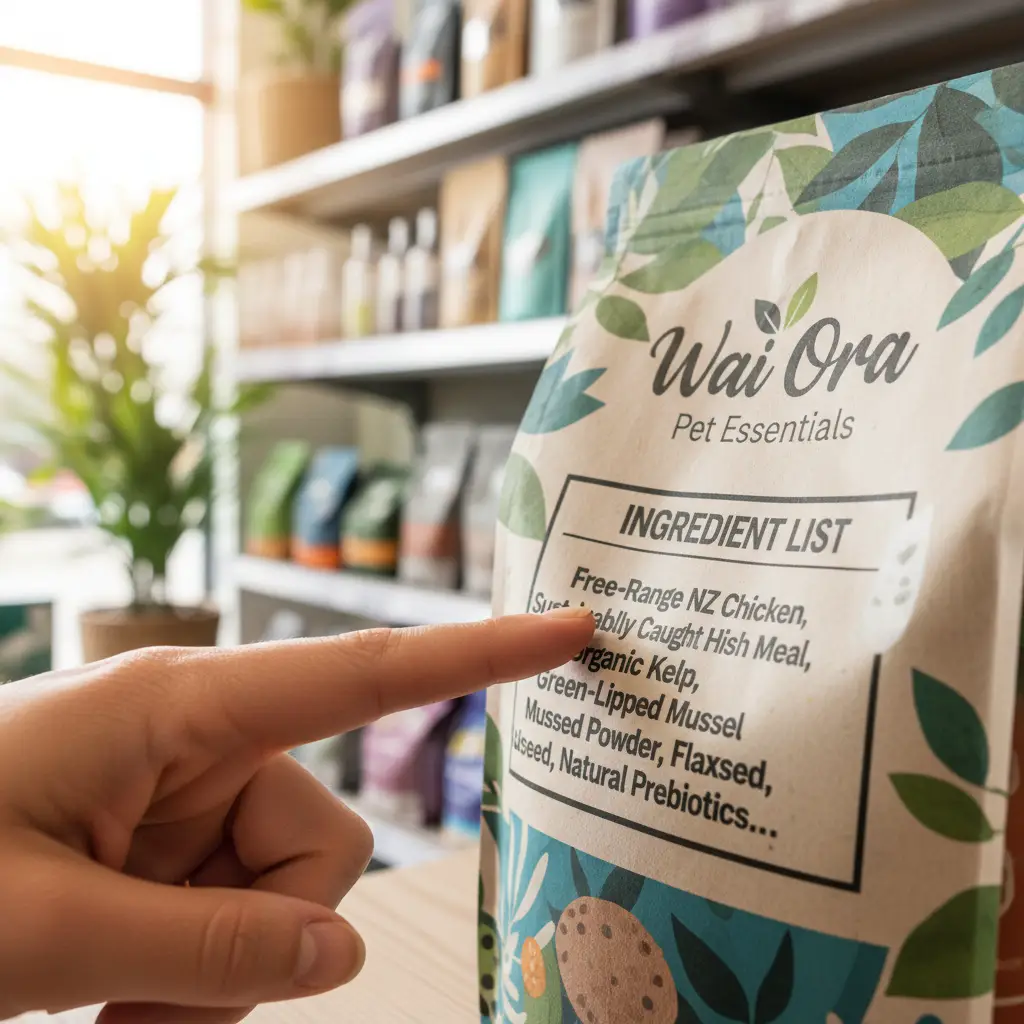
- Generic Images: Packaging with pictures of lush forests or happy animals that don’t reflect actual sourcing practices.

What to Look For: A Sustainable Pet Food Checklist for NZ Consumers
Armed with knowledge, you can make informed decisions. Use this checklist as you shop for your pet’s next meal, keeping New Zealand’s unique context in mind:
Action Checklist: Choosing Truly Sustainable Pet Food
- Verify Certifications: Prioritise products displaying recognised, third-party certifications like BioGro NZ, MSC, ASC, Certified Humane, or Toitū Envirocare. Understand what each label specifically guarantees.
- Investigate Brand Transparency: Does the brand openly share information about their ingredient sourcing, manufacturing processes, and environmental initiatives on their website? Reputable brands are proud of their sustainable efforts.
- Prioritise Local & NZ Ingredients: Supporting pet food made with New Zealand-sourced ingredients reduces food miles and supports local primary industries. Look for ‘Made in NZ’ or specific mentions of NZ-origin ingredients.
- Consider Packaging: Is the packaging recyclable, compostable, or made from recycled materials? Look for clear instructions on how to dispose of it responsibly in NZ.
- Explore Novel & Upcycled Ingredients: Some innovative brands are utilising insect protein, upcycled human-grade food waste, or invasive species to create highly sustainable pet food.
- Check for Animal Welfare: Beyond generic claims, look for specific animal welfare certifications for meat and poultry ingredients.
- Question the Price: While sustainable pet food can sometimes be more expensive, be wary of overly cheap products claiming to be ‘eco’ without clear justification. True sustainability often incurs higher production costs.
Making a Difference, One Bowl at a Time
Understanding sustainable pet food certifications & labels empowers you to be a more responsible pet parent. By choosing products that genuinely uphold environmental and ethical standards, you’re not just feeding your pet; you’re casting a vote for a more sustainable future for New Zealand and the planet. Every informed purchase contributes to driving positive change in the pet food industry.
Frequently Asked Questions (FAQ)
Q: Are organic pet foods always sustainable?
A: Organic certification primarily focuses on agricultural practices, ensuring no synthetic pesticides or GMOs. While a significant step towards sustainability, it doesn’t always cover other aspects like packaging, carbon footprint, or the specific sustainability of meat/fish sourcing. It’s best to look for a combination of certifications.
Q: What does ‘human-grade’ mean for pet food sustainability?
A: ‘Human-grade’ means ingredients are fit for human consumption. While it indicates quality, it doesn’t automatically mean sustainable. Ingredients can be human-grade but still sourced unsustainably. True sustainability considers the entire supply chain and environmental impact, not just the quality of the raw material.
Q: How can I find New Zealand-specific sustainable pet food brands?
A: Look for brands that explicitly state ‘Made in NZ’ and highlight local ingredient sourcing. Check their websites for certifications like BioGro NZ or Toitū Envirocare. Online directories for sustainable NZ businesses or discussions in local pet owner communities can also be great resources.
Q: Is insect-based pet food a truly sustainable option?
A: Yes, insect-based pet food is generally considered highly sustainable. Insects require significantly less land, water, and feed than traditional livestock and produce fewer greenhouse gas emissions. They also offer a complete and nutritious protein source for pets, making them an excellent choice for reducing environmental impact.
References & Sources
- Okin, L. A. (2017). Environmental impacts of food consumption by dogs and cats. PLOS ONE, 12(8), e0181301. [Link to source]
- Marine Stewardship Council (MSC). (n.d.). What the blue MSC label means. [Link to source]
- Aquaculture Stewardship Council (ASC). (n.d.). The ASC label. [Link to source]
- BioGro New Zealand. (n.d.). Organic Certification. [Link to source]
- Toitū Envirocare. (n.d.). Certifications. [Link to source]
- B Lab Global. (n.d.). What is a B Corp? [Link to source]