Sustainable Composting Tips for New Zealand Gardens
Embracing a sustainable lifestyle in Aotearoa often starts in our own backyards. Composting is one of the simplest yet most impactful actions you can take to reduce waste, enrich your soil, and foster a thriving garden. It’s a natural cycle, transforming kitchen scraps and garden waste into nutrient-rich humus – a gardener’s ‘black gold’. For New Zealand gardeners, understanding local conditions and resources can make all the difference in creating effective compost.
This comprehensive guide will equip you with practical, sustainable composting tips tailored for New Zealand gardens, helping you turn waste into a valuable resource and contribute to a healthier environment, one spadeful at a time.
Why Composting Matters for Aotearoa
In New Zealand, organic waste makes up a significant portion of what ends up in landfills. When food scraps and garden waste decompose in anaerobic (oxygen-free) landfill environments, they produce methane, a potent greenhouse gas contributing to climate change. Composting offers a powerful solution, diverting this waste and creating a valuable resource instead.
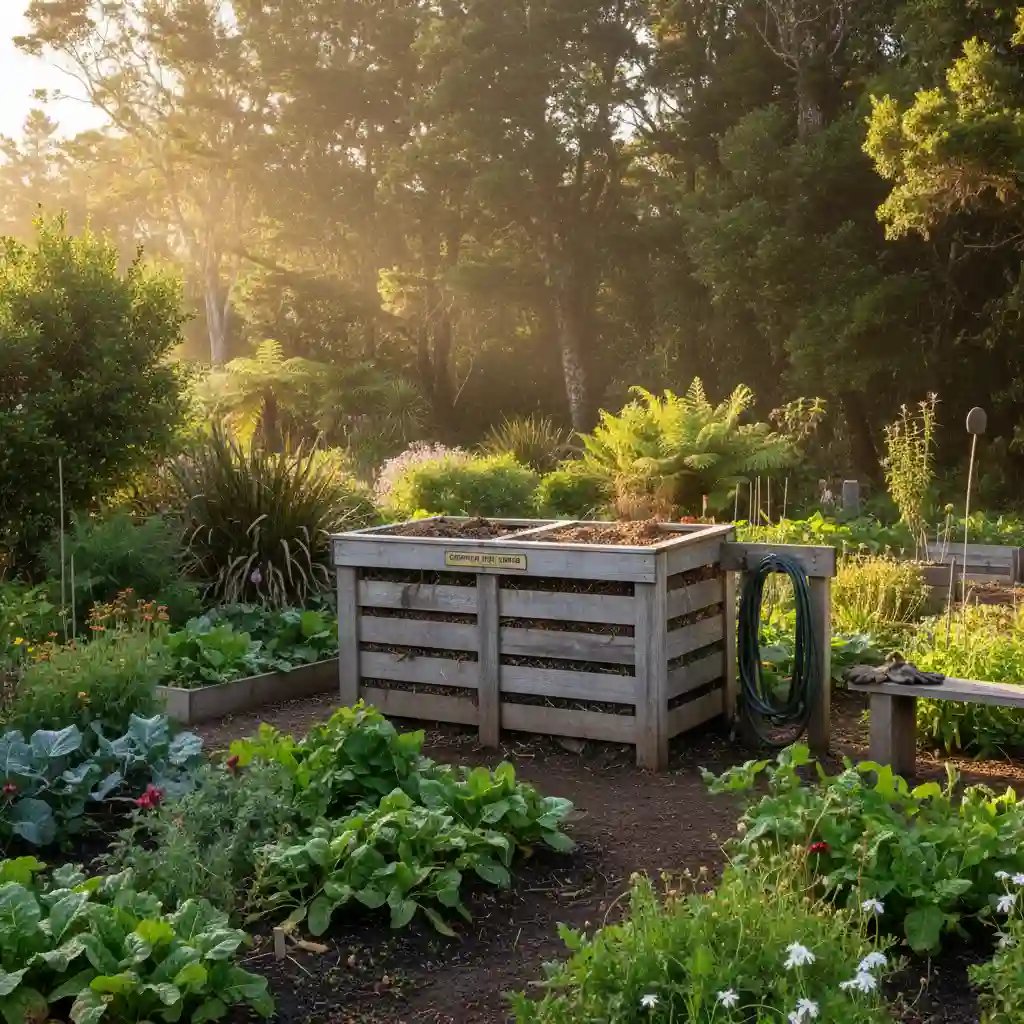
Stat Callout: Approximately one-third of the average New Zealand household’s kerbside rubbish bin is food waste. Diverting this organic matter through composting can significantly reduce our environmental footprint and contribute to a circular economy. (Love Food Hate Waste NZ)
Beyond waste reduction, the benefits extend directly to your garden. Finished compost improves soil structure, aeration, and water retention, reducing the need for synthetic fertilisers. It also introduces beneficial microorganisms, helping plants absorb nutrients more efficiently and increasing their resilience against pests and diseases. This creates a healthier, more vibrant ecosystem right in your backyard, aligning perfectly with sustainable living principles.
Getting Started: Your Composting Journey
Embarking on your composting adventure is easier than you think. Here are practical, step-by-step tips to get you started with sustainable composting in your New Zealand garden.
1. Choose Your Composting Method
Different methods suit different needs, garden sizes, and lifestyles in New Zealand. Consider what works best for you:
- Traditional Compost Pile/Bin: Ideal for larger gardens with space. Requires turning for aeration. Open piles are simple, while enclosed bins deter pests and retain heat, speeding decomposition.
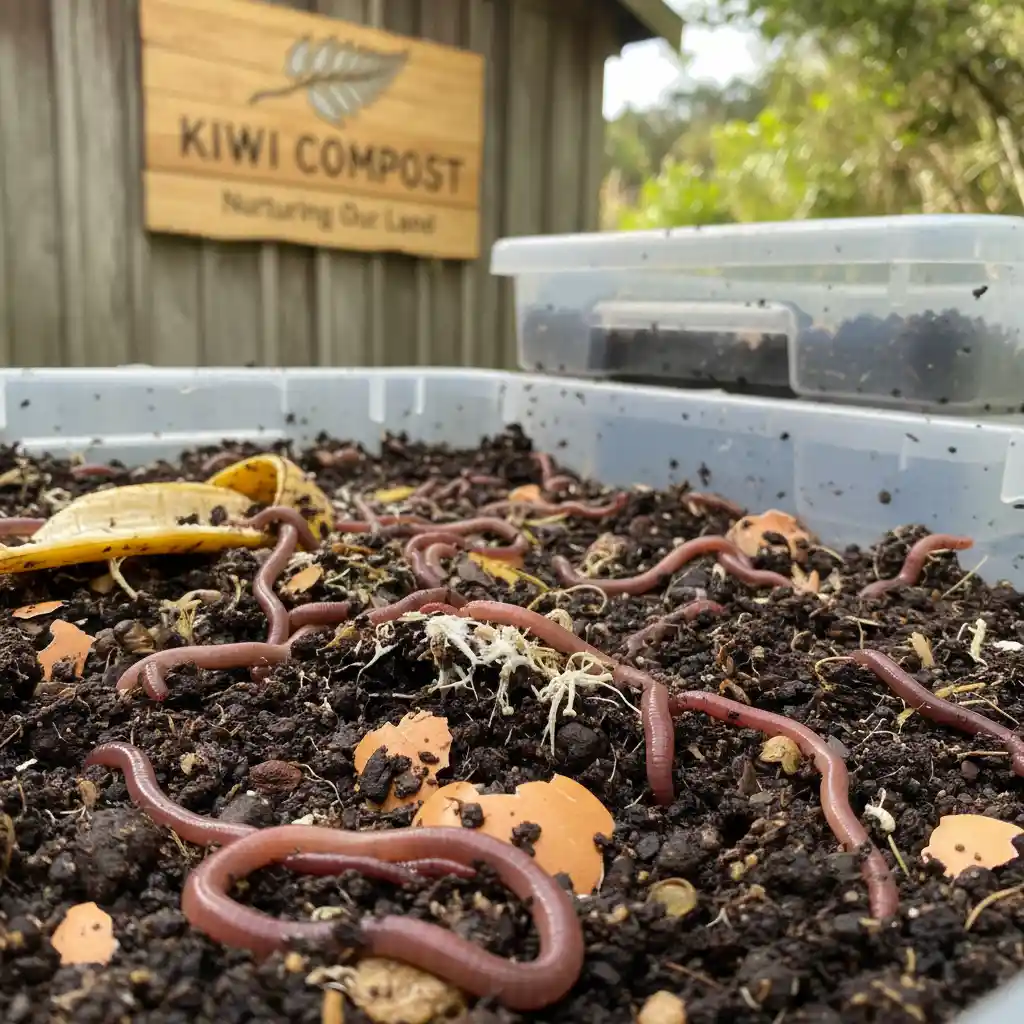
- Worm Farm (Vermicomposting): Excellent for smaller spaces or urban gardens, efficiently processing kitchen scraps. Worms (often ‘tiger worms’ or ‘red wigglers’) produce nutrient-rich castings and ‘worm tea’ fertiliser.
- Bokashi System: A fermentation process using inoculated bran to ‘pickle’ food scraps (including meat and dairy, which most other methods don’t allow). The fermented waste is then buried in the garden or added to a compost pile for final decomposition.
2. Understand the Greens & Browns Balance
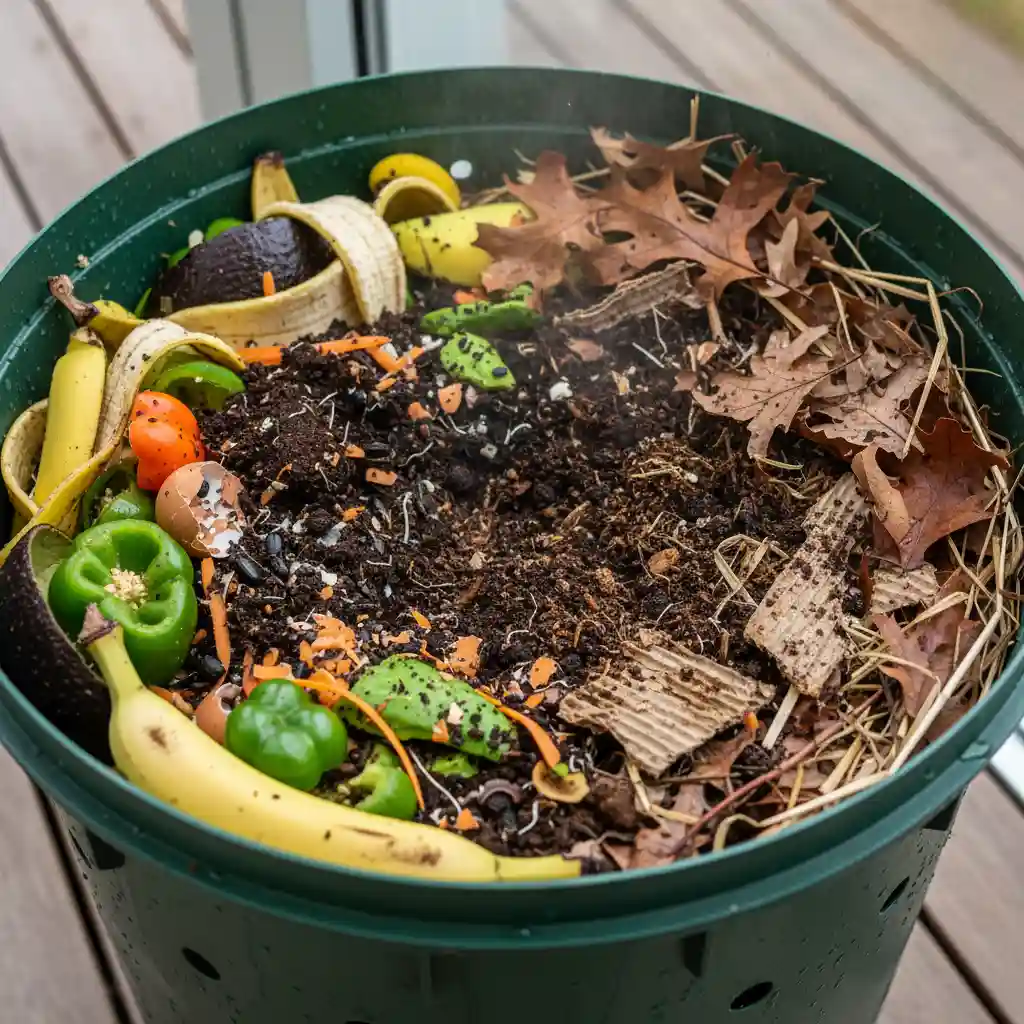
A successful compost pile relies on a good balance of ‘greens’ (nitrogen-rich) and ‘browns’ (carbon-rich). Aim for a ratio of roughly 1 part green to 2-3 parts brown by volume.
- Greens (Nitrogen): Fresh grass clippings, fruit and vegetable scraps, coffee grounds, tea bags, fresh weeds. These provide moisture and nitrogen, essential for microbial growth and heat generation.
- Browns (Carbon): Dry leaves, shredded cardboard, newspaper, wood chips, straw, small twigs. These provide aeration and carbon, the energy source for microorganisms, and prevent compaction.
3. What to Compost (and What Not To!)
Knowing what to add to your compost is crucial for its health and effectiveness, especially in a New Zealand context where pest control and disease prevention are important.
- DO COMPOST: Fruit and vegetable scraps, eggshells, coffee grounds, tea bags, grass clippings, dry leaves, shredded newspaper/cardboard, wood ash (in moderation), small twigs, untreated sawdust.
- DO NOT COMPOST: Meat, bones, dairy products, oily foods (attract pests), diseased plants (spreads pathogens), persistent weeds (e.g., twitch, convolvulus seeds), pet waste (pathogens), synthetic materials, chemically treated wood.
For Bokashi systems, meat and dairy are acceptable during the fermentation stage, but still require burial after pickling.
4. Location, Location, Location
Choose a spot in your New Zealand garden that is:
- Accessible: Easy to add materials and turn the pile.
- Shady: Prevents drying out too quickly in NZ’s strong sun, especially during summer, maintaining crucial moisture.
- Well-drained: Prevents waterlogging, which leads to anaerobic conditions and foul odours.
- Near a water source: For easy moistening when needed.
5. Maintain & Monitor Your Pile
Active composting requires a bit of attention to thrive:
- Moisture: Your compost should feel like a wrung-out sponge – damp, not soaking wet or bone dry. Add water if too dry, or more browns if too wet.
- Aeration (Turning): Regularly turn your pile (weekly or bi-weekly for active composting) to introduce oxygen. This prevents foul odours and speeds up decomposition by fuelling aerobic microorganisms.
- Temperature: An active compost pile will heat up significantly in the centre (often reaching 50-60°C), indicating healthy microbial activity and efficient breakdown.
Troubleshooting Common Composting Challenges
Even experienced composters encounter issues. Here’s how to tackle common problems in your NZ garden:
- Foul Odour: Usually a sign of too much nitrogen (‘greens’) or not enough air. Turn the pile, add more ‘browns’ (shredded cardboard, dry leaves), and ensure good aeration.
- Pests (Rats, Flies): Often attracted by exposed food scraps, meat, or dairy. Bury food scraps deeply within the pile, keep bins covered, and avoid adding prohibited items. A thick ‘brown’ layer on top helps.
- Slow Decomposition: Can be due to lack of moisture, aeration, or an imbalance of greens/browns. Check moisture, turn the pile, and adjust your green-to-brown ratio. Chopping materials into smaller pieces also helps.
The Benefits Beyond Your Garden
Choosing to compost in your New Zealand home extends far beyond personal garden benefits. It’s a tangible step towards a more sustainable Aotearoa, reducing landfill reliance, mitigating greenhouse gas emissions, and fostering a deeper connection to natural cycles.
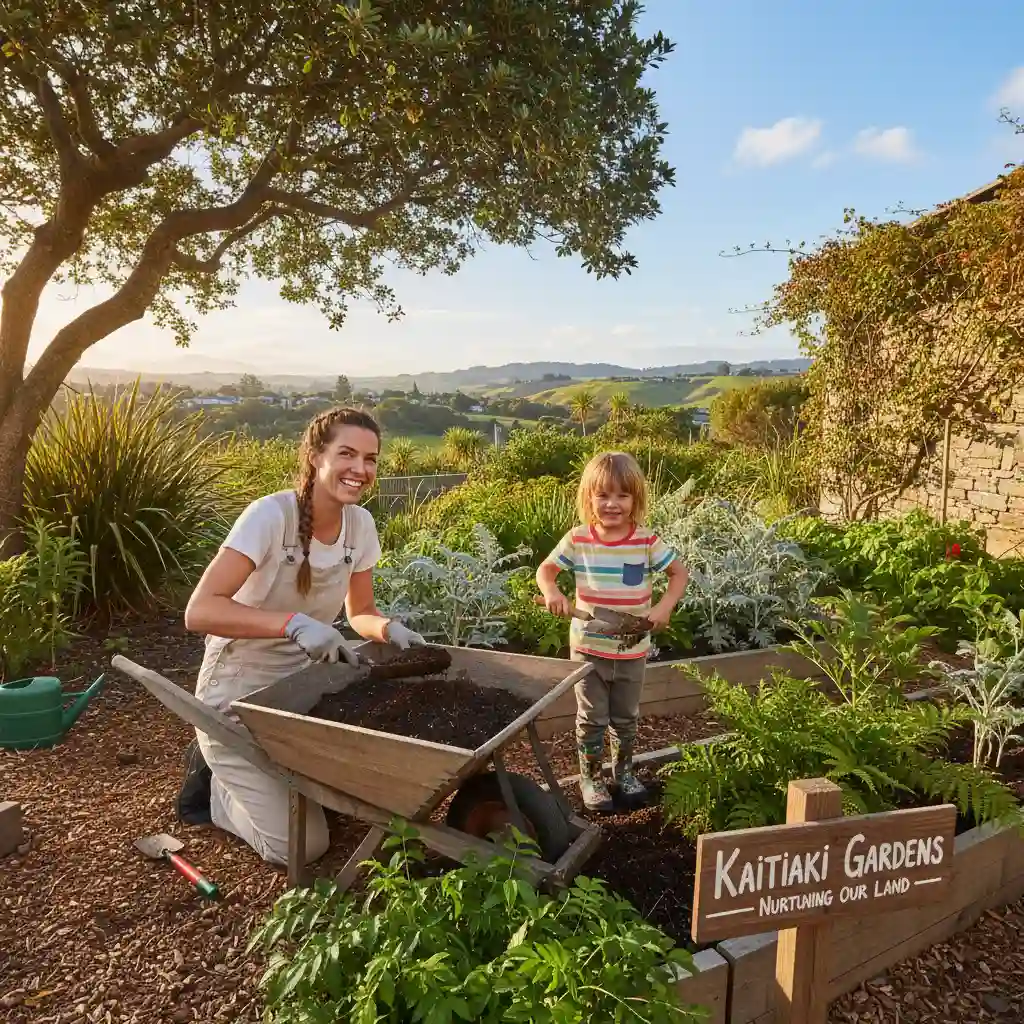
By composting, you become an active participant in building a circular economy for organic waste, transforming potential pollutants into life-giving soil amendments. This aligns with the broader goals of New Zealand’s sustainable future, encouraging resourcefulness and environmental stewardship in every household.
Sustainable Composting Action Checklist
Ready to get your hands dirty? Use this checklist to kickstart or improve your sustainable composting efforts for your New Zealand garden:
- ☐ Choose Your Method: Select a composting system (bin, worm farm, bokashi) that suits your space and lifestyle.
- ☐ Gather Your Tools: A pitchfork or aerator, a bucket for kitchen scraps, and a watering can.
- ☐ Balance Greens & Browns: Actively mix nitrogen-rich materials with carbon-rich ones (1:2-3 ratio).
- ☐ Diversify Inputs: Add a variety of acceptable kitchen and garden waste for a richer nutrient profile.
- ☐ Regular Turning: Aerate your traditional compost pile weekly or bi-weekly to speed decomposition.
- ☐ Monitor Moisture: Keep your compost damp like a wrung-out sponge – never too wet or dry.
- ☐ Bury Food Scraps: Always bury fresh food scraps deep within the pile or cover well to deter pests.
- ☐ Harvest Your Gold: When your compost is dark, crumbly, and smells earthy, it’s ready for your garden beds!
Frequently Asked Questions (FAQ)
What’s the best composting method for a small New Zealand garden?
For small NZ gardens, a worm farm (vermicomposting) or a Bokashi system are often ideal. Worm farms efficiently process kitchen scraps and produce excellent fertiliser in compact spaces. Bokashi allows composting of a wider range of food waste in a small indoor bin, with the fermented output then buried in the garden or added to a regular compost bin.
Can I compost citrus peels and onion scraps in New Zealand?
Yes, you can compost citrus peels and onion scraps, but in moderation. Large quantities can slow down decomposition and deter beneficial worms due to their acidity. It’s best to chop them into smaller pieces and mix them well into your compost pile to balance their impact.
How long does it take to make compost in New Zealand conditions?
The time it takes varies widely depending on the method, materials, and maintenance. An actively managed ‘hot’ compost pile in ideal NZ conditions (warm, moist, turned regularly) can produce finished compost in as little as 3-4 months. Slower, passive piles might take 6-12 months or even longer. Worm farms produce castings continuously.
Why is my compost pile attracting pests in my NZ garden?
Pests like rats, mice, or flies are usually attracted to uncovered food scraps, especially meat, dairy, or oily foods. To deter them, always bury fresh food waste deep within the pile and cover it with a layer of ‘brown’ materials. Ensure your compost bin has a secure lid, and avoid adding prohibited items to your compost.
What are the signs of healthy compost in Aotearoa?
Healthy, finished compost will be dark brown, crumbly, and have a pleasant earthy smell – like fresh forest soil. You shouldn’t be able to recognise the original food scraps or garden waste (except for possibly some larger woody bits that take longer to break down). It should also feel moist but not wet, and be teeming with beneficial microbial life.
References
- Ministry for the Environment. (Various publications on waste and resource efficiency in New Zealand). Retrieved from environment.govt.nz
- Love Food Hate Waste NZ. (Information on food waste reduction and composting best practices for New Zealanders). Retrieved from lovefoodhatewaste.co.nz
- Local Government New Zealand. (Guides on sustainable living and waste management initiatives by local councils). Retrieved from lgnz.co.nz
- The Compost Collective. (Educational resources, workshops, and support for composting in New Zealand). Retrieved from compostcollective.org.nz