Ethical Banking & Investments in NZ: A Guide to Sustainable Finance
Imagine your money not just sitting in an account, but actively working to build a better Aotearoa. As New Zealanders increasingly seek to align their values with their finances, the concept of ethical banking and sustainable investment has moved from niche to mainstream. This comprehensive guide will illuminate the landscape of ethical finance, helping you make informed choices that benefit both your wallet and the planet.
Discover how to find genuine ethical banks NZ has to offer and explore opportunities to invest responsibly.
What is Ethical Banking?
Ethical banking, often interchangeably called sustainable or responsible banking, is about much more than just managing your money. It’s a commitment from financial institutions to operate in a way that positively impacts society and the environment, rather than purely focusing on profit maximization.
These banks consider Environmental, Social, and Governance (ESG) factors in all their operations and investment decisions. This means they actively avoid funding industries like fossil fuels, weapons, tobacco, or exploitative labour practices. Instead, they direct capital towards areas that align with a sustainable future, such as renewable energy, affordable housing, community development, and fair trade initiatives.

For consumers, choosing an ethical bank means their savings and investments are not inadvertently supporting harmful industries, but are instead contributing to a values-aligned economy. It’s a powerful way to make your money reflect your conscience.
Stat Callout: Growing Green Finance
Globally, sustainable investment assets reached $35.3 trillion across five major markets in early 2020, representing 35.9% of total assets under management. This signifies a massive shift towards responsible investing worldwide, including in New Zealand.
Top Ethical Banks NZ
When searching for ethical banks NZ residents can trust, it’s important to look beyond marketing slogans. True ethical institutions demonstrate transparency in their lending and investment policies, often providing detailed reports on their impact. While the New Zealand banking sector is dominated by a few large players, there are increasingly strong options emerging.
Here’s a comparison of some of the leading contenders in the ethical banking space in New Zealand:
| Feature | The Co-operative Bank | Kiwibank | Small Ethical Funds (e.g., Pathfinder Asset Management) |
|---|---|---|---|
| Ownership Model | Customer-owned (co-operative) | NZ Government-owned | Independent, privately owned |
| Core Ethical Focus | Community, fairness, profit-sharing with customers. Strong ethical investment screens. | NZ focus, sustainability initiatives, no direct fossil fuel lending. | ESG integration, impact focus, strong negative screens (e.g., weapons, tobacco, fossil fuels). |
| Investment Exclusions | Fossil fuels, weapons, tobacco, gambling, adult entertainment. | No direct lending to fossil fuel extraction. Specific exclusions for KiwiSaver. | Extensive list: controversial weapons, nuclear weapons, tobacco, gambling, adult entertainment, fossil fuels, alcohol, genetic modification, animal testing. |
| Transparency | Annual Ethical Policy, Sustainability Reports. | Sustainability Reports, responsible investment statements for KiwiSaver. | Detailed responsible investment policies, regular impact reports, B Corp certified. |
| Products Offered | Personal & business banking, loans, credit cards. | Full range of banking services, KiwiSaver, home loans. | KiwiSaver, Managed Funds, Ethical Property Funds. |
It’s crucial to remember that ‘ethical’ is a spectrum. Each institution will have different criteria and levels of transparency. Always check their latest public statements and ethical policies.

Sustainable Investment Options
Beyond simply choosing ethical banks NZ offers, your investment portfolio provides another powerful avenue for change. Sustainable investment involves selecting investments that are not only financially sound but also contribute positively to environmental and social outcomes.
Ethical KiwiSaver Funds
- Many KiwiSaver providers now offer specific ethical or responsible investment funds. These funds screen out companies involved in controversial activities.
- Check your provider: Ask for their Statement of Investment Policy and Objectives (SIPO) to understand their specific exclusions and positive investment criteria.
Managed Funds and ETFs (Exchange Traded Funds)
- A growing number of managed funds and ETFs focus on ESG principles, allowing you to diversify your portfolio across a range of ethically screened companies.
- These can be a good option if you want professional management and broad market exposure with an ethical lens.
Green Bonds
- Green bonds are fixed-income instruments specifically designed to fund projects with environmental benefits, such as renewable energy or sustainable infrastructure.
- While less common for individual investors directly, they form part of many ethical funds’ portfolios.
“Investing sustainably doesn’t mean sacrificing returns. Increasingly, research shows that companies with strong ESG practices often outperform their peers in the long run.”

Impact Investing
While sustainable investing generally aims to avoid harm and support good practices, impact investing takes it a step further. Impact investments are specifically designed to generate positive, measurable social and environmental impact alongside a financial return.
This type of investing seeks to address specific challenges, such as climate change, poverty, or lack of access to education. In New Zealand, impact investing is gaining traction through initiatives supporting:
- Social Enterprises: Businesses that prioritise a social or environmental mission alongside profit.
- Renewable Energy Projects: Direct investment into solar farms, wind energy, or geothermal initiatives.
- Affordable Housing: Projects aimed at increasing the supply of sustainable, affordable homes.
- Conservation and Regeneration: Funding for projects that protect biodiversity or restore natural ecosystems.
Impact investing often involves a more hands-on approach or investing in specialised funds that vet and manage these targeted projects. It represents the forefront of values-aligned finance, where capital is a direct tool for positive change.
Avoiding Greenwashing
As demand for ethical products and services grows, so does the risk of greenwashing. Greenwashing occurs when a company or financial institution misleadingly markets itself as environmentally friendly or socially responsible without genuinely committing to sustainable practices.
It can be challenging to distinguish genuine efforts from superficial claims, especially when seeking truly ethical banks NZ wide. Here’s how to protect yourself:
- Look for Transparency: Ethical institutions should provide clear, detailed information about their investment policies, exclusions, and where your money is actually going. Annual impact reports are a good sign.
- Check for Independent Certifications: Look for external validations like B Corp certification, Responsible Investment Association Australasia (RIAA) certification, or other recognised ethical standards.
- Scrutinise Exclusions: A truly ethical provider will have clear negative screens (what they won’t invest in) in addition to positive screens (what they will support).
- Read the Fine Print: Don’t rely solely on marketing. Dive into their official policy documents to understand their commitments.
- Ask Questions: Don’t hesitate to directly ask your bank or fund manager about their ethical practices and how they measure their impact.
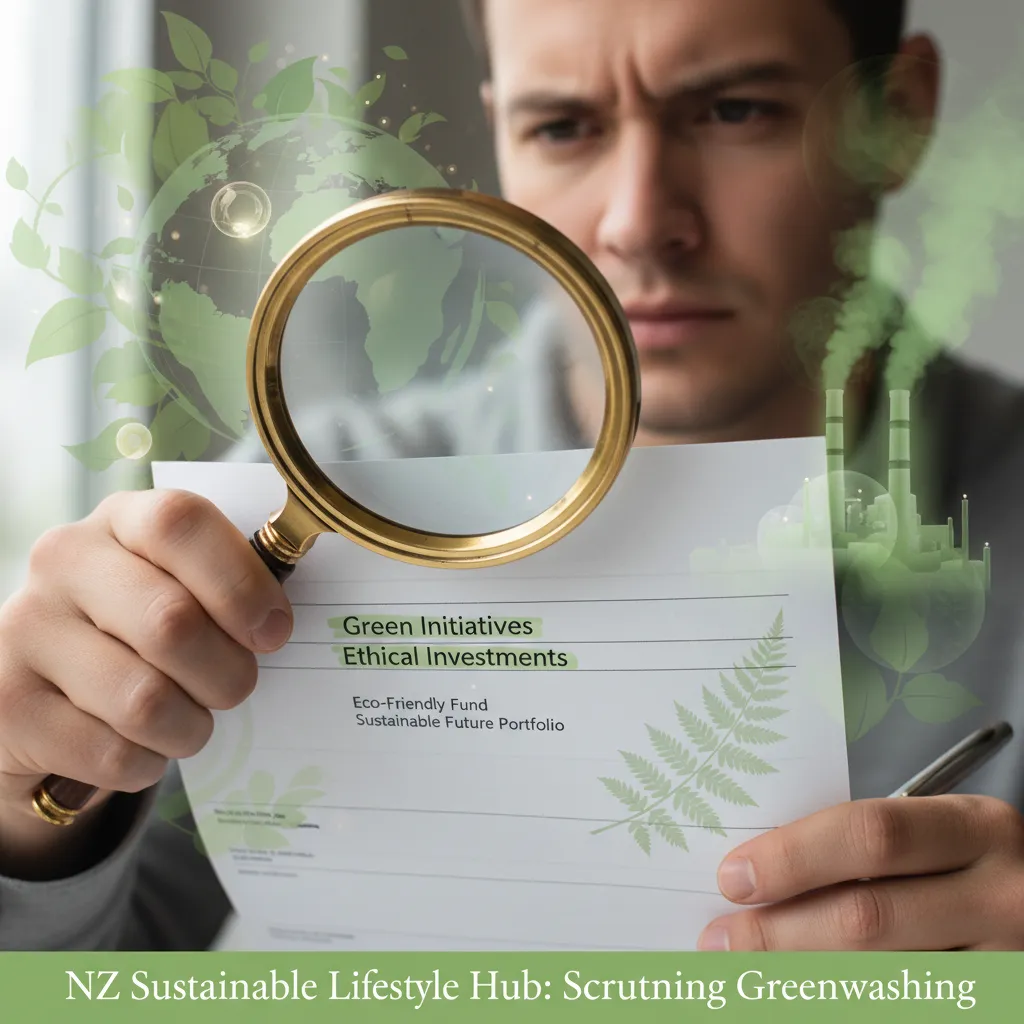
Your vigilance is key to ensuring your money supports genuine change, not just clever marketing.
Making the Switch: Your Ethical Finance Journey
Transitioning to ethical banking and sustainable investments is a powerful step towards living a more conscious lifestyle. It’s a journey that begins with understanding your values and extends to ensuring your financial choices reflect them.
Whether you’re opening a new account with ethical banks NZ recommends, adjusting your KiwiSaver, or exploring impact investment opportunities, every decision contributes to a more sustainable and equitable future for Aotearoa. Start small, do your research, and feel confident that your money is doing good.
Frequently Asked Questions (FAQ)
What is the difference between ethical and sustainable banking?
While often used interchangeably, “ethical” banking usually refers to a broader set of values-based exclusions (e.g., no weapons, tobacco, gambling). “Sustainable” banking tends to focus more specifically on environmental and long-term viability factors, often including positive investments in green technologies or sustainable infrastructure. However, most genuinely responsible banks will incorporate both ethical and sustainable principles.
Are ethical banks profitable, and do they offer competitive rates?
Yes, ethical banks can be very profitable. Their responsible investment strategies often lead to more stable, long-term returns as they avoid risky, environmentally damaging, or socially controversial sectors. Many ethical banks offer competitive interest rates on savings and loans, similar to traditional banks, as their operational costs and profit margins need to remain viable.
Is switching banks difficult in NZ?
Switching banks in New Zealand has become much easier thanks to initiatives like the New Zealand Banking Association’s switching service. Most banks will assist you in transferring direct debits, automatic payments, and even closing your old account once everything is set up with your new one. It typically involves a bit of paperwork but is a smooth process.
How do I find out if my current bank is ethical?
To assess your current bank’s ethical stance, review their public statements, annual reports, and specific policies on lending and investment. Look for sections on responsible investment, sustainability, or ESG (Environmental, Social, Governance) criteria. Websites like Mindful Money also offer tools and reports specific to the ethical performance of financial institutions in New Zealand.
What is KiwiSaver’s role in ethical investing?
KiwiSaver plays a significant role in ethical investing for many New Zealanders. A growing number of KiwiSaver providers now offer specific “ethical” or “socially responsible” funds. These funds typically screen out investments in controversial industries like fossil fuels, weapons, and tobacco. It’s crucial to check your specific KiwiSaver provider’s Statement of Investment Policy and Objectives (SIPO) to understand their ethical criteria.
References & Sources
- Responsible Investment Association Australasia (RIAA). (2022). Responsible Investment Benchmark Report Australia & New Zealand 2022. responsibleinvestment.org
- Mindful Money. (Current Data). Ethical Bank Comparison & Fund Checker. mindfulmoney.nz
- The Co-operative Bank. (Ongoing). Our Ethical Policy. co-operativebank.co.nz
- Kiwibank. (Ongoing). Sustainability & Responsible Banking. kiwibank.co.nz
- Global Sustainable Investment Alliance (GSIA). (2020). Global Sustainable Investment Review 2020. (Cited stat derived from this type of global report)