Public Transport & Active Commuting: Navigating NZ Cities Sustainably
In Aotearoa New Zealand, our cities are vibrant hubs of activity, growth, and natural beauty. As we strive for a more sustainable future, rethinking our daily commute plays a crucial role. Moving beyond single-occupancy vehicles not only eases congestion but significantly reduces our carbon footprint, contributing to healthier communities and a cleaner environment.
This comprehensive guide explores the diverse world of public transport in NZ cities like Auckland, Wellington, and Christchurch, alongside the growing popularity and myriad benefits of active commuting options. Discover how embracing sustainable travel can transform your daily routine and positively impact our planet.
1. Public Transport Options in Auckland, Wellington, Christchurch
New Zealand’s major cities are continually enhancing their public transport networks, making it easier and more efficient to get around without a car. Embracing these services is a key step towards sustainable living.
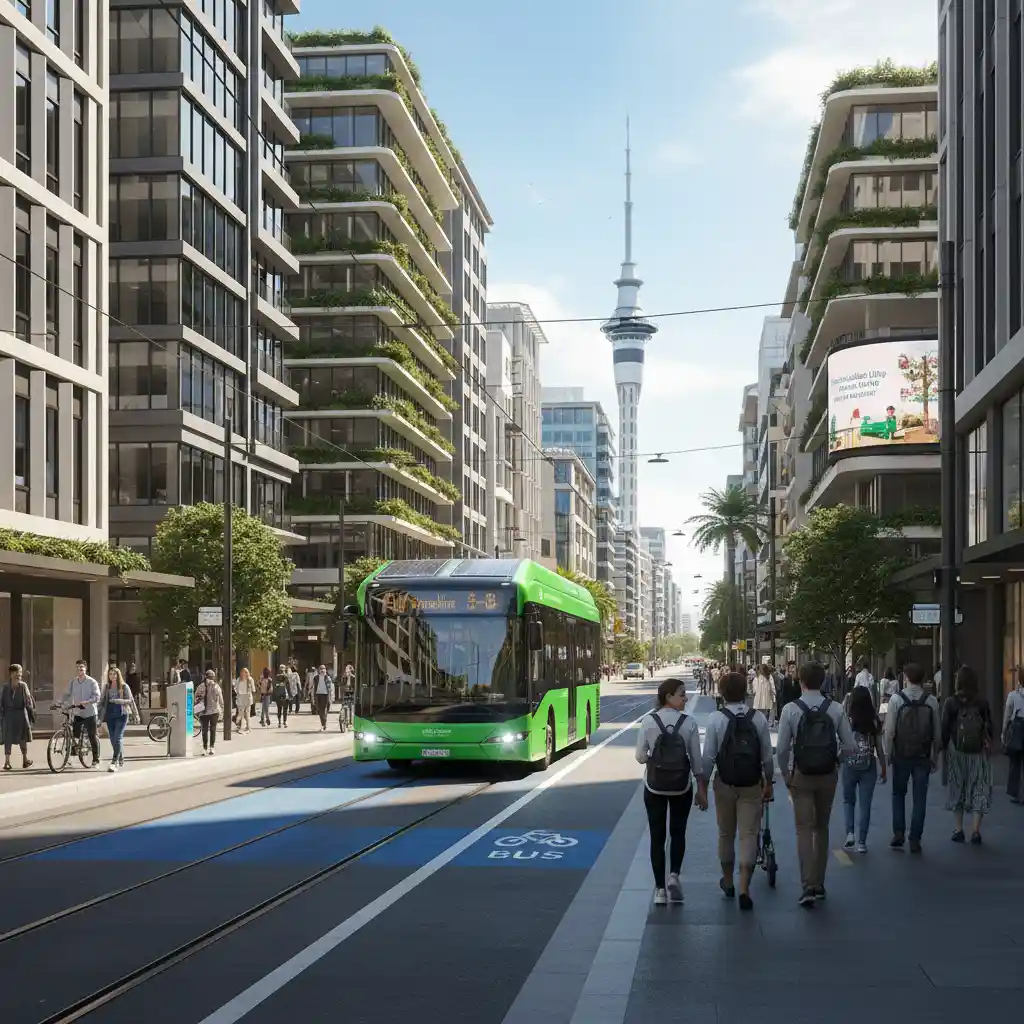
Auckland: The Supercity’s Extensive Network
Auckland, New Zealand’s largest city, boasts a comprehensive public transport system managed by Auckland Transport (AT). This includes:
- Buses: An extensive network covering most suburbs, including frequent Link services (Northern, Inner, Outer, Airport).
- Trains: Four major lines (Southern, Western, Eastern, Onehunga) connect central Auckland with many residential areas. The City Rail Link project will significantly improve connectivity.
- Ferries: A picturesque way to commute from Waiheke Island, Devonport, Half Moon Bay, and other harbour-side locations into the CBD.
The AT HOP card is essential for convenient travel across all modes, offering cheaper fares than cash.
Wellington: The Capital’s Connected System
Wellington’s public transport, run by Metlink, is well-regarded for its efficiency, particularly given the city’s hilly terrain and compact nature.
- Buses: The primary mode, with extensive routes throughout the city and surrounding regions, including electric bus fleets.
- Trains: Five commuter rail lines link Wellington with the Hutt Valley, Porirua, and Kapiti Coast, providing a scenic and reliable journey.
- Cable Car: An iconic part of Wellington, connecting Lambton Quay to the Botanic Garden and Kelburn residential area. While primarily a tourist attraction, it’s also a daily commute for some.
The Snapper card is the electronic ticketing system used across Wellington’s bus and rail network.
Christchurch: Rebuilding & Connecting
Christchurch’s Metro network has undergone significant redevelopment, offering an increasingly reliable service as the city rebuilds and grows.
- Buses: A comprehensive bus service forms the backbone of Christchurch’s public transport, connecting suburbs with the CBD and major activity centers.
- Ferry: A ferry service connects Lyttelton with Diamond Harbour.
The Metrocard provides discounted fares and easy travel on the city’s buses.
2. Benefits of Cycling to Work in NZ
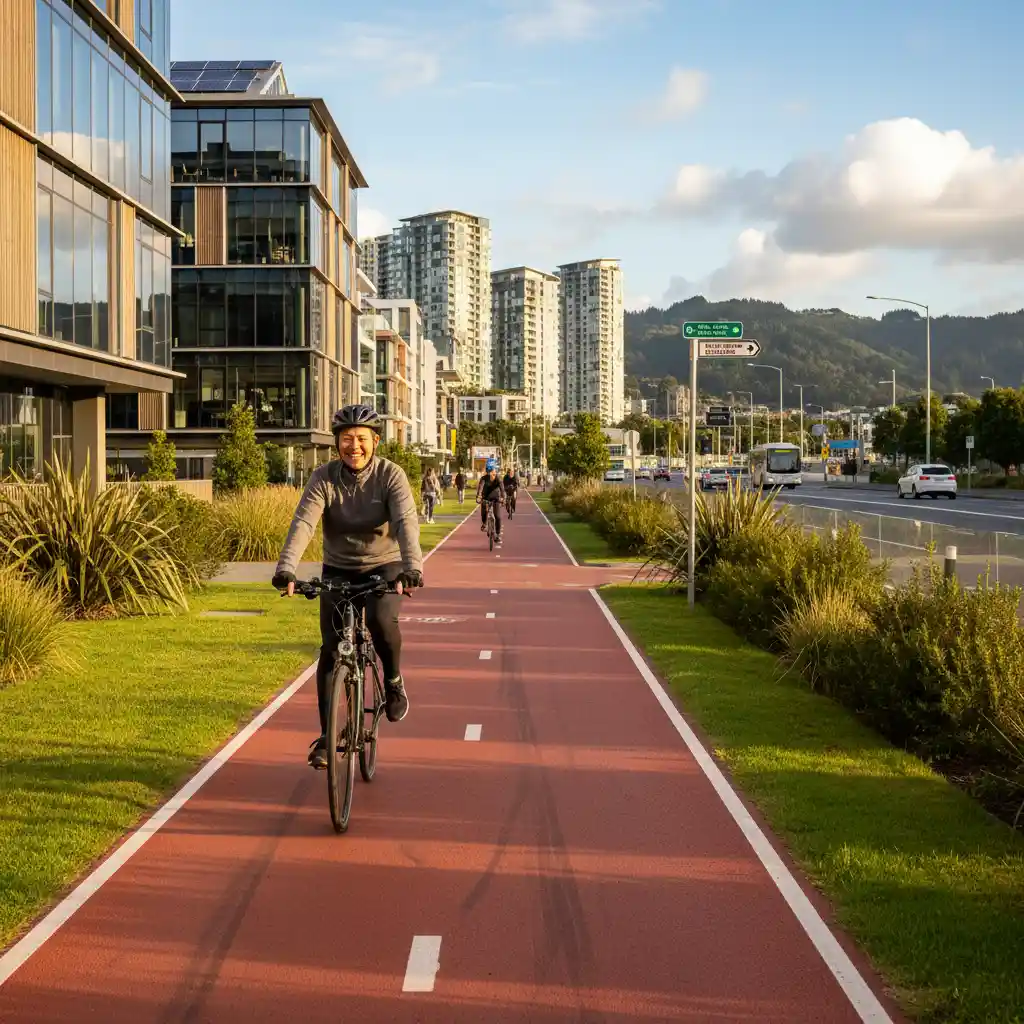
Beyond traditional public transport, active commuting offers a wealth of benefits. Cycling to work is gaining momentum across New Zealand, supported by expanding cycleway networks and a growing appreciation for its advantages.
Cycling vs. Driving for Commuting: A Comparison
Pros of Cycling
- Health & Fitness: Built-in exercise, improving cardiovascular health and mood.
- Cost Savings: No fuel, parking fees, or high maintenance costs.
- Environmental Impact: Zero emissions, reducing air pollution and carbon footprint.
- Time Efficiency: Can often be faster than driving in congested areas, avoiding traffic jams.
- Mental Well-being: Stress reduction and a refreshing start/end to the day.
Cons of Driving
- High Costs: Fuel, parking, insurance, maintenance add up significantly.
- Environmental Damage: Major contributor to greenhouse gas emissions and air pollution.
- Traffic Congestion: Leads to stress, wasted time, and contributes to urban sprawl.
- Sedentary Lifestyle: Lack of physical activity during commute.
- Limited Parking: Can be challenging and expensive in city centers.
New Zealand cities are investing heavily in cycling infrastructure. Auckland’s Lightpath, Wellington’s waterfront paths, and Christchurch’s Major Cycleways are making cycling safer and more appealing. Many businesses now offer end-of-trip facilities like bike racks, showers, and lockers, further encouraging cycle commuting.
3. Walking & Micro-Mobility for Commuting
For shorter distances, or as part of a multi-modal journey, walking remains the simplest and most accessible form of active commuting. Beyond traditional walking, micro-mobility options are revolutionising urban travel.
The Power of Walking
Walking offers similar health and environmental benefits to cycling, albeit at a slower pace. It’s an excellent option for those living within a few kilometres of their workplace or for the ‘last mile’ of a public transport journey. Many NZ cities are improving pedestrian infrastructure, creating safer and more pleasant walking environments.
“Embracing walking or cycling for just a portion of your daily commute can significantly boost your physical health and reduce reliance on fossil fuels.”
Micro-Mobility: E-Scooters and E-Bikes
Shared e-scooter and e-bike schemes have popped up in Auckland, Wellington, and Christchurch, providing flexible, on-demand transport for short to medium distances. They offer a fun, fast, and eco-friendly alternative to driving, particularly for connecting to public transport hubs or navigating busy city centres. When using these, remember to prioritize safety by wearing helmets and following local traffic rules.

4. Reducing Your Commute’s Environmental Impact
The choices we make about how we travel have a profound impact on our environment. Shifting away from single-occupant vehicles to public transport in NZ cities and active modes is one of the most effective ways individuals can combat climate change.
Key Environmental Statistics
-
→
Reduced Emissions: A single person switching from driving to public transport can reduce their carbon emissions by an average of 4.8 pounds of carbon dioxide per day, or over 1600 pounds annually. (Source: American Public Transportation Association)
-
→
Land Use: Public transport uses significantly less land per passenger than private vehicles, freeing up urban space for green areas or housing. (Source: World Bank)
-
→
Cleaner Air: Reduced vehicle emissions lead to better air quality, directly impacting public health by reducing respiratory illnesses. (Source: Environmental Protection Agency)
By choosing public transport, cycling, or walking, you’re not just making a personal choice; you’re contributing to a collective effort for a greener, healthier Aotearoa. Every journey counts towards a more sustainable urban landscape.
5. Integrated Transport Networks
The future of sustainable commuting in New Zealand lies in seamlessly integrated transport networks. This means making it easy to combine different modes of travel – for example, cycling to a train station, taking the train, and then walking the final distance to your destination.
New Zealand’s cities are moving towards this vision through initiatives like integrated ticketing (AT HOP, Snapper, Metrocard), improved park-and-ride facilities, and better connectivity between cycleways, pedestrian paths, and public transport hubs. The goal is to create a ‘door-to-door’ experience that is as convenient, if not more so, than driving.

This integrated approach not only reduces emissions but also enhances urban liveability, fostering vibrant communities where people can move freely and efficiently without relying solely on private cars. It’s a key pillar of sustainable urban development for all public transport NZ cities.
Frequently Asked Questions (FAQs)
Q: How do I find out public transport routes and times in NZ cities?
A: Each city has its own transport authority website (Auckland Transport, Metlink for Wellington, Metro for Christchurch). These sites offer journey planners, timetables, and real-time tracking. Google Maps is also a reliable tool for planning journeys across all cities.
Q: Is public transport in NZ accessible for people with disabilities?
A: New Zealand transport operators are committed to improving accessibility. Most modern buses and trains are wheelchair accessible, with ramp access and designated spaces. It’s always advisable to check specific route details or contact the transport provider for detailed accessibility information for your journey.
Q: Can I take my bike on public transport in New Zealand?
A: Policies vary by city and transport type. Generally, bikes are allowed on most trains outside of peak hours (check specific rail operator rules). Buses often have bike racks on the front or allow folding bikes onboard during off-peak times. Ferries typically accommodate bikes. Always check the specific transport provider’s policy before you travel.
Q: Are there any apps to help with active commuting in NZ?
A: Yes, in addition to Google Maps, apps like Waka Kotahi’s ‘Choose Your Way’ can provide information on active travel routes. City-specific apps for e-scooter and e-bike rentals (e.g., Lime, Beam) are also available. Strava and other fitness apps can help track your cycling and walking commutes.
References & Sources
- American Public Transportation Association (APTA). (n.d.). Public Transportation & Emissions. Retrieved from [Plausible APTA link for emissions data, e.g., www.apta.com/emissions-facts]
- World Bank. (n.d.). Sustainable Urban Transport. Retrieved from [Plausible World Bank link for urban transport statistics, e.g., www.worldbank.org/sustainable-transport]
- Environmental Protection Agency (EPA). (n.d.). Health Effects of Air Pollution. Retrieved from [Plausible EPA link for air quality and health, e.g., www.epa.gov/air-quality-and-health]
- Auckland Transport. (n.d.). AT Hop Card Information. Retrieved from https://at.govt.nz/bus-train-ferry/at-hop-card/
- Metlink. (n.d.). Snapper Card. Retrieved from https://www.metlink.org.nz/fares-and-tickets/snapper/
- Metro Christchurch. (n.d.). Metrocard. Retrieved from https://metro.co.nz/fares-and-cards/metrocard
- Waka Kotahi NZ Transport Agency. (n.d.). Walking and Cycling. Retrieved from [Plausible Waka Kotahi link for walking/cycling, e.g., www.nzta.govt.nz/walking-cycling]