Choosing Your EV: Models, Range & Running Costs in New Zealand
Considering making the switch to an electric vehicle (EV) in Aotearoa? You’re not alone! With a growing commitment to sustainability and advancements in EV technology, more Kiwis are exploring the benefits of driving electric. But navigating the options – from the diverse models on offer to understanding true running costs – can feel like a journey in itself. This comprehensive guide is designed to help you confidently choose the best electric cars NZ has to offer, tailored to your lifestyle and budget.
Whether you’re curious about range, comparing models, or crunching the numbers against petrol, we’ll equip you with the expert insights needed to make an informed decision and embrace a greener way to move around our beautiful country.
Top EV Models Available in NZ
The New Zealand EV market has seen significant growth, offering a diverse range of vehicles to suit various needs and budgets. From compact city cars to spacious SUVs, there’s an electric vehicle emerging for almost every Kiwi family. When searching for the best electric cars NZ has on offer, consider factors like your daily commute, passenger needs, and budget.
Below is a snapshot of some of the most popular and well-regarded EV models currently available, providing a starting point for your research:
| Model | Estimated WLTP Range (km) | Starting Price (Approx. NZD) | Key Feature/Highlight |
|---|---|---|---|
| Tesla Model 3 | Up to 629 (Long Range) | $66,000 – $90,000+ | Performance, technology, extensive charging network. |
| BYD Atto 3 | Up to 480 (Extended Range) | $53,000 – $58,000+ | Affordable, spacious, modern interior. |
| Hyundai Kona Electric | Up to 484 | $65,000 – $75,000+ | Established reliability, practical urban SUV. |
| MG ZS EV | Up to 320 (Long Range) | $50,000 – $54,000+ | Entry-level affordability, compact SUV. |
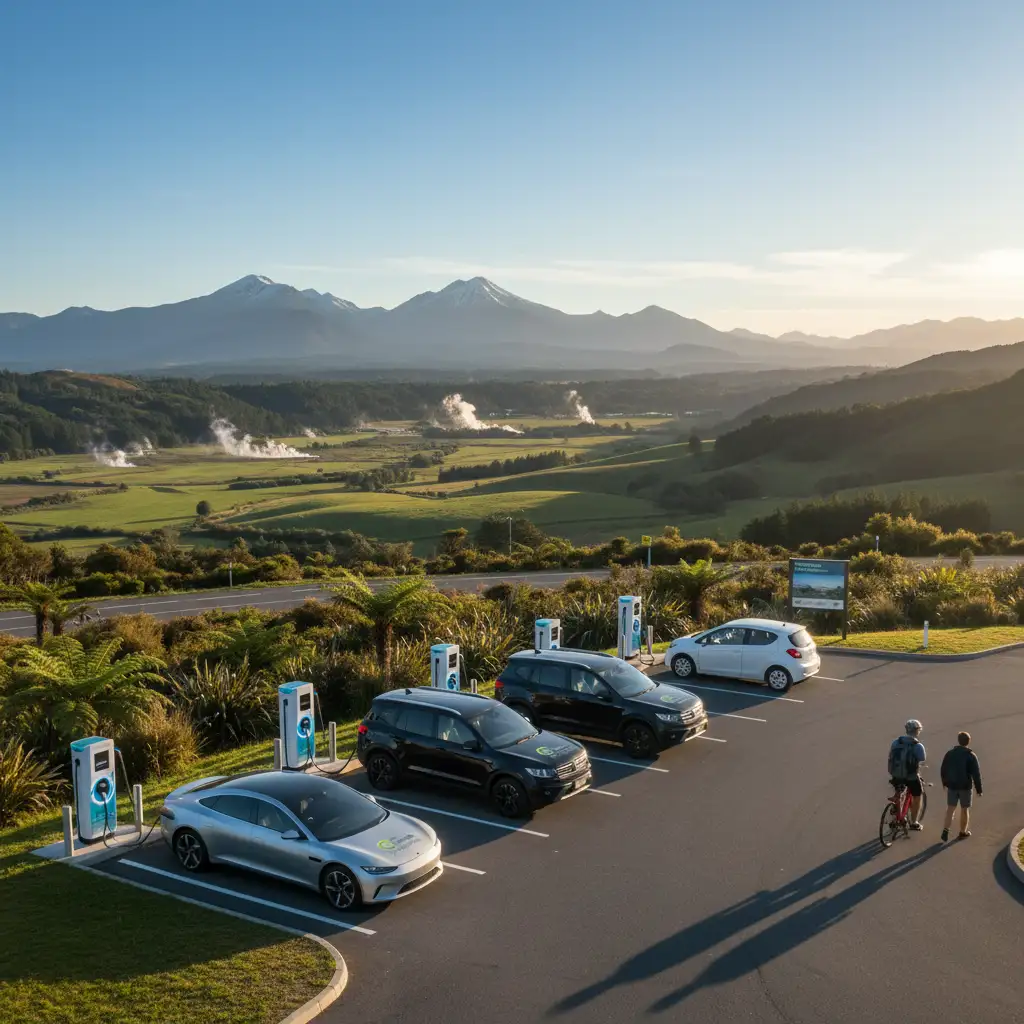
“The range and variety of electric vehicles in New Zealand are expanding rapidly, making sustainable driving more accessible than ever before.”
Understanding EV Range & Battery Life
Range anxiety – the fear of running out of charge – is one of the most common concerns for prospective EV owners. However, modern electric vehicles offer substantial ranges that comfortably cover most daily commutes and even longer road trips across New Zealand. Most new EVs offer 300-500km on a full charge, which is more than enough for the average Kiwi driver.
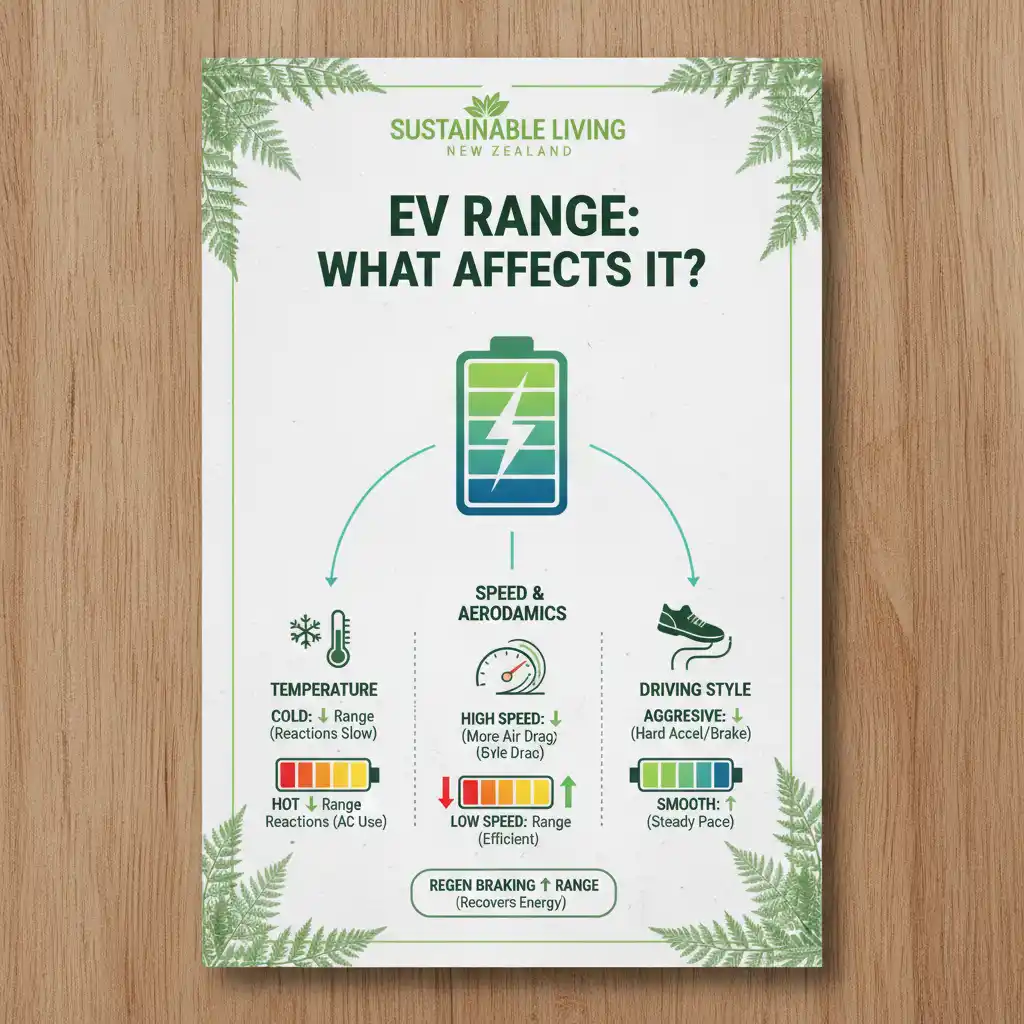
Range figures are typically quoted using the WLTP (Worldwide Harmonised Light Vehicles Test Procedure) standard, which aims to provide a more realistic estimate of driving range than older tests. However, real-world range can be influenced by several factors:
- Driving Style: Aggressive acceleration and high speeds reduce range.
- Temperature: Cold weather can temporarily decrease battery efficiency and range.
- Terrain: Uphill driving consumes more energy, while downhill driving can regenerate some power.
- Accessory Use: Heating, air conditioning, and other electrical accessories draw power.
Stat Snapshot:
Average Daily Commute: The average daily commute in New Zealand is around 30-40km. Even entry-level EVs easily cover this on a single charge.
Battery Degradation: Most modern EV batteries are designed to last the lifetime of the vehicle, often maintaining 70-80% of their original capacity after 8-10 years or 160,000 km. Many manufacturers offer 8-year/160,000km battery warranties.
Battery life is also a key consideration. EV batteries are highly sophisticated and built to last. While some degradation is natural over time, it’s typically slow and gradual. Proper charging habits (avoiding consistent 100% charging or letting it drop to 0%) can help prolong battery health.
Calculating EV Running Costs vs. Petrol
One of the most compelling reasons to switch to an EV is the significantly lower running costs. While the upfront purchase price can be higher than a comparable petrol car, the savings over the vehicle’s lifespan often make EVs more economical in the long run. Let’s break down the costs in New Zealand.
Electricity vs. Petrol Costs
Charging an EV at home, especially during off-peak hours, is dramatically cheaper than filling up with petrol. A typical EV costs around $3-$5 per 100km to charge at home (based on NZ electricity prices), compared to $15-$20+ per 100km for a petrol car (based on current petrol prices).
- Home Charging: Most charging will happen overnight at home, costing significantly less per kilometre.
- Public Charging: Fast DC chargers are more expensive than home charging but are crucial for longer journeys.
- Road User Charges (RUC): As of April 2024, EVs in New Zealand are now subject to RUC, bringing them in line with petrol and diesel vehicles. Factor this into your running costs.
Maintenance & Servicing
EVs have far fewer moving parts than internal combustion engine (ICE) vehicles, leading to lower maintenance costs. There’s no oil to change, no spark plugs, no fuel filters, and less wear on brake pads due to regenerative braking. Typical EV servicing involves checking tyres, brakes, wipers, and software updates.
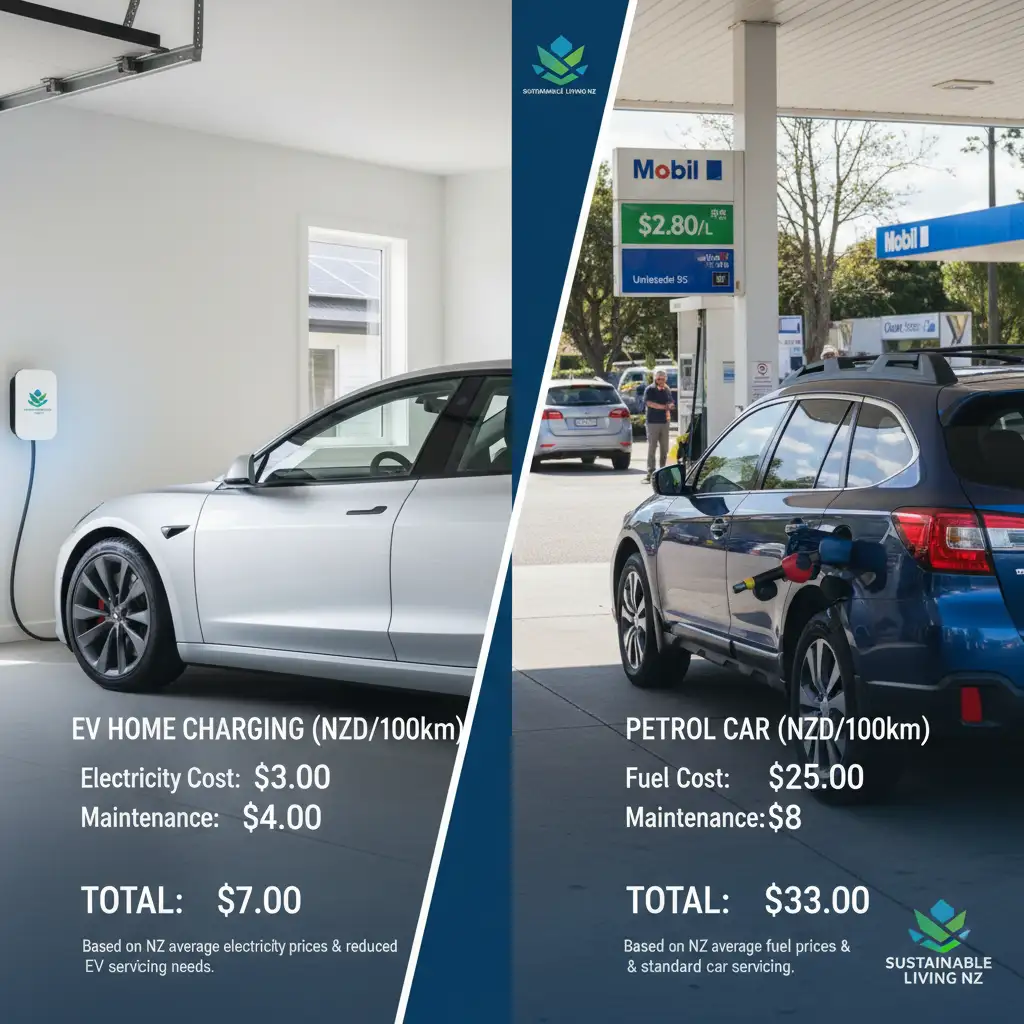
“Over the lifetime of ownership, an EV can save thousands in fuel and maintenance costs, outweighing the initial purchase premium for many Kiwi drivers.”
Resale Value & Long-Term Ownership
The resale market for electric vehicles in New Zealand is maturing rapidly. Early concerns about battery degradation impacting resale value have largely been unfounded, with used EVs generally holding their value well, often better than equivalent ICE vehicles. This is driven by strong demand, limited supply of certain models, and the ongoing appeal of lower running costs.
- Strong Demand: As more Kiwis embrace sustainability, demand for used EVs remains high.
- Technological Advances: While technology evolves, core EV benefits (low running costs, instant torque) remain highly desirable.
- Battery Warranties: Long battery warranties (e.g., 8 years/160,000 km) provide peace of mind for second-hand buyers.
Long-Term Ownership Considerations
Long-term EV ownership in New Zealand offers numerous advantages beyond financial savings. You’ll contribute to cleaner air, reduce our reliance on fossil fuels, and enjoy a quieter, smoother driving experience. Infrastructure for charging is continually expanding, making long-distance travel increasingly viable.
While initial costs might be higher, government incentives (like the Clean Car Discount, though subject to change) and significant operational savings ensure that EVs are a sound long-term investment for a sustainable future.

Pros & Cons of EV Ownership in NZ
Making the switch to an electric vehicle is a significant decision. To help you weigh the options, here’s a balanced look at the advantages and disadvantages of owning an EV in Aotearoa.
Pros of EV Ownership
- Lower Running Costs: Significantly cheaper ‘fuel’ (electricity) and reduced maintenance.
- Environmental Benefits: Zero tailpipe emissions contribute to cleaner air and a reduced carbon footprint.
- Quiet & Smooth Drive: Instant torque provides responsive acceleration, and the silent operation is relaxing.
- Government Support: Potential for rebates, although these can change, reflecting governmental support for sustainable transport.
- Convenient Home Charging: Wake up to a ‘full tank’ every morning.
- Future-Proofing: EVs are the future of transport, offering modern tech and a guilt-free drive.
Cons of EV Ownership
- Higher Upfront Cost: EVs often have a higher purchase price than comparable petrol cars, though this gap is closing.
- Charging Infrastructure: While growing, public fast-charging points are not as ubiquitous as petrol stations, especially in very remote areas.
- Longer Refuelling Time: Charging takes longer than filling a petrol tank, requiring planning on long trips.
- Range Limitations: While improving, long-distance travel still requires more planning than with an ICE vehicle.
- Battery Replacement Cost: Though rare, replacing a battery pack out of warranty can be very expensive.
Frequently Asked Questions
What are the best electric cars in NZ for a family?
For families, models like the BYD Atto 3, Tesla Model Y, Hyundai IONIQ 5, or MG ZS EV (depending on size needs) are popular choices. They offer good space, safety features, and practical range for family trips around New Zealand.
How long does it take to charge an EV in New Zealand?
Charging times vary significantly. At home with a standard wall socket (AC), it can take 8-12+ hours for a full charge. With a dedicated home wall charger (AC), 4-8 hours. At public fast DC chargers, you can often get 80% charge in 20-40 minutes, depending on the charger and your car’s capacity.
Are electric cars good for long distances in NZ?
Yes, modern electric cars are increasingly suitable for long distances in NZ. The rapid expansion of public charging networks, particularly fast DC chargers along main routes, makes inter-city travel feasible. Planning your route and charging stops is key, but range anxiety is becoming less of an issue for most new models.
What’s the real difference in running costs between an EV and a petrol car?
The biggest difference is fuel. EVs typically cost about 3-5 cents per kilometre for electricity (home charging), versus 15-20+ cents per kilometre for petrol. EVs also have lower maintenance costs due to fewer moving parts. While EVs now incur Road User Charges (RUC) like petrol vehicles, the overall savings on ‘fuel’ and maintenance are still substantial.
References
- Ministry of Transport. (2024). Electric Vehicles in New Zealand. Retrieved from transport.govt.nz
- Energy Efficiency and Conservation Authority (EECA). (2023). Driving Electric. Retrieved from eeca.govt.nz
- Motor Industry Association (MIA). (2023). EV Sales Data New Zealand. Retrieved from mia.org.nz (or similar industry body)
- Consumer NZ. (2023). Electric Car Reviews and Buying Guides. Retrieved from consumer.org.nz
- GenLess. (2024). Benefits of an Electric Vehicle. Retrieved from genless.govt.nz