Electric Vehicles (EVs) & The Evolving Landscape of Incentives in NZ
The road to a sustainable future in Aotearoa New Zealand is increasingly paved with electric vehicles. As fuel prices fluctuate and environmental consciousness grows, making the switch to an EV is more appealing than ever. While the Clean Car Discount, a significant incentive for electric vehicle rebates NZ, has concluded, the financial and environmental benefits of EV ownership continue to make them a compelling choice for Kiwis.
This comprehensive guide will navigate the past and present of EV incentives, explore the myriad advantages of going electric, demystify charging, and help you compare models to find your perfect ride. Even without direct rebates, the smart money is on EVs for long-term savings and a greener footprint.

Understanding the Clean Car Discount (Historical Context)
From July 2021 to December 31, 2023, the New Zealand government offered the Clean Car Discount (CCD), a significant initiative designed to encourage the uptake of low-emission vehicles. This programme provided rebates for eligible battery electric vehicles (BEVs) and plug-in hybrid electric vehicles (PHEVs), effectively acting as electric vehicle rebates NZ consumers could claim at the point of sale.
The CCD aimed to reduce transport emissions and accelerate New Zealand’s transition to a cleaner vehicle fleet. For many, these rebates made the initial purchase of an EV significantly more accessible, easing the financial barrier to entry.
“The Clean Car Discount played a pivotal role in accelerating EV adoption, demonstrating that financial incentives are a powerful tool for driving sustainable change.” – Sustainable Living NZ Expert
While the direct rebates for purchasing new or imported used EVs are no longer available, the programme laid important groundwork. It helped establish a thriving second-hand EV market and increased public awareness and infrastructure development for electric transport. Many early adopters benefited from these electric vehicle rebates NZ offered, contributing to a more mature EV landscape today.
During its tenure, the Clean Car Discount contributed to a record surge in EV registrations, with over 100,000 rebates processed for new and used vehicles in New Zealand.

Benefits of Owning an EV in NZ Today
Despite the conclusion of direct electric vehicle rebates NZ, the advantages of owning an EV in Aotearoa remain substantial. These benefits extend beyond environmental impact, offering tangible financial and lifestyle improvements.
Significant Running Cost Savings
- Fuel vs. Electricity: Charging an EV at home, especially off-peak, is significantly cheaper than filling up with petrol or diesel. With New Zealand’s high percentage of renewable electricity generation, you’re powering your car with clean, local energy.
- Lower Maintenance: EVs have fewer moving parts than internal combustion engine (ICE) vehicles, leading to reduced maintenance costs (no oil changes, spark plugs, or exhaust systems).
- Road User Charges (RUC): While EVs transitioned to paying RUC from April 1, 2024, the government has stated these charges are set at a comparable rate to petrol excise duties, ensuring fairness while still offering overall running cost advantages for many.
Estimates suggest that an average New Zealand driver can save around $2,500 per year on fuel costs by switching from a petrol car to an EV, even after accounting for RUC.
Environmental Impact
New Zealand’s electricity grid is powered by over 80% renewable sources, primarily hydro, geothermal, and wind. This means driving an EV here dramatically reduces your personal carbon footprint, contributing to cleaner air and a healthier planet.
Superior Driving Experience
EVs offer instant torque, providing smooth, rapid acceleration. They are incredibly quiet, making for a serene and enjoyable driving experience, free from engine noise and vibrations. Many also boast advanced technology and safety features.

Charging Your EV: Home & Public Solutions
One of the most common concerns for prospective EV owners is charging. Thankfully, New Zealand has a rapidly expanding charging infrastructure, making EV ownership increasingly convenient.
Home Charging: The Most Convenient Option
- Standard Wall Socket (Level 1): Every EV comes with a cable to plug into a standard 3-pin NZ wall socket. This offers ‘trickle charging,’ adding about 10-15km of range per hour. Perfect for overnight charging for those with shorter commutes.
- Dedicated Wallbox (Level 2): Installing a dedicated EV charger (a ‘wallbox’) at home is highly recommended. These typically provide 7kW or 22kW of power, charging your EV much faster – enough to fully charge most EVs overnight or significantly top up during the day. Many smart chargers offer scheduling to take advantage of off-peak electricity rates.
Public Charging Networks: On the Go
New Zealand boasts a robust and growing public charging network, making longer journeys feasible. Key players include:
- ChargeNet NZ: The largest fast-charging network, with DC rapid chargers (50kW to 300kW+) strategically located across the country.
- Z Energy & BP: Petrol stations increasingly host fast chargers, integrating EVs into existing fuel infrastructure.
- Other Networks: Smaller providers and destination chargers (e.g., at hotels, supermarkets) supplement the main networks.
Apps like ChargeNet NZ, PlugShare, and EV Roam are essential tools for locating available chargers, checking their status, and managing payments on the go.
Comparing EV Models & Running Costs
The EV market in New Zealand is diversifying rapidly, offering options for every budget and lifestyle. When comparing models, consider factors like range, battery size, charging speed, vehicle size, and, of course, the upfront price. Even without electric vehicle rebates NZ, the total cost of ownership often makes EVs competitive.
Key Considerations for EV Buyers:
- Range (WLTP): How far can it go on a single charge? The ‘real-world’ range can vary based on driving style, terrain, and temperature.
- Battery Size (kWh): A larger battery generally means more range but also a heavier car and potentially longer charging times.
- Charging Speed (kW DC): How quickly can it fast charge? Important for road trips.
- Vehicle Type: Hatchbacks, SUVs, sedans – the choice is yours.
- Price & Availability: Consider both new and the burgeoning used EV market.
EV Model Comparison & Indicative Running Costs
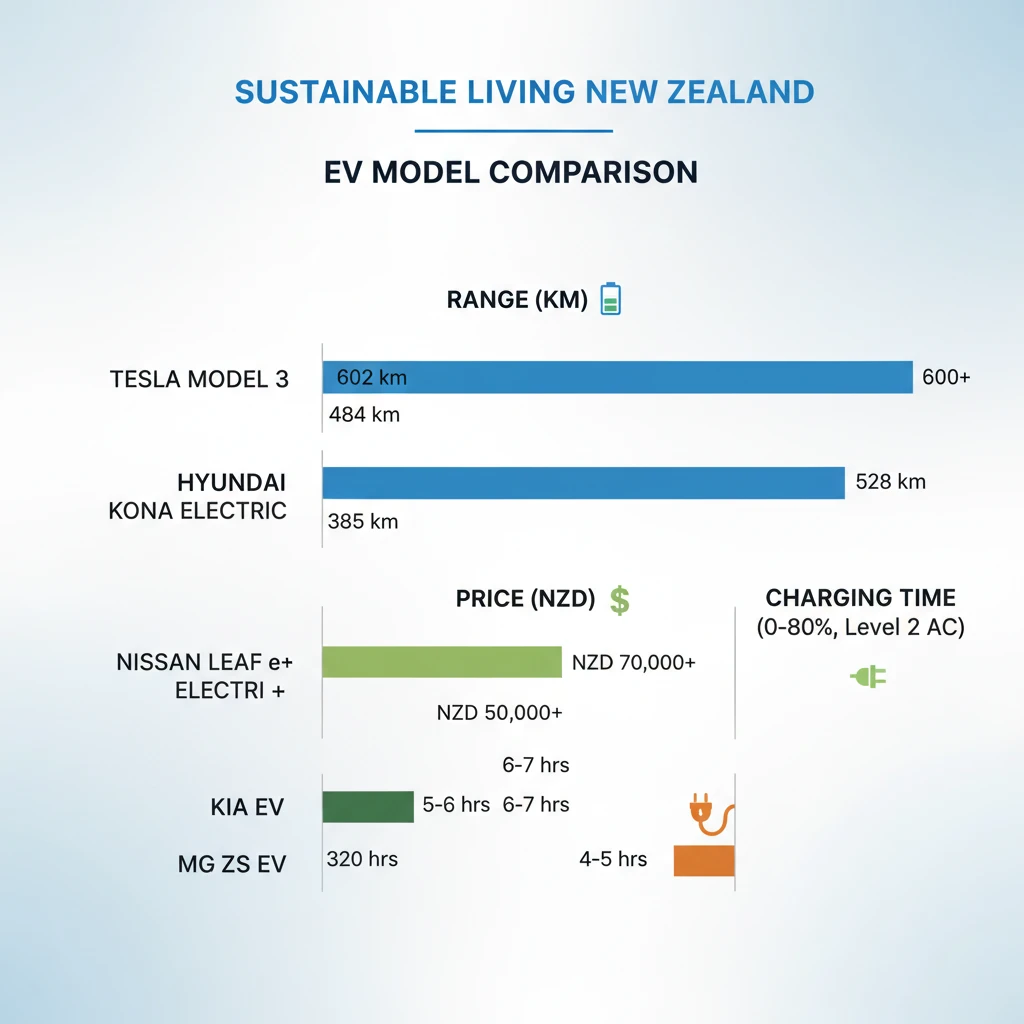
Here’s a comparison of some popular EV models available in New Zealand, focusing on key specs and estimated running costs. (Prices are indicative and subject to change based on new/used market conditions, trim levels, and dealer offers.)
| Model | Type | Indicative Price (NZD) | WLTP Range (approx.) | Max DC Charge Rate | Est. Running Cost (per 100km)* |
|---|---|---|---|---|---|
| BYD Atto 3 | BEV SUV | $55,000 – $60,000 | 420 km (Extended Range) | 80 kW | ~$3.50 – $4.50 |
| Tesla Model 3 | BEV Sedan | $62,000 – $80,000+ | 513 km (RWD) | 170-250 kW+ | ~$4.00 – $5.50 |
| Hyundai Kona Electric | BEV SUV | $60,000 – $70,000 | 484 km (64kWh) | 75-100 kW | ~$3.80 – $4.80 |
| MG ZS EV | BEV SUV | $50,000 – $55,000 | 320 km (Long Range) | 50 kW | ~$3.00 – $4.00 |
| Nissan Leaf (Used) | BEV Hatchback | $20,000 – $40,000 | 150-270 km (depending on model/battery) | 50 kW | ~$2.80 – $3.80 |
*Estimated running costs per 100km factor in average New Zealand electricity prices (approx. $0.25-0.35/kWh) and current EV Road User Charges (RUC) of $76 per 1,000 km. Actual costs will vary based on electricity provider, charging habits (home vs. public fast charge), vehicle efficiency, and driving style.
Researching and test driving different models is crucial to finding the EV that best suits your needs and budget. The used EV market, especially for models like the Nissan Leaf and Hyundai Kona Electric, offers excellent value without the need for electric vehicle rebates NZ once provided.
While the era of direct electric vehicle rebates NZ enjoyed under the Clean Car Discount has passed, the compelling arguments for switching to an EV remain stronger than ever. New Zealand’s commitment to sustainability, coupled with the ongoing financial savings, environmental benefits, and a continuously improving charging infrastructure, makes EV ownership a smart, forward-thinking choice for Kiwis.
Embrace the future of transport and discover how an electric vehicle can transform your daily commute and contribute to a cleaner, greener Aotearoa.
Frequently Asked Questions (FAQ)
Are there any current electric vehicle rebates NZ offers?
As of January 1, 2024, the Clean Car Discount programme, which provided rebates for electric vehicles, has ended. While there are no direct government rebates for EV purchases currently, local councils or specific energy providers may offer their own incentives. Always check with local authorities and your energy company.
How much can I save by owning an EV in New Zealand?
Even without rebates, EVs offer significant savings on running costs. You can save approximately $2,500 per year on ‘fuel’ compared to a petrol car, after accounting for electricity costs and Road User Charges (RUC). Maintenance costs are also generally lower due to fewer moving parts.
Do EVs pay Road User Charges (RUC) in NZ?
Yes, from April 1, 2024, all Light Electric Vehicles (LEVs) in New Zealand became subject to Road User Charges (RUC) at a rate of $76 per 1,000 km. This transition aims to ensure all road users contribute fairly to road maintenance.
What’s the best way to charge an EV at home?
For optimal convenience and faster charging, installing a dedicated wallbox charger (Level 2, typically 7kW or 22kW) at home is recommended. This allows you to fully charge your EV overnight, often utilizing cheaper off-peak electricity rates. A standard 3-pin wall socket can also be used for slower ‘trickle charging’.
Is the public charging network in NZ sufficient for long trips?
Yes, New Zealand has a well-established and continuously expanding public charging network, primarily led by ChargeNet NZ, with rapid DC chargers located along major routes and in urban centers. Planning your trips using apps like PlugShare or EV Roam can help you locate chargers and ensure a smooth journey.
References & Sources