Heat Pumps: Your Guide to NZ Subsidies, Smart Selection & Expert Installation
Unlock warmer, healthier homes and significant savings with New Zealand’s heat pump grants and efficient heating solutions.
In the pursuit of a warmer, healthier, and more sustainable home, efficient heating is paramount for New Zealanders. Heat pumps have emerged as a leading solution, offering incredible energy efficiency, year-round comfort, and a reduced carbon footprint. But the initial investment can sometimes be a hurdle.
The good news? The New Zealand government and various regional initiatives are committed to making these energy-efficient systems more accessible through generous heat pump subsidies NZ residents can take advantage of. This comprehensive guide will walk you through everything you need to know, from securing a subsidy to choosing the perfect unit and ensuring a flawless installation.
Table of Contents
1. NZ Heat Pump Subsidies & Rebates
The New Zealand government, alongside various charitable organisations and regional councils, provides crucial financial assistance to help homeowners upgrade to more efficient heating. These NZ heat pump grants are designed to combat energy poverty, improve health outcomes, and reduce the country’s carbon footprint.
Understanding Warmer Kiwi Homes
The flagship programme for energy-efficient home improvements is the Warmer Kiwi Homes programme, managed by the Energy Efficiency and Conservation Authority (EECA). This initiative offers grants for insulation and heating (including heat pumps) to eligible homeowners. It’s a fantastic opportunity to reduce the cost of a new heat pump significantly.
“The Warmer Kiwi Homes programme has helped tens of thousands of New Zealanders achieve warmer, drier, healthier homes. It’s a key initiative in our national drive towards energy efficiency.”
– EECA Spokesperson
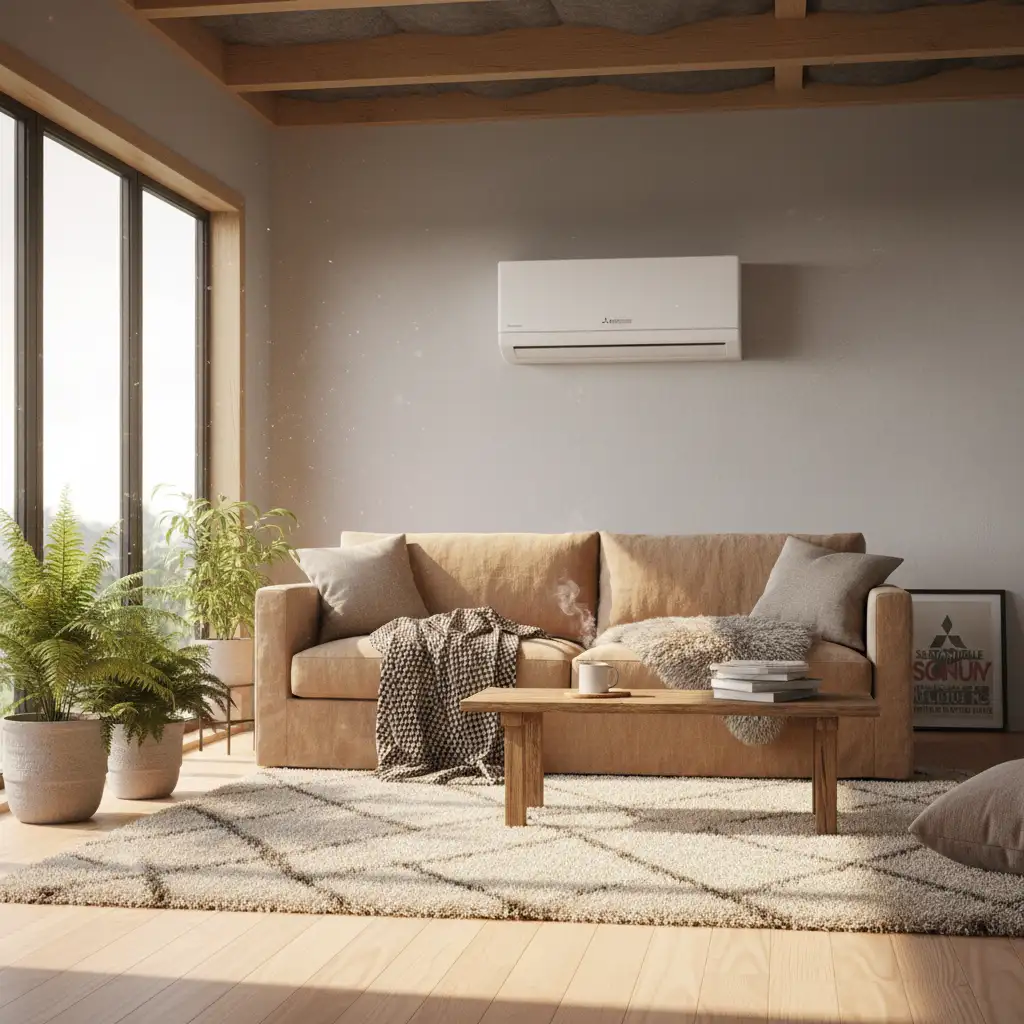
Warmer Kiwi Homes Eligibility Criteria (Snapshot):
- You own and live in a home built before 2008.
- You (the homeowner) hold a Community Services Card or SuperGold combo card, OR live in an eligible low-income area.
- Your home needs insulation or heating upgrades.
It’s essential to check the most up-to-date criteria on the EECA website or through an approved Warmer Kiwi Homes service provider.
Other Regional & Local Grants for Heat Pumps
Beyond Warmer Kiwi Homes, several regional councils and trusts offer additional assistance. These can sometimes be combined with national grants, maximising your savings on a new heat pump subsidy NZ wide.
| Programme | Provider | Key Eligibility (General) | Benefit Type |
|---|---|---|---|
| Warmer Kiwi Homes | EECA (Government) | Low-income households, specific home age. | Up to 80-100% of heat pump cost. |
| Home Energy Saver Loan (e.g., Auckland) | Regional Councils | Ratepayer, often no income criteria. | Interest-free or low-interest loans added to rates. |
| Specific Energy Company Rebates | Various (e.g., Genesis, Meridian) | Customer of the energy company, meeting specific product standards. | Cashback or discount on specific heat pump models. |
How to Apply for a Heat Pump Subsidy: A Step-by-Step Guide
Navigating the application process for a heat pump grant NZ can seem daunting, but it’s straightforward if you follow the steps.
Step 1: Check Your Eligibility
The first and most crucial step is to determine if you meet the criteria for programmes like Warmer Kiwi Homes. Use the online eligibility checker on the EECA website or contact an approved service provider directly.
Step 2: Find an Approved Installer
Warmer Kiwi Homes grants are only processed through approved service providers. They will manage your application, provide quotes, and carry out the installation. Seek out local providers accredited by EECA.
Step 3: Get a Home Assessment & Quote
An approved installer will visit your home to assess your heating needs, recommend the right size and type of heat pump, and provide a detailed quote. They’ll confirm your eligibility and explain the grant amount you qualify for.
Step 4: Confirm Grant and Schedule Installation
Once your grant is confirmed and you accept the quote, the installer will schedule your heat pump installation. They handle all the paperwork for the grant, making the process seamless for you.
Step 5: Enjoy Your Warmer Home!
After installation, you can immediately start enjoying the benefits of a more efficient, comfortable, and healthier home.
2. Choosing the Right Heat Pump for Your Home
Selecting the ideal heat pump isn’t just about price; it’s about matching the system to your home’s unique characteristics and your heating requirements. A correctly sized and efficient unit will maximise your heat pump savings NZ wide.
Types and Efficiency Ratings
The most common heat pump types in NZ are air-to-air systems, which extract heat from the outside air. These come in various configurations:
- High-Wall Units: Mounted high on a wall, ideal for heating single rooms.
- Floor Consoles: Installed at floor level, distributing heat similarly to a traditional radiator.
- Ducted Systems: Provide whole-home heating and cooling via a network of ducts, offering discreet aesthetics.
- Multi-Split Systems: Connect multiple indoor units to a single outdoor unit, allowing individual control in different zones.
Look for models with high Energy Star ratings and favourable COP (Coefficient of Performance) and HSPF (Heating Seasonal Performance Factor) values, which indicate efficiency.

Sizing for Optimal Performance
An undersized heat pump will struggle to heat your home effectively, running constantly and incurring higher energy costs. An oversized unit will cycle on and off too frequently, leading to inefficiency and potential discomfort. Factors influencing sizing include:
- Room/home size (m²) and ceiling height.
- Insulation levels (ceiling, walls, floor).
- Number and size of windows and doors.
- Orientation to the sun.
- Local climate zone.
Always rely on a qualified professional’s assessment for accurate sizing.
Your Heat Pump Selection Checklist
- Assess Your Needs: Which rooms need heating? Do you want whole-home or zone heating?
- Check Efficiency Ratings: Prioritise high COP/HSPF for maximum savings.
- Consider Features: Timer functions, Wi-Fi control, quiet mode, air filtration.
- Brand Reputation & Warranty: Choose reputable brands with good local support and strong warranties.
- Get Multiple Quotes: Compare prices, proposed models, and installation scope from several certified installers.
- Ask About Maintenance: Understand required servicing to keep your unit running efficiently.
- Factor in Subsidies: Remember that a significant heat pump subsidy NZ could make a higher-spec, more efficient model more affordable.
3. Installation Best Practices & Costs
Even the best heat pump won’t perform optimally without correct installation. Professional installation is crucial for efficiency, safety, and honouring your warranty. It’s an investment that pays dividends.
The Value of Professional Installation
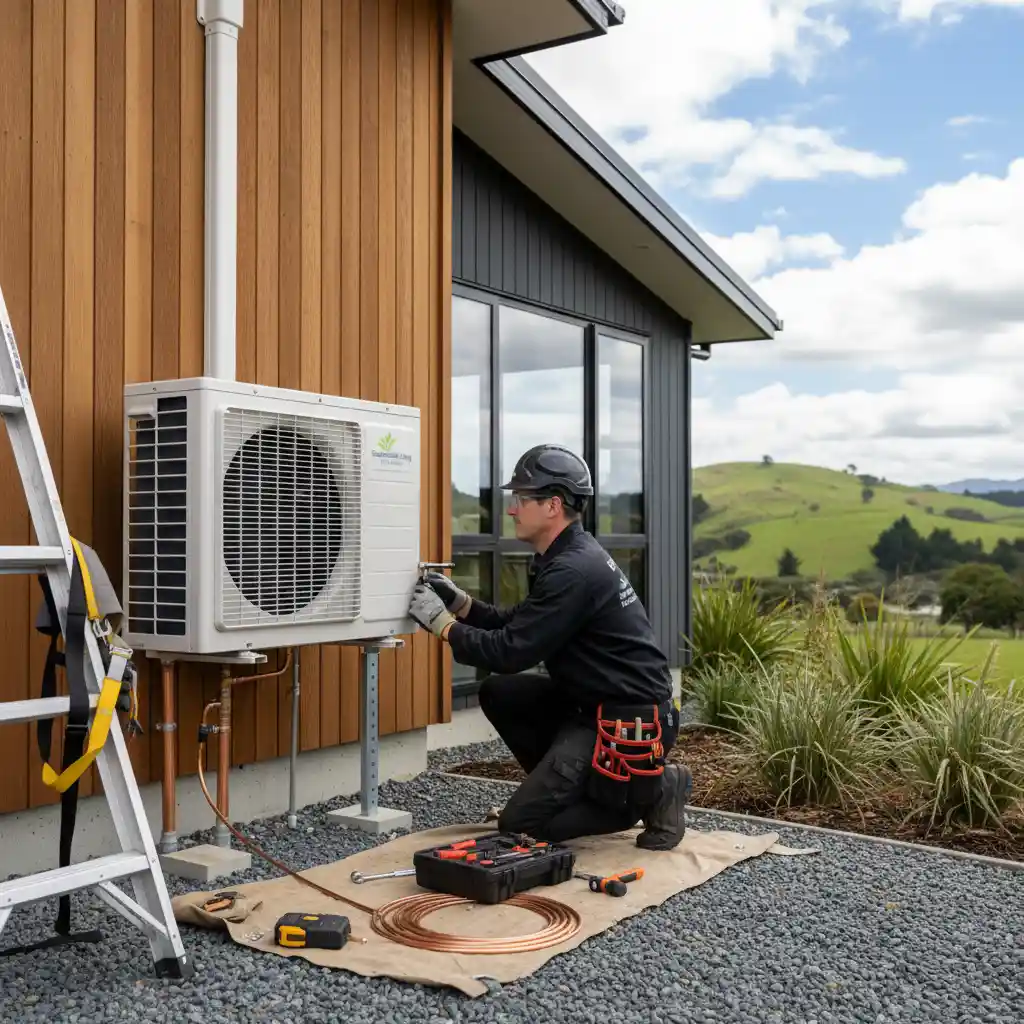
A qualified installer ensures your heat pump is correctly sized, positioned for optimal airflow, and connected safely to your electrical system. They also handle refrigerant lines, vacuuming, and commissioning – all vital for efficient and long-lasting operation. Incorrect installation can lead to reduced efficiency, higher running costs, and potential breakdowns.
The Heat Pump Installation Process Explained
1. Site Assessment & Planning
The installer will confirm the best placement for both indoor and outdoor units, considering factors like sunlight, airflow, noise, and structural integrity.
2. Mounting Units
Indoor units are securely mounted, often on a wall or floor, while the outdoor unit is placed on a level pad or wall brackets, ensuring good ventilation and drainage.
3. Connecting Refrigerant Lines & Electrical Wiring
Copper pipes for refrigerant and electrical cabling are run between the indoor and outdoor units, often through a small hole drilled in the wall. This requires specialised tools and expertise to ensure a sealed, leak-free system.
4. Vacuuming & Commissioning
The refrigerant lines are vacuumed to remove air and moisture, then refrigerant is released. The system is then tested to ensure all modes (heating, cooling, fan) function correctly and efficiently.
5. User Handover
Your installer will explain how to operate your new heat pump, its features, and basic maintenance requirements.
Understanding Heat Pump Installation Costs
The overall cost of a heat pump NZ varies significantly based on the unit type, capacity, brand, and complexity of installation. On average, you can expect:
- Unit Cost: For a standard high-wall unit suitable for a living area, expect to pay between NZD $1,500 – $4,000+. Ducted systems are considerably more, often $10,000+.
- Installation Cost: Typically ranges from NZD $600 – $1,500 for a standard back-to-back installation. More complex installations (longer pipe runs, multiple stories, tricky access) will cost more.
- Electrical Work: A dedicated circuit is often required, which may add to the cost if your switchboard needs upgrading.
Remember, while the upfront cost might seem high, a significant heat pump subsidy NZ residents can access can drastically reduce this. Always get a detailed, itemised quote.
4. Long-Term Savings with Efficient Heating
Investing in a heat pump isn’t just about immediate comfort; it’s a strategic financial decision that offers substantial long-term savings and contributes to a healthier planet. This is where the initial heat pump subsidy NZ really starts to pay off.
Significant Energy Bill Reductions
Heat pumps are renowned for their efficiency. Unlike traditional heaters that convert electricity directly into heat, heat pumps move heat from one place to another. This means they use far less energy to produce the same amount of warmth.
A modern, efficient heat pump can be up to 3-5 times more energy-efficient than a standard electric heater, delivering three to five kilowatts of heat for every one kilowatt of electricity consumed!
Beyond Savings: Environmental Benefits
Choosing a heat pump is a proactive step towards sustainable living. By reducing your electricity consumption for heating, you also significantly lower your household’s carbon footprint, especially when paired with New Zealand’s high proportion of renewable energy sources.
Switching from an inefficient heating source to a high-efficiency heat pump can reduce your heating-related carbon emissions by up to 80%!
Maximising Efficiency with Maintenance
To ensure your heat pump continues to deliver optimal performance and savings for years to come, regular maintenance is key:
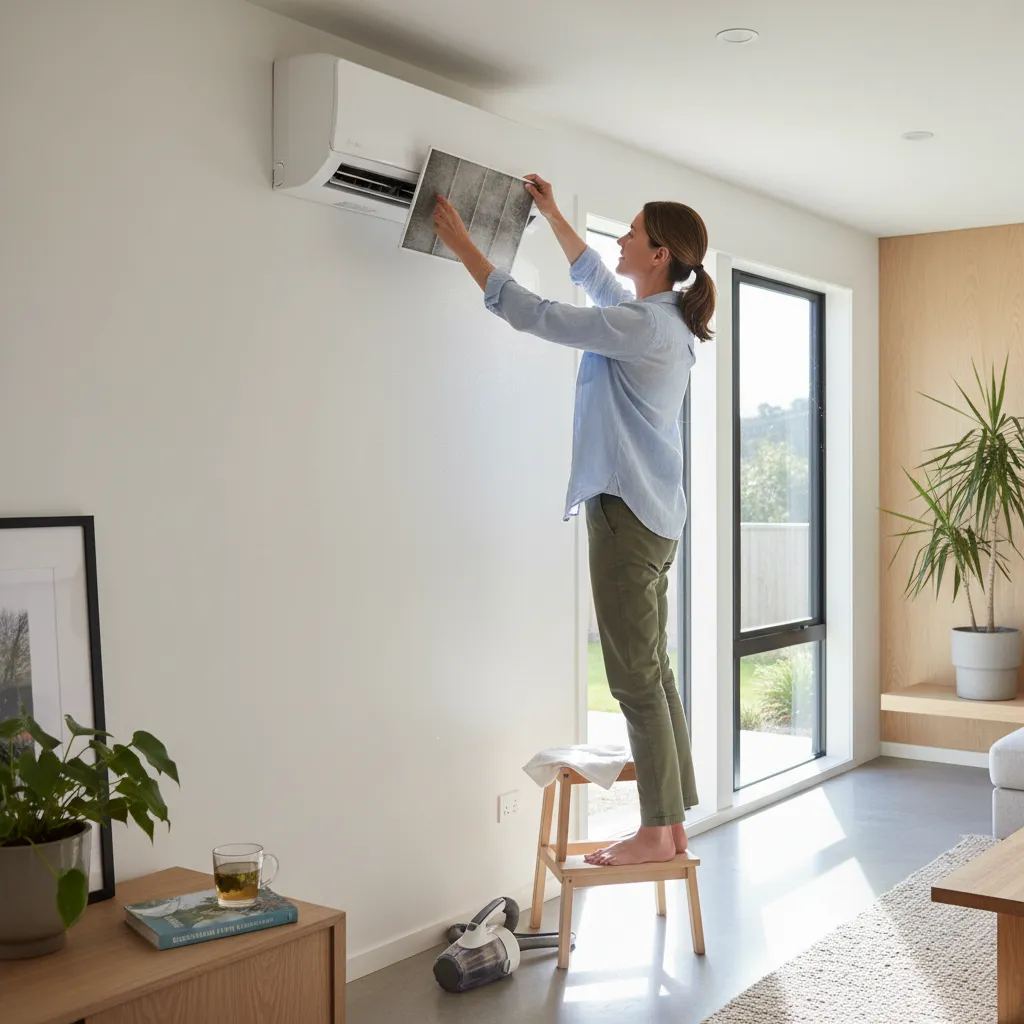
- Clean Filters Regularly: Monthly cleaning of air filters improves airflow and efficiency.
- Clear Outdoor Unit: Keep the outdoor unit free from leaves, debris, and obstructions.
- Annual Professional Service: Schedule a professional service technician to inspect, clean, and tune your unit once a year. This catches minor issues before they become costly problems.
Embrace a Warmer, Greener Future with Heat Pumps
From understanding the generous heat pump subsidy NZ programmes available to making an informed choice about the right unit and ensuring expert installation, you now have the knowledge to transform your home heating.
Don’t let the upfront cost deter you. Explore the subsidies, talk to approved installers, and take the step towards a healthier, more comfortable, and significantly more energy-efficient home. The long-term savings and environmental benefits make it a decision you won’t regret.
Start your journey to a warmer Kiwi home today!

Frequently Asked Questions (FAQ)
Q: What is the main heat pump subsidy NZ residents can apply for?
A: The primary programme is the Warmer Kiwi Homes grant, managed by EECA. It offers significant subsidies for insulation and heating (including heat pumps) to eligible low-income homeowners. Many regional councils also offer interest-free or low-interest loans for energy efficiency upgrades.
Q: Am I eligible for a Warmer Kiwi Homes heat pump grant?
A: Eligibility typically requires you to own and live in a home built before 2008, and either hold a Community Services Card/SuperGold combo card, or live in an area identified as low-income. It’s best to check the EECA website or contact an approved provider for precise, up-to-date criteria.
Q: How much can a heat pump subsidy save me?
A: The Warmer Kiwi Homes grant can cover up to 80-100% of the cost of a new, efficient heat pump, depending on your specific circumstances and provider. Regional council loans vary but can significantly reduce the upfront financial burden by spreading costs over your rates.
Q: What’s the typical lifespan of a heat pump in New Zealand?
A: With proper professional installation and regular maintenance, a quality heat pump can last anywhere from 10 to 15 years, or even longer. Annual servicing and regular filter cleaning are crucial for extending its lifespan and maintaining efficiency.
Q: Should I get a heat pump for a small apartment?
A: Absolutely! Even for smaller apartments, a correctly sized heat pump (often a smaller high-wall unit) can provide efficient, cost-effective heating and cooling. The benefits of improved indoor air quality and lower energy bills apply universally, and you might still be eligible for certain heat pump subsidies NZ wide.
References & Sources
- Energy Efficiency and Conservation Authority (EECA) – Official Website
- Consumer NZ – Heat Pump Buying Guide
- Ministry of Business, Innovation & Employment (MBIE) – Building & Housing
- Auckland Council – Targeted Rate for Home Retrofits (Example of regional council initiative)
- BRANZ (Building Research Association of New Zealand) – Publications on Home Performance