Waste Reduction & The Circular Economy in Aotearoa
The majestic landscapes of New Zealand are a taonga, a treasure we are all responsible for protecting. Yet, like many nations, Aotearoa faces a significant challenge: managing our ever-growing waste. From bustling cities to serene rural communities, the bins we fill tell a story of resource consumption, and too often, linear disposal.
But what if we could rewrite that story? What if waste wasn’t an end point, but a valuable resource cycling through an intelligent system? This is the promise of the circular economy, a powerful paradigm shift that’s gaining traction across the globe, and particularly vital for a nation as environmentally conscious as New Zealand. Join us as we explore practical strategies for waste reduction NZ, delve into innovative solutions, and empower you to be a part of Aotearoa’s sustainable future.
Table of Contents
Embracing the Circular Economy in NZ
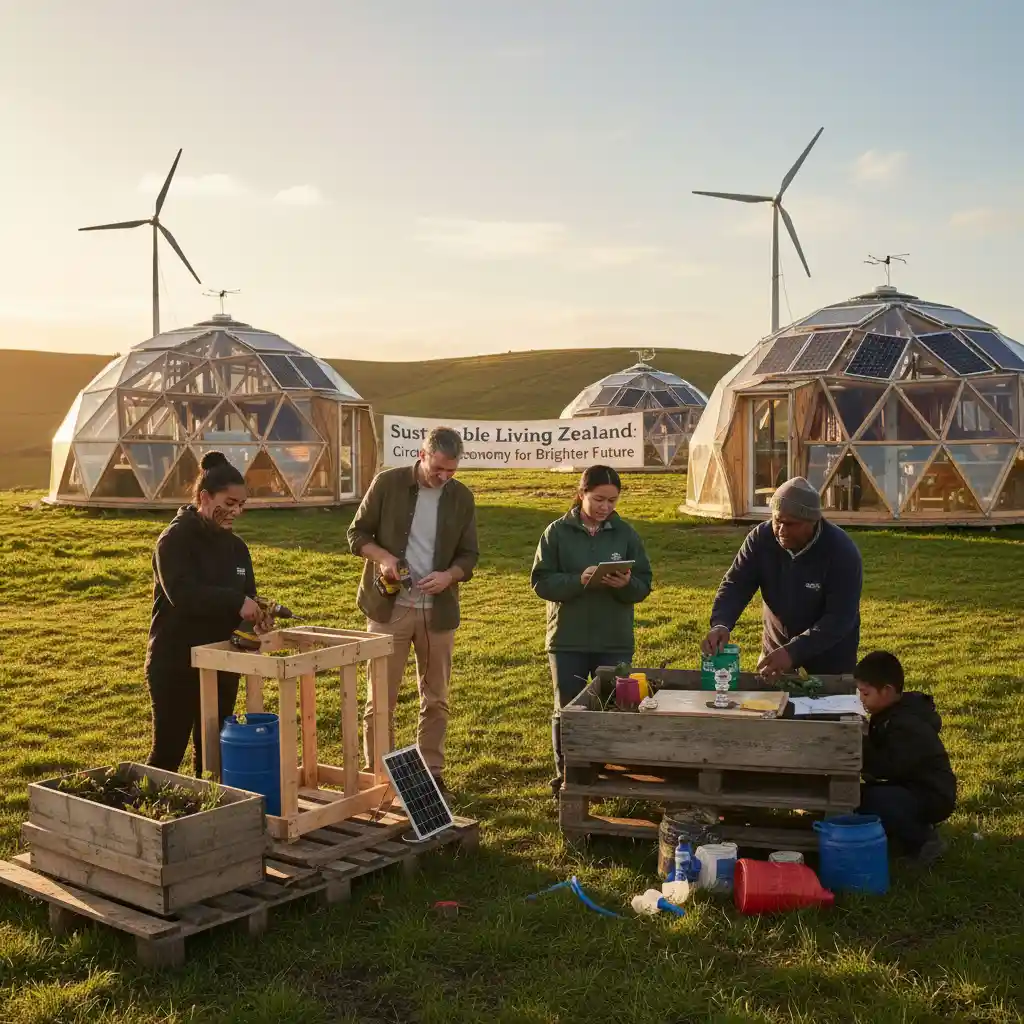
Traditionally, our economy operates on a linear ‘take-make-dispose’ model. Resources are extracted, products are manufactured, consumed, and then thrown away. The circular economy, however, aims to keep resources in use for as long as possible, extract the maximum value from them whilst in use, then recover and regenerate products and materials at the end of their service life.
“The circular economy isn’t just about recycling; it’s a fundamental rethinking of how we design, produce, and consume, creating a system that is restorative and regenerative by design.”
For New Zealand, embracing this model is more than an environmental choice; it’s an economic imperative. By reducing our reliance on virgin resources and minimising waste, we can build a more resilient, innovative, and sustainable economy, perfectly aligned with Māori principles of kaitiakitanga – guardianship of the land and resources.
The Importance of Reducing Waste
The sheer volume of waste generated by modern societies poses critical environmental threats. Landfills consume valuable land, produce harmful greenhouse gases like methane, and can leach toxins into our soil and waterways. Effective waste reduction NZ strategies are crucial for mitigating these impacts.
Did You Know?
New Zealanders send an average of 736 kg of waste per person to landfill annually. That’s one of the highest rates in the developed world, highlighting the urgent need for robust waste reduction NZ efforts. (Source: Ministry for the Environment)
Beyond the environmental toll, waste represents a massive loss of resources and economic opportunity. Every item we throw away could have been reused, repaired, or its materials recovered. By investing in waste reduction, we save energy, conserve natural resources, reduce pollution, and stimulate local economies through new business models.
The ‘R’ Hierarchy: Beyond Just Recycling
- Refuse: Say no to unnecessary items (e.g., single-use plastics).
- Reduce: Buy less, choose products with minimal packaging.
- Reuse: Repair items, donate, buy second-hand.
- Repurpose: Give old items a new function.
- Recycle: The last resort for materials that can’t be reused or repurposed.
- Rot (Compost): For organic waste.
Recycling in New Zealand: What You Need to Know
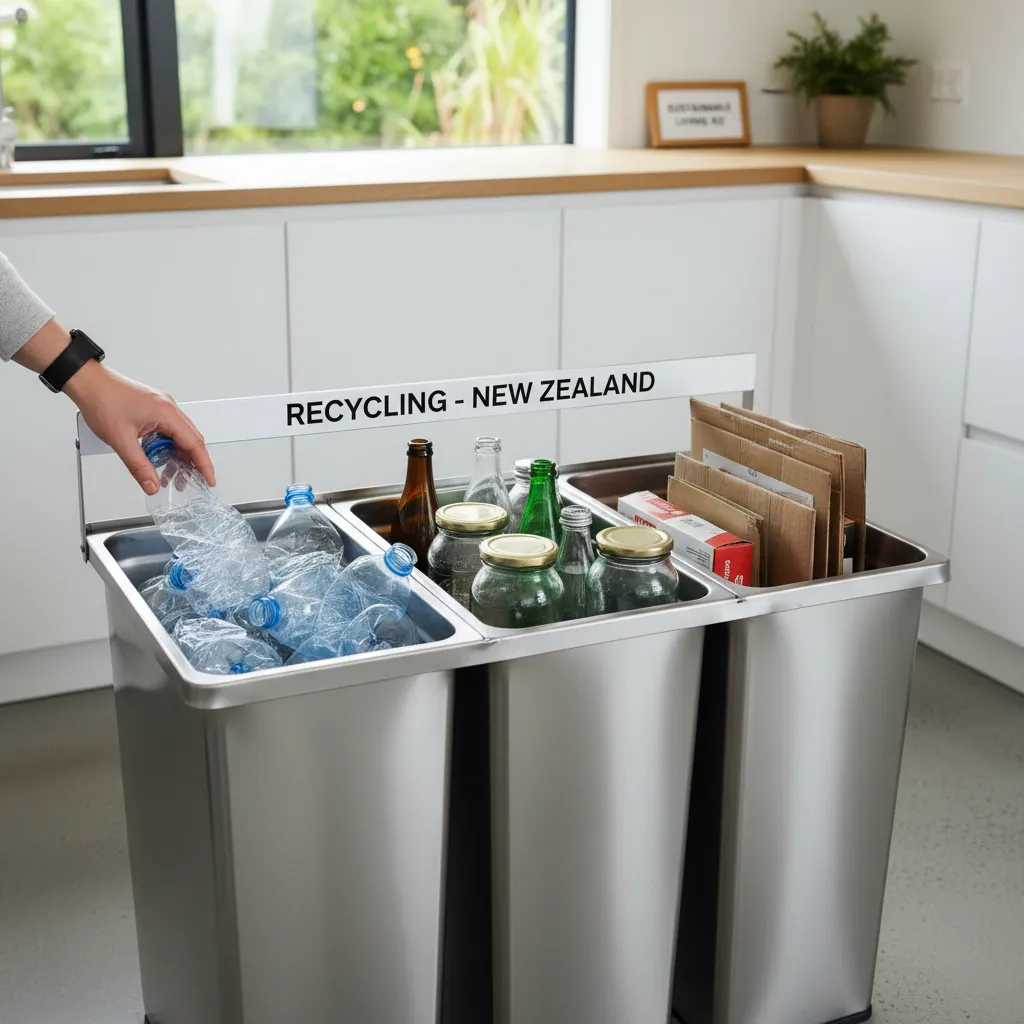
Recycling is a cornerstone of waste reduction, but it’s also an area often fraught with confusion. What can be recycled? What do the numbers mean? Rules can vary significantly between local councils, leading to ‘wishcycling’ – putting items in the recycling bin hoping they’ll be processed, but often contaminating the stream instead.
To maximise your impact on waste reduction NZ through recycling, always check your local council’s website for specific guidelines. Common accepted items usually include:
- Clean plastic containers (bottles, trays coded 1, 2, and sometimes 5)
- Glass bottles and jars (all colours)
- Paper and cardboard (flattened, clean)
- Aluminium and steel cans
Avoid putting soft plastics (plastic bags, cling film), polystyrene, aerosols, or food-contaminated items into your kerbside recycling. Many supermarkets offer soft plastic recycling drop-offs, providing an alternative for these tricky materials.
Composting & Food Waste Solutions
Food waste is a particularly potent contributor to landfill emissions. When organic matter decomposes in anaerobic (oxygen-free) conditions like a landfill, it produces methane, a greenhouse gas significantly more potent than carbon dioxide. Diverting food waste is one of the most impactful actions for waste reduction NZ.
Simple Steps to Slash Your Food Waste
- Plan your meals: Shop with a list and avoid impulse buys.
- Store food correctly: Understand shelf-life and proper storage for different items.
- Get creative with leftovers: Transform scraps into new meals.
- Understand ‘best before’ vs. ‘use by’: Many foods are safe to eat past their ‘best before’ date.
- Compost or use a food scrap collection: For unavoidable scraps, ensure they don’t go to landfill.
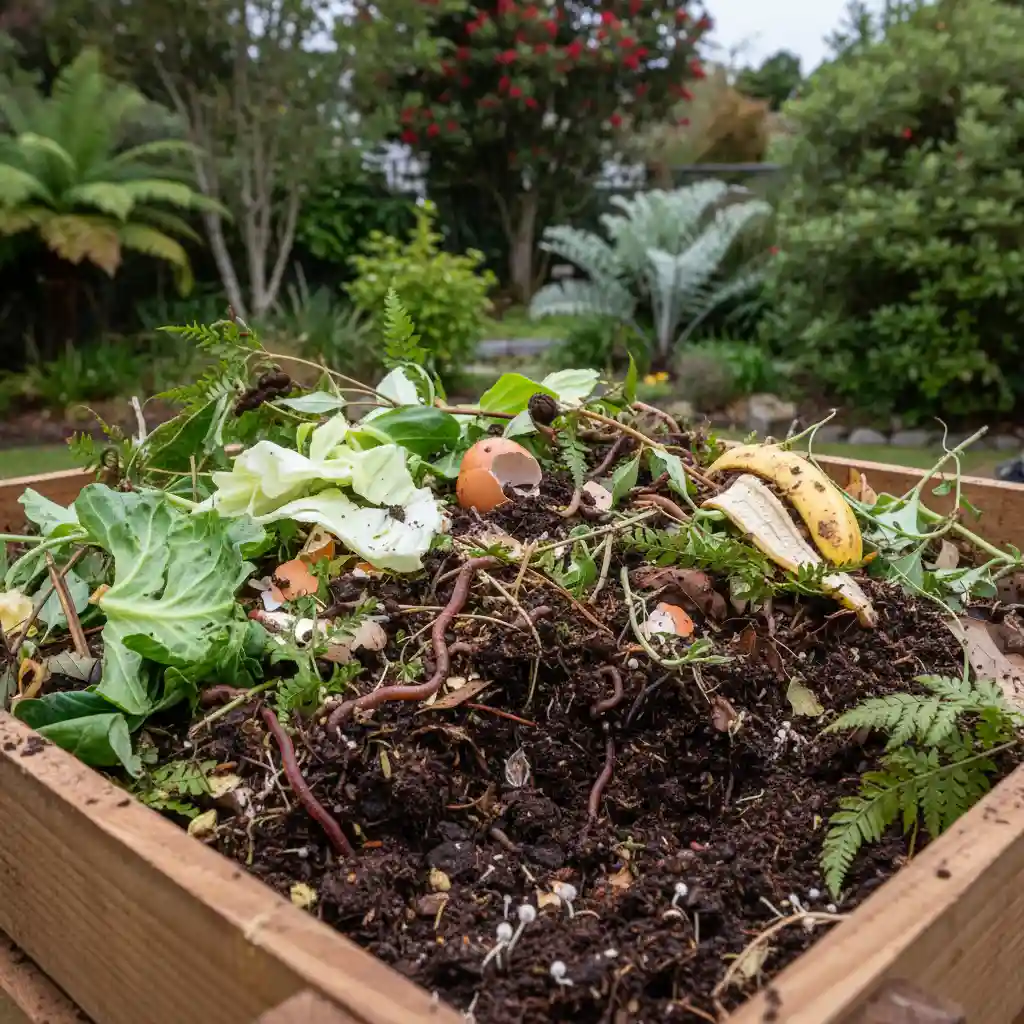
Composting turns your kitchen and garden waste into nutrient-rich soil amendment. Options include traditional compost bins, worm farms (vermicomposting), and Bokashi systems. Even small apartment dwellers can manage a worm farm or use council-provided food scrap collection services where available. Check if your local council offers such a service as part of your waste reduction NZ efforts.
Action Checklist: Reducing Household Food Waste
- Conduct a weekly ‘food waste audit’ to identify what you’re throwing out.
- Master ‘nose to tail’ or ‘root to shoot’ cooking techniques.
- Start a small worm farm or compost bin, or sign up for a local food scrap collection.
- Freeze excess food, fruits, and vegetables before they spoil.
- Learn basic fermenting to preserve foods.
Sustainable Consumption & Repair
Ultimately, the most effective form of waste reduction NZ begins before an item is even purchased. Sustainable consumption encourages us to think critically about our purchases: do we truly need this? Can I borrow it, buy it second-hand, or make it myself? Opting for quality over quantity, and choosing durable, repairable products, significantly extends their lifespan and reduces their environmental footprint.
The ‘right to repair’ movement is gaining momentum, advocating for products designed to be easily fixable, with parts and manuals readily available. Supporting local repair cafes, skilled artisans, and businesses that offer product servicing helps foster a ‘repair culture’ vital for a circular economy.
Embrace minimalism, swap parties, and community sharing initiatives. Every choice to mend a torn garment, fix a broken appliance, or pass on an item reduces demand for new goods and contributes positively to waste reduction NZ efforts.
Conclusion: A Brighter, Circular Future for NZ
Achieving genuine waste reduction NZ and transitioning to a thriving circular economy requires a concerted effort from individuals, businesses, and government. It’s a journey, not a destination, but one with immense benefits for our environment, economy, and communities. By making conscious choices in how we consume, manage our waste, and support sustainable practices, each of us can play a vital role in protecting the unique beauty and resources of Aotearoa for generations to come. Let’s collectively reduce our footprint and build a more regenerative New Zealand.
Frequently Asked Questions about Waste Reduction in NZ
Q: What is the biggest waste problem in New Zealand?
A: New Zealand faces significant challenges with general solid waste, particularly organic waste (food and green waste) and construction and demolition waste, both of which contribute heavily to landfills. Plastics and electronic waste are also growing concerns.
Q: How can I start reducing my household waste in NZ?
A: Begin with the ‘R’ hierarchy: Refuse unnecessary items, Reduce your consumption, Reuse what you have, Repair broken items, and then Recycle or Rot (compost) what’s left. Focus on food waste reduction, smart shopping, and understanding your local recycling rules.
Q: Are there government initiatives for waste reduction NZ?
A: Yes, the New Zealand government supports waste reduction through policies like the Waste Minimisation Act, the Waste Levy, and various initiatives promoted by the Ministry for the Environment. These aim to encourage resource recovery, product stewardship, and a transition to a circular economy.
Q: What is ‘wishcycling’ and why should I avoid it?
A: Wishcycling is when you put an item into the recycling bin hoping it’s recyclable, even if you’re unsure. This often leads to contamination of the recycling stream, making it harder and more expensive to process, and sometimes even leading to entire batches being sent to landfill.
Q: Where can I find local recycling and composting information in NZ?
A: Your local city or district council’s website is the best source for specific recycling guidelines, kerbside collection schedules, food waste services, and information on transfer stations or community composting initiatives in your area.
References & Further Reading
- Ministry for the Environment. (2022). Waste Data and Statistics. Retrieved from environment.govt.nz
- Ellen MacArthur Foundation. (n.d.). What is the Circular Economy? Retrieved from ellenmacarthurfoundation.org
- Love Food Hate Waste NZ. (n.d.). Official Website. Retrieved from lovefoodhatewaste.co.nz
- WasteMINZ. (n.d.). New Zealand Waste Management Institute. Retrieved from wasteminz.org.nz