Sustainable Home & Energy Solutions for New Zealand Living
Transform your property into an eco-friendly oasis. Discover smart, cost-effective ways to create a healthier, more energy-efficient sustainable home NZ.
Introduction to Sustainable Homes in NZ
In Aotearoa, New Zealand, the call for sustainable living is louder than ever. Homeowners are increasingly looking for ways to reduce their environmental footprint, lower energy bills, and create healthier living spaces. A sustainable home NZ isn’t just a trend; it’s a strategic investment in your future and the planet’s well-being.
From leveraging our abundant sunshine to optimising water usage, the opportunities for sustainable home upgrades are diverse and impactful. This guide will walk you through the essential solutions available, helping you navigate the path to a greener, more efficient home.

Table of Contents
Benefits of Eco-Friendly Home Upgrades
Investing in a sustainable home in NZ offers a myriad of advantages that extend beyond environmental stewardship. These upgrades deliver tangible benefits to your wallet, your health, and the value of your property.
- Reduced Operating Costs: Energy-efficient homes consume less electricity and water, leading to significantly lower utility bills over time.
- Increased Property Value: Homes with green features are increasingly attractive to buyers, often commanding higher resale values.
- Improved Indoor Air Quality: Better insulation and ventilation systems can reduce dampness, mould, and allergens, creating a healthier living environment.
- Enhanced Comfort: A well-insulated home with efficient heating and cooling solutions maintains a more consistent and comfortable temperature year-round.
- Environmental Impact: By reducing your reliance on fossil fuels and conserving resources, you play a direct role in mitigating climate change.
📊 Stat Callout:
Homes with solar panels in New Zealand can see electricity bill reductions of 50% to 80%, equating to significant savings over the system’s lifespan. (Source: EECA, various solar providers)

Solar Energy for Your Home
Harnessing the sun’s power is one of the most impactful steps you can take towards a truly sustainable home NZ. Solar photovoltaic (PV) systems convert sunlight directly into electricity, reducing your reliance on the grid and fossil fuels.
Types of Solar Power Systems
- Grid-Tied Systems: The most common option, connected to the national electricity grid. Any excess power generated is fed back into the grid, potentially earning you credits.
- Grid-Tied with Battery Storage: Combines grid connection with battery backup, allowing you to store excess solar power for use at night or during outages.
- Off-Grid Systems: Completely independent of the national grid, relying entirely on solar power and battery storage. Ideal for remote locations.
Pros and Cons of Solar Energy
Pros
- Significant reduction in electricity bills.
- Reduces carbon footprint.
- Increases property value.
- Low maintenance costs.
- Potential for government incentives/grants.
Cons
- Initial upfront investment can be high.
- Performance can be affected by weather (though modern systems are efficient).
- Requires adequate roof space or ground area.
- Battery systems add to complexity and cost.
“New Zealand’s abundant sunshine makes solar power a remarkably viable and sustainable energy choice for homeowners, offering long-term financial and environmental returns.”

Efficient Heating & Insulation Options
A truly efficient sustainable home NZ prioritises keeping warmth in during winter and cool in during summer, significantly reducing the need for excessive heating or cooling. This starts with excellent insulation and is complemented by smart heating choices.
Optimising Insulation
Proper insulation is the foundation of an energy-efficient home. It acts as a barrier to heat flow, ensuring your heating and cooling efforts are not wasted.
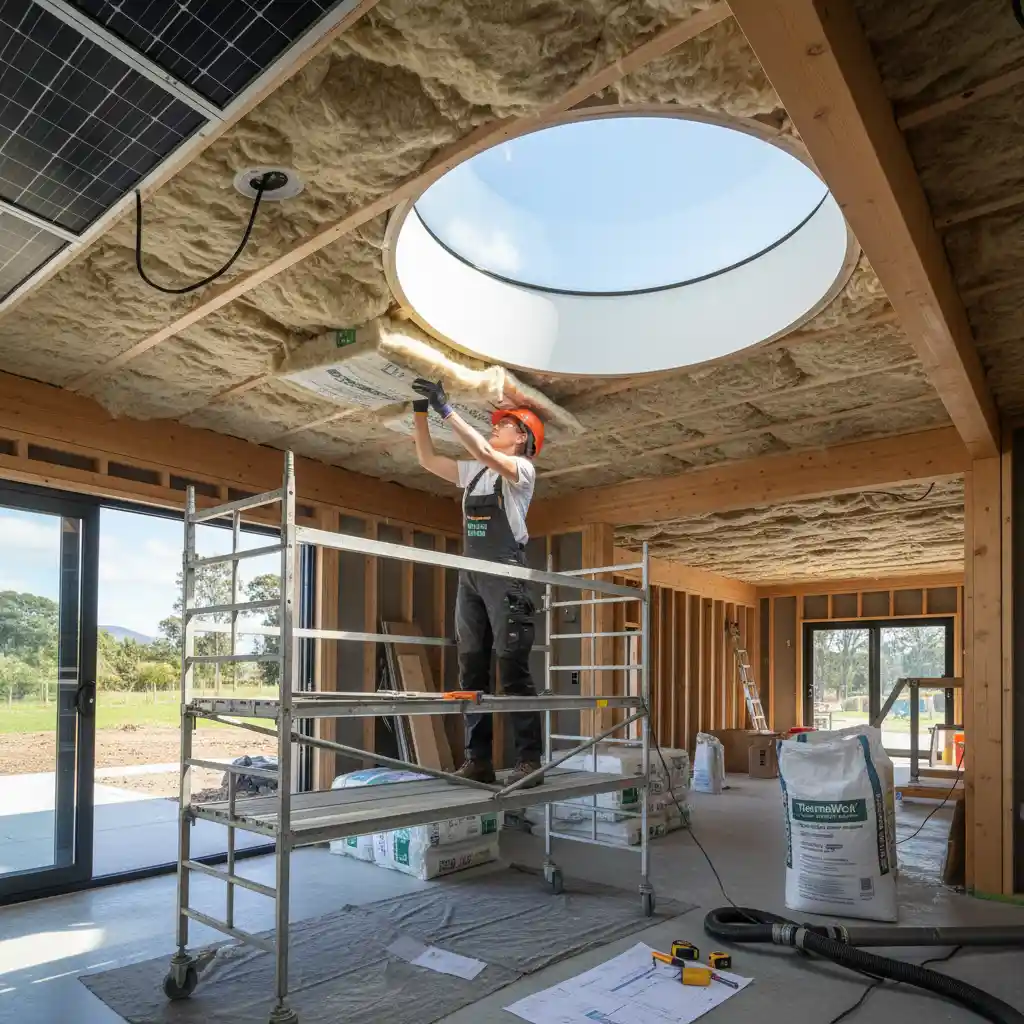
- Ceiling Insulation: Often the easiest and most cost-effective to improve, crucial for preventing heat loss upwards.
- Underfloor Insulation: Prevents cold air from rising from the ground, especially in older homes with suspended timber floors.
- Wall Insulation: More complex to retrofit but offers significant benefits, often done during renovations.
- Double Glazing: Insulates windows, reducing heat loss and condensation.
Smart Heating Solutions
Once your home is well-insulated, selecting an efficient heating system is key.
Comparison: Popular Heating Options
| Option | Efficiency | Environmental Impact | Best For |
|---|---|---|---|
| Heat Pumps | Very High (300-500% efficient) | Low carbon (if electricity is renewable) | Whole-home heating/cooling |
| Wood Burners (ECAN approved) | High (requires good wood) | Carbon neutral if wood is sustainably sourced | Supplementary, aesthetic heating |
| Pellet Fires | High, consistent heat | Very low emissions, renewable fuel | Automated, clean solid fuel heating |
Smart Water & Energy Saving Tips
Beyond major upgrades, countless smaller habits and installations contribute significantly to a sustainable home NZ. These tips focus on conserving two of our most precious resources: water and electricity.
- LED Lighting: Replace old incandescent or CFL bulbs with energy-efficient LEDs, which consume significantly less power and last longer.
- Efficient Appliances: When upgrading, look for appliances with high energy star ratings. They might cost a little more upfront but save substantially on running costs.
- Rainwater Harvesting: Install a system to collect rainwater for use in toilets, laundry, and garden irrigation, reducing your reliance on treated mains water.
- Low-Flow Fixtures: Install low-flow showerheads, taps, and dual-flush toilets to reduce water consumption without sacrificing performance.
- Smart Home Technology: Use smart thermostats, lighting controls, and power plugs to automate energy use, optimising heating, cooling, and lighting schedules.
- Draft Proofing: Seal gaps around windows, doors, and floors to prevent heat loss and drafts.
💡 Did You Know?
A leaky tap dripping once per second can waste over 10,000 litres of water annually. Regular maintenance is a simple yet powerful sustainable habit!
Your Sustainable Home NZ Action Checklist
Ready to make your home more sustainable? Use this checklist to guide your journey:
- ✅ Assess Your Current Home: Conduct an energy audit or get professional advice to identify key areas for improvement.
- ✅ Prioritise Insulation: Start with ceiling and underfloor insulation if not up to standard.
- ✅ Explore Solar Options: Research solar PV systems, get quotes, and understand payback periods.
- ✅ Upgrade Heating: Consider efficient heat pumps or other sustainable heating solutions.
- ✅ Water Conservation: Look into rainwater harvesting and low-flow fixtures.
- ✅ Smart Tech Integration: Invest in smart thermostats and lighting controls.
- ✅ Review Appliances: Replace old, inefficient appliances with high-star rated models as needed.
- ✅ Seek Professional Advice: Consult with certified installers and energy efficiency experts for tailored solutions.
Frequently Asked Questions
Q: How much does it cost to make a home sustainable in NZ?
A: The cost varies widely depending on the scope of work. Minor upgrades like LED lighting and draft-proofing can be inexpensive, while major installations like solar panels or full insulation retrofits can range from $10,000 to $30,000+. However, these are investments that often pay for themselves through energy savings over time.
Q: Are there government grants or subsidies for sustainable home upgrades in NZ?
A: Yes, various initiatives exist. The Energy Efficiency and Conservation Authority (EECA) sometimes offers programmes like Warmer Kiwi Homes for insulation and heating. Local councils or specific regions may also have incentives. It’s best to check the EECA website and your local council for current schemes.
Q: How long does it take for solar panels to pay for themselves in New Zealand?
A: The payback period for solar panels in NZ typically ranges from 6 to 10 years, depending on factors like system size, electricity consumption, local solar irradiance, and feed-in tariffs. After this, your electricity generation is essentially free.
Q: What’s the most important first step for a sustainable home NZ?
A: The most impactful first step is often improving insulation and addressing drafts. A well-sealed and insulated home requires significantly less energy to heat or cool, making subsequent energy-saving investments even more effective.
References and Sources
- Energy Efficiency and Conservation Authority (EECA) – www.eeca.govt.nz
- BRANZ (Building Research Association of New Zealand) – www.branz.co.nz
- Sustainable Business Council New Zealand – www.sbc.org.nz
- Consumer NZ – www.consumer.org.nz