Every year, New Zealand households send a staggering amount of food waste to landfills, contributing to greenhouse gas emissions and wasting valuable resources. But what if there was a simple, effective, and even financially rewarding way to tackle this challenge right from your backyard or balcony?
Enter composting and conscious food waste reduction. This comprehensive guide will transform your approach to kitchen scraps and garden refuse, offering practical insights into composting NZ food waste and unlocking significant benefits for your garden, your wallet, and our beautiful Aotearoa.
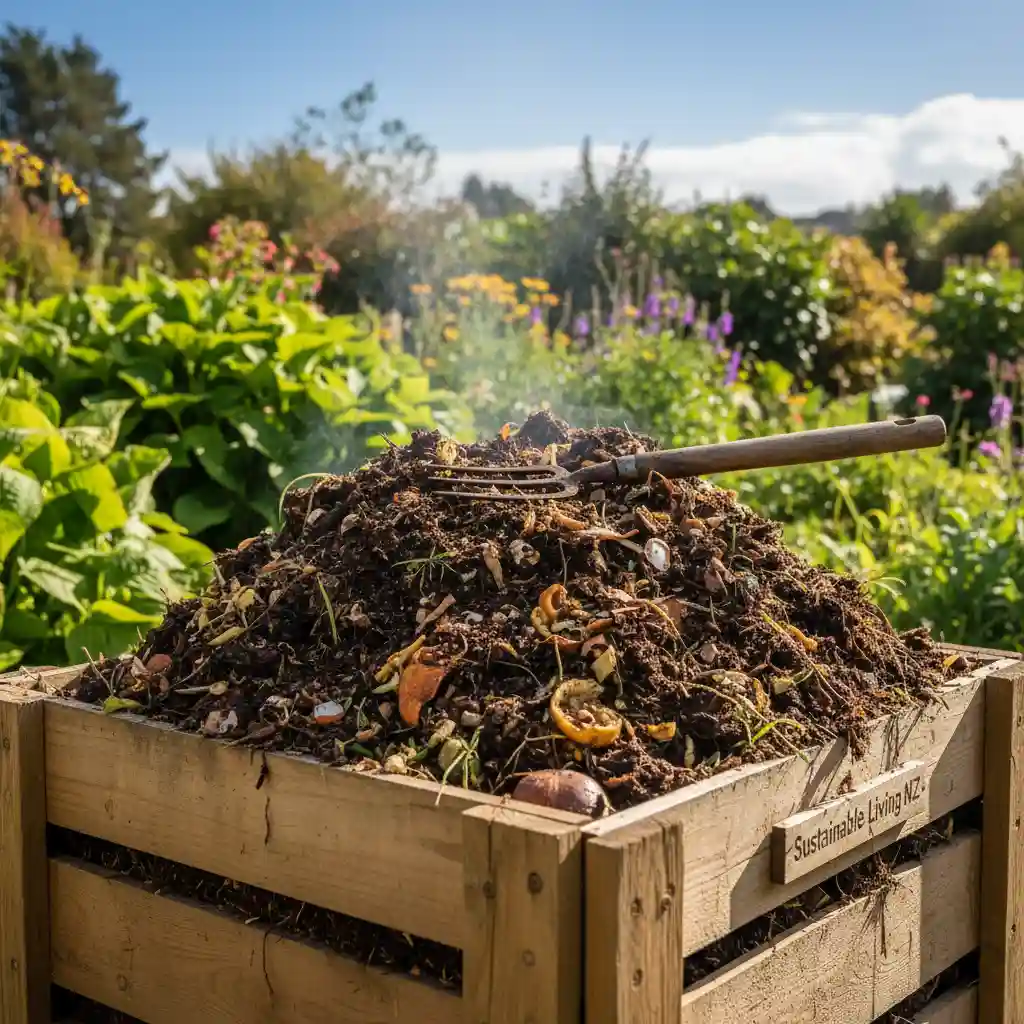
Table of Contents
Benefits of Composting for Gardens & Pockets
Composting isn’t just a trendy eco-habit; it’s a powerful tool for enhancing your garden’s vitality and making smart financial decisions. By transforming organic materials into nutrient-rich soil amendment, you unlock a cascade of benefits.
Stat Callout: New Zealand households send over 157,000 tonnes of food waste to landfills annually – enough to feed 262,977 people for a year. Composting can significantly divert this waste, reducing landfill burden and methane emissions.
Healthier Gardens, Naturally
- Enriched Soil Structure: Compost improves soil aeration, water retention, and drainage, creating an optimal environment for root growth.
- Natural Nutrient Boost: It provides a slow-release source of essential nutrients (nitrogen, phosphorus, potassium) for your plants, reducing the need for chemical fertilisers.
- Disease Suppression: Healthy, microbe-rich soil from compost can help plants resist pests and diseases.
- Reduced Watering Needs: Compost acts like a sponge, helping your garden retain moisture longer, especially beneficial during dry spells.
Savings That Add Up
- Lower Waste Bills: Less food waste means a lighter kerbside rubbish bin, potentially reducing your waste collection frequency or bag purchases.
- Free Fertiliser: Why buy expensive synthetic fertilisers when you can make your own superior, organic alternative for free?
- Reduced Landfill Levies: While not directly applicable to household bins, reducing collective waste contributes to broader environmental and economic savings for communities.
- Healthier Produce: Grow stronger, more vibrant fruits and vegetables in your own garden, saving on grocery bills.
Embracing composting NZ food waste is a win-win for both the environment and your household budget, offering tangible returns on a small investment of time and effort.
Types of Composting Systems for NZ Homes
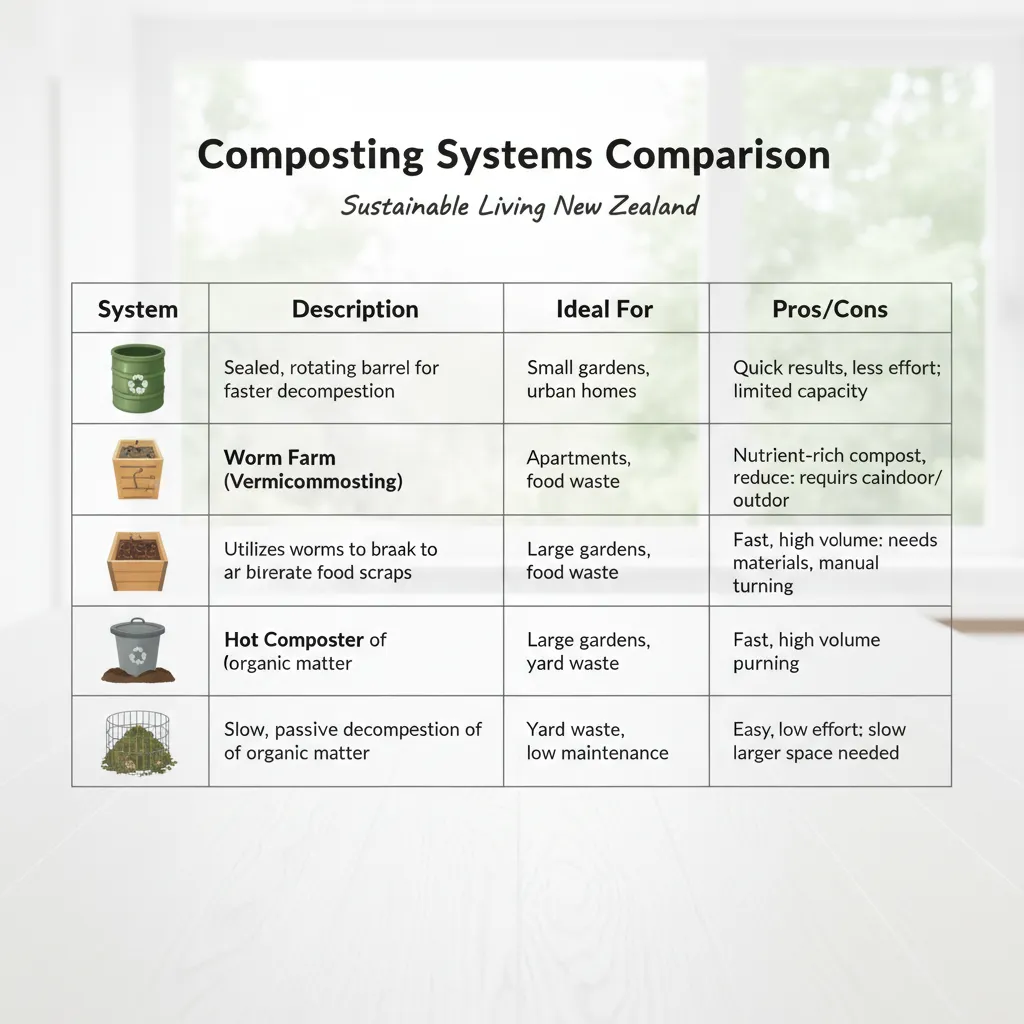
Choosing the right composting system depends on your living situation, the amount of organic waste you produce, and your desired level of involvement. Here’s a look at popular options perfect for composting NZ food waste.
| System | Best For | Pros | Cons | Food Waste Compatibility |
|---|---|---|---|---|
| Traditional Compost Bin | Gardens, medium-large spaces | Low cost, handles garden waste, minimal fuss | Slower, takes up space, attracts rodents if not managed | Vegetable scraps, fruit peels, coffee grounds (no meat/dairy) |
| Worm Farm (Vermicompost) | Apartments, small gardens, avid gardeners | Fast, produces ‘worm tea’ & castings, compact | Can be sensitive to overfeeding/food types, initial setup cost | Most fruit/veg scraps, bread (no meat/dairy/citrus in large amounts) |
| Bokashi Composting | Apartments, small kitchens, all food types | Handles meat/dairy, compact, no smell (if done right) | Requires burying fermented waste, ongoing bran cost | ALL food scraps, including meat, dairy, cooked foods |
| Hot Composting | Large gardens, high waste volume, fast results | Very fast, kills weed seeds/pathogens | Requires active management (turning), specific material ratios | Large volumes of fruit/veg scraps, garden waste (no meat/dairy) |
1. Traditional Compost Bins: The Classic Choice
Ideal for those with a garden, traditional bins are simple to use. Layer ‘greens’ (nitrogen-rich: food scraps, grass clippings) and ‘browns’ (carbon-rich: dry leaves, wood chips, shredded paper) to achieve a balanced pile. Keep it moist, like a wrung-out sponge, and turn it occasionally.
- What to add: Fruit and vegetable scraps, coffee grounds, tea bags, eggshells, garden clippings, dry leaves, shredded newspaper.
- Avoid: Meat, dairy, oily foods, pet waste (can attract pests and create odours).
2. Worm Farming (Vermicomposting): Nature’s Recyclers
Worm farms are fantastic for smaller spaces and produce highly fertile ‘worm castings’ and ‘worm tea’. Red wriggler worms do the hard work, breaking down food scraps efficiently.
- Setup: A multi-tiered bin system with a tap for ‘worm tea’. Add bedding (shredded paper/coconut fibre) and worms.
- Feeding: Small amounts of fruit and vegetable scraps, coffee grounds, small bits of bread. Avoid large amounts of citrus, onions, garlic, meat, dairy.
3. Bokashi Composting: Fermenting Food Scraps
Bokashi is an anaerobic (oxygen-free) fermentation process perfect for all food waste, including cooked foods, meat, and dairy. It uses a special bran inoculated with beneficial microorganisms.
- Process: Layer food scraps with Bokashi bran in an airtight bin. Once full, let it ferment for 1-2 weeks.
- Next Step: The fermented scraps need to be buried in the garden or added to a traditional compost bin to break down further into soil.
4. Hot Composting: Speeding Up the Process
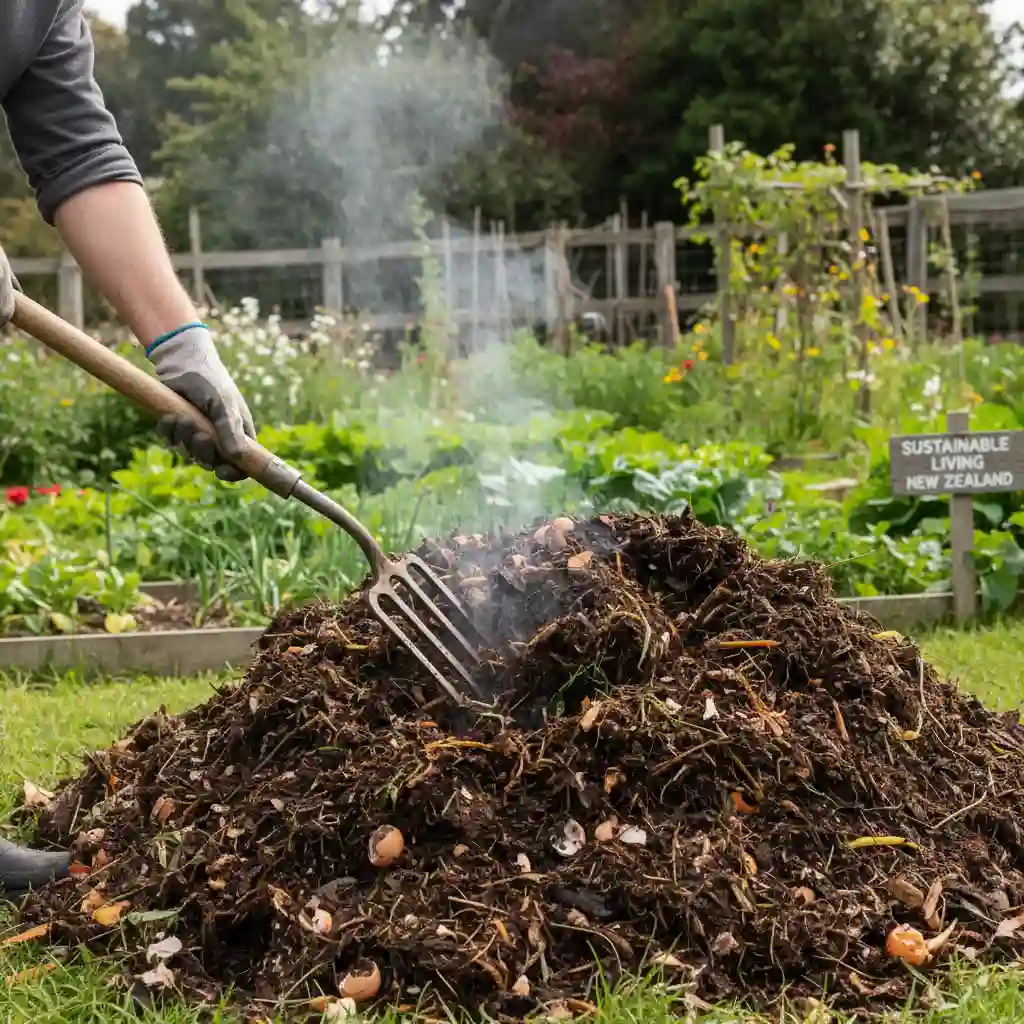
For those with a high volume of garden and food waste and a desire for fast results, hot composting is an option. It involves creating a large, well-balanced pile that heats up significantly (to 55-65°C), speeding decomposition and killing weed seeds and pathogens.
- Requirements: A large volume of ‘greens’ and ‘browns’ at once, regular turning, and careful moisture management.
Troubleshooting Common Composting Issues
Even the most experienced composters encounter challenges. Don’t be discouraged! Most problems are easily remedied.
1. Odour: The Smelly Truth
- Cause: Often too much ‘green’ material (nitrogen) or too wet, leading to anaerobic conditions. Meat, dairy, or cooked foods in traditional bins are also culprits.
- Solution: Add more ‘brown’ materials (dry leaves, shredded cardboard/paper). Turn the pile to introduce oxygen. If using a traditional bin, ensure no problematic food items are present.
2. Pests: Unwanted Visitors
- Cause: Exposed food scraps, particularly meat, dairy, or cooked foods.
- Solution: Bury food scraps deeply within the pile. Use a lidded, pest-proof bin. Avoid adding pest-attracting items to traditional bins (Bokashi and worm farms handle food waste better for this reason).
3. Slow Decomposition: Patience is a Virtue, But Speed Helps
- Cause: Not enough moisture, lack of oxygen (not turned), incorrect ‘greens’ to ‘browns’ ratio, or pile is too small to heat up.
- Solution: Moisten the pile if dry. Turn it regularly. Adjust your ‘greens’ (food scraps, grass) and ‘browns’ (carbon, dry leaves) ratio. Aim for roughly 1 part green to 2-3 parts brown.
4. Compost is Slimy or Soggy
- Cause: Too much moisture, not enough ‘browns’.
- Solution: Add more dry, carbon-rich materials like shredded paper, cardboard, or dry leaves. Turn the pile to aerate it and help it dry out slightly.
Reducing Food Waste for Financial Gain
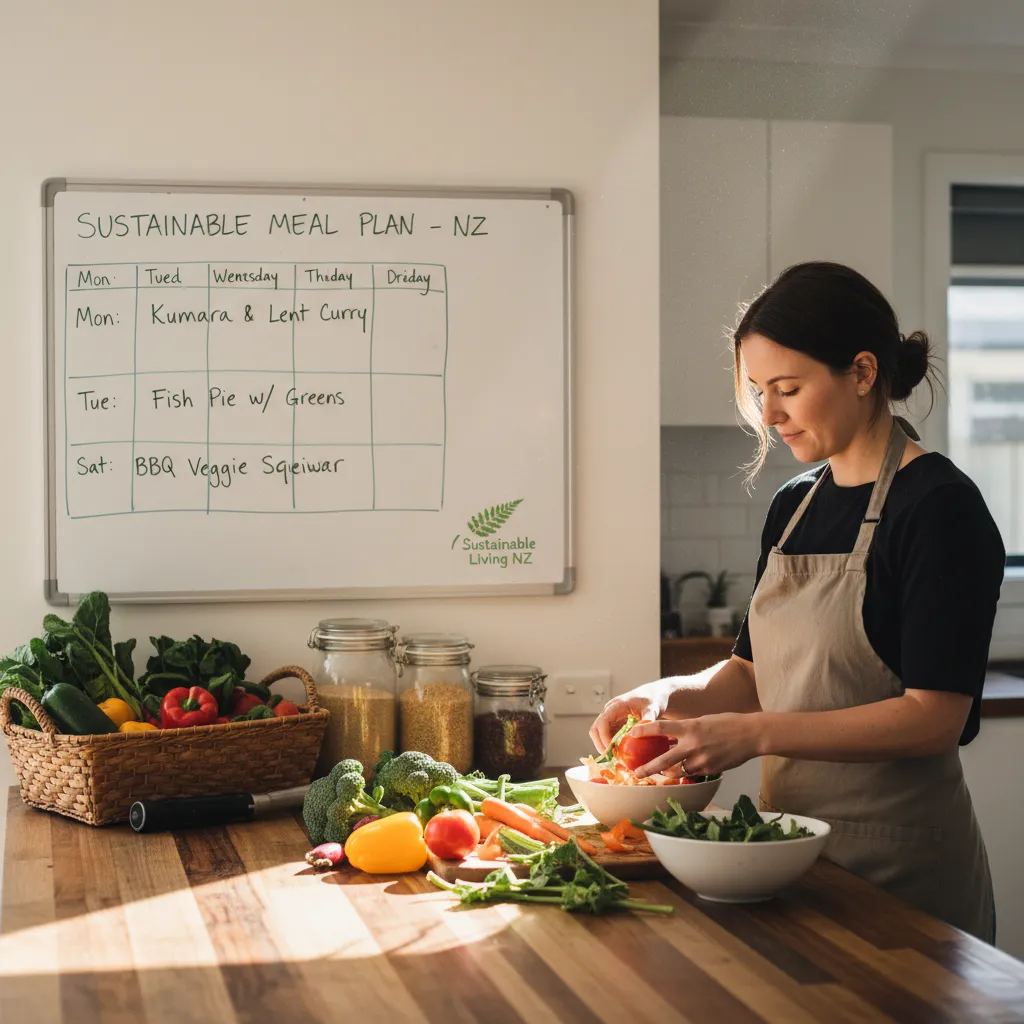
While composting NZ food waste tackles the unavoidable scraps, the bigger win for your wallet comes from preventing food waste in the first place. Every item saved from the bin is money saved from your grocery budget.
Stat Callout: The average Kiwi household throws away over $600 worth of edible food each year. Preventing this waste can put hundreds back into your pocket annually.
Practical Steps to Reduce Waste & Save Money:
- Plan Your Meals: Before shopping, plan meals for the week. Make a list and stick to it to avoid impulse buys and excess perishable items.
- Understand ‘Best Before’ vs. ‘Use By’: ‘Use By’ is about safety; ‘Best Before’ is about quality. Many foods are still perfectly fine to eat after their ‘Best Before’ date.
- Proper Storage: Learn how to store different foods correctly to extend their shelf life. For example, store leafy greens with a damp paper towel in an airtight container.
- Portion Control: Cook only what you need. If you cook extra, portion it immediately into containers for future meals.
- Love Your Leftovers: Get creative! Transform leftovers into new dishes. Stale bread can become croutons or breadcrumbs. Overripe fruit makes great smoothies or baked goods.
- First In, First Out (FIFO): Rotate your pantry and fridge items. Bring older items to the front so they are used first.
- Preserve & Freeze: If you have an abundance of fresh produce, consider freezing, canning, or dehydrating it to enjoy later.
By combining smart waste reduction strategies with effective composting NZ food waste, you create a powerful cycle of sustainability and savings in your home.
Frequently Asked Questions (FAQ)
What are the best items to put in my compost bin in NZ?
For most traditional compost bins and worm farms, the best items include fruit and vegetable scraps, coffee grounds, tea bags, eggshells, grass clippings, dry leaves, and shredded paper or cardboard. Bokashi systems can handle all food waste, including meat and dairy.
How do I stop my compost from smelling bad?
Bad odours usually mean your compost is too wet, has too many ‘greens’ (nitrogen-rich items like food scraps), or isn’t getting enough air. Add more ‘browns’ (carbon-rich items like dry leaves, wood chips, shredded paper) and turn your compost pile regularly to aerate it. Avoid adding meat, dairy, or oily foods to traditional compost bins.
Can I compost weeds in New Zealand?
Yes, most weeds can be composted. However, avoid composting weeds that have gone to seed, as the seeds might survive the composting process and sprout in your garden. Also, steer clear of invasive weeds like tradescantia or bindweed, as they can easily regrow from small fragments. Hot composting can kill most weed seeds effectively.
What’s the difference between ‘worm castings’ and ‘worm tea’?
‘Worm castings’ are the nutrient-rich solid waste produced by worms, essentially worm poop. It’s a fantastic soil amendment. ‘Worm tea’ (or leachate) is the liquid that drains from a worm farm; it’s a potent liquid fertiliser. Both are excellent for plant health.
How much money can I really save by reducing food waste?
Estimates suggest the average New Zealand household discards over $600 worth of edible food each year. By implementing meal planning, proper storage, and mindful consumption, you could potentially save hundreds of dollars annually, significantly impacting your grocery budget.
References & Sources
- Ministry for the Environment. (2022). Waste and recycling in New Zealand: snapshot 2022. Retrieved from environment.govt.nz
- Love Food Hate Waste NZ. (n.d.). The facts about food waste. Retrieved from lovefoodhatewaste.co.nz
- NZ Composting & Worm Farm Collective. (n.d.). Getting Started with Composting. (Plausible community resource)
- Garden Waste Solutions NZ. (n.d.). Choosing the Right Composter for Your Home. (Plausible commercial resource)