EV Charging Solutions: Home & Public Infrastructure in Aotearoa
Making the switch to an electric vehicle (EV) is a fantastic step towards sustainable living in New Zealand. But for many prospective EV owners, the big question looms: how and where will I charge it? Fortunately, the landscape for EV charging NZ is rapidly evolving, offering a growing array of convenient and accessible solutions.
From the comfort of your own garage to a nationwide network of public fast chargers, understanding your options is key to a smooth and enjoyable EV experience. This comprehensive guide will navigate you through everything you need to know about charging your electric vehicle in Aotearoa.
Table of Contents
Installing a Home EV Charger: Costs & Options
For most EV owners, home charging is the most convenient and cost-effective option. Imagine waking up every day to a ‘full tank’ without ever visiting a petrol station! Setting up an EV charging station at home in NZ is simpler than you might think.
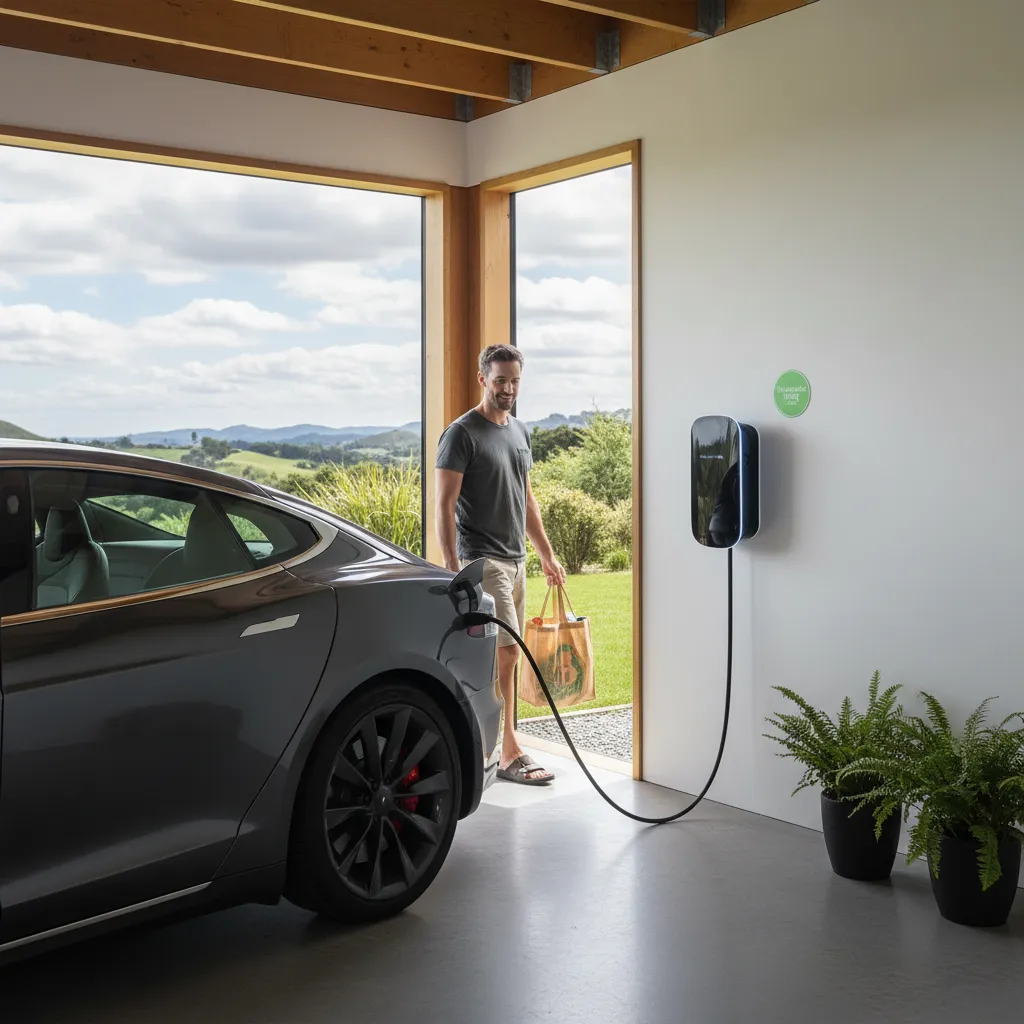
Understanding Home Charger Types
There are generally two main levels of AC charging available for home use, each offering different speeds and installation requirements:
| Feature | Level 1 Charger (Portable) | Level 2 Charger (Wall-mounted) |
|---|---|---|
| Power Output | Up to 2.4 kW (standard 3-pin wall socket) | 7.4 kW (single-phase) to 22 kW (three-phase) |
| Charging Speed | Slow (approx. 10-20 km range per hour) | Fast (approx. 40-120 km range per hour) |
| Installation | Plug-and-play (no installation required) | Requires professional electrician installation |
| Cost | Usually included with EV purchase | NZD $1,000 – $3,000+ (charger unit + installation) |
| Ideal Use | Occasional top-ups, overnight charging for low-mileage drivers | Daily charging, faster turnaround, optimal for most EV owners |
Step-by-Step Home Charger Installation
Installing a Level 2 home EV charger is a straightforward process when handled by qualified professionals. This ensures safety and compliance with New Zealand electrical standards.
- Assess Your Needs: Determine your daily driving range and desired charging speed. Consider your home’s electrical capacity (single-phase vs. three-phase power). A higher power charger will need appropriate electrical supply.
- Choose Your Charger: Select a Level 2 charger that meets your requirements and is compatible with your EV (most use a Type 2 connector in NZ). Look for smart features like scheduling and load management.
- Engage a Qualified Electrician: This is crucial for safety and compliance. A registered electrician will assess your home’s electrical panel, wiring, and advise on necessary upgrades or fuse board capacity to handle the new load.
- Obtain Quotes: Get several quotes for both the charger unit and installation costs. Prices can vary significantly depending on wiring complexity, chosen model, and location.
- Permit Application (If Required): Your electrician will handle any necessary electrical permits or inspections with your local council to ensure the installation meets all safety regulations.
- Installation Day: The electrician will install the charger, run new dedicated wiring if needed, connect it safely to your electrical panel, and thoroughly test its functionality.
- Enjoy Convenient Charging: Once installed, simply plug in your EV overnight and wake up to a fully charged battery, ready for your next adventure!
Costs & Considerations
The cost of a home EV charger in NZ typically ranges from NZD $800 to $2,500 for the unit itself, with installation costs varying from NZD $500 to $2,000+ depending on complexity. Factors affecting the total cost include:
- The brand, power output, and smart features of the charger (e.g., app connectivity, solar integration).
- The distance from your electrical panel to the desired charging location, which impacts wiring length and labour.
- Whether your home requires an electrical panel upgrade or significant circuit modifications to support the new load safely.
- Existing electrical infrastructure (single-phase vs. three-phase power) can influence installation complexity and cost.
“Investing in a home EV charger significantly enhances the convenience and long-term cost savings of owning an electric vehicle in New Zealand. It’s often the most impactful upgrade for new EV owners.”
Public EV Charging Network in NZ
While home charging covers daily needs, a robust public network is essential for longer journeys and situations where home charging isn’t feasible. New Zealand has seen remarkable growth in its public EV charging NZ infrastructure, making cross-country travel increasingly viable.
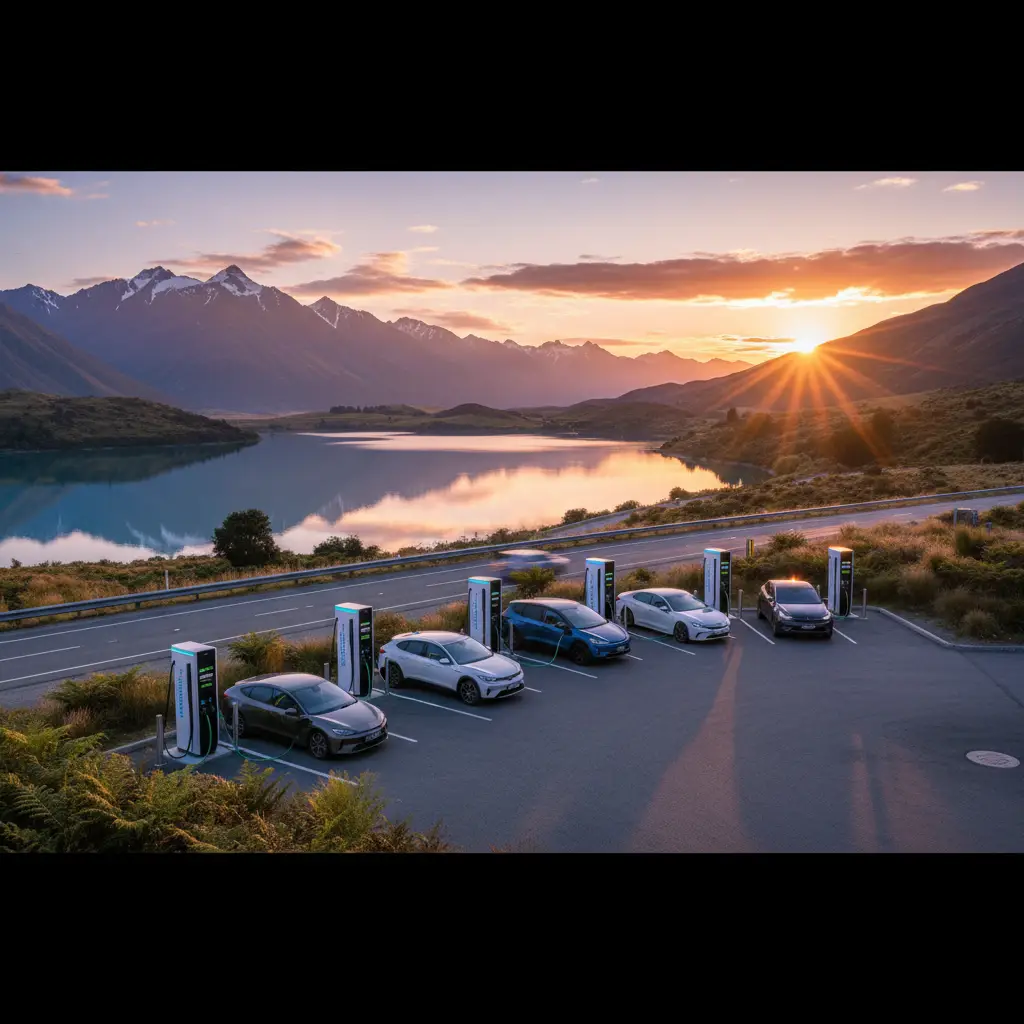
Growth & Key Providers
The public charging network is expanding rapidly, with an increasing number of fast and hyper-fast DC chargers strategically located across both the North and South Islands. Key providers include:
- ChargeNet NZ: The largest and most widespread fast-charging network, with stations typically offering 50kW to 300kW+ DC charging across major routes and towns.
- BP Pulse (formerly Ecotricity): Expanding their network with fast and ultra-fast chargers at BP service stations, often integrated into existing forecourts.
- Meridian Energy: Offers free 25kW DC chargers in various key tourist destinations and regional centres, a great option for a top-up.
- Vector: Primarily focuses on Auckland’s network, including destination chargers and some fast chargers.
- Tesla Supercharger Network: While primarily for Tesla vehicles, many newer Superchargers are becoming accessible to non-Tesla EVs, adding significant capacity.
Stat Callout: As of early 2024, New Zealand boasts over 1,000 public charging connectors nationwide, with more than 300 being DC fast chargers capable of adding significant range quickly. This number continues to grow steadily annually. (Source: Ministry of Transport, EV Roam)
Payment & Access
Accessing public chargers is generally straightforward. Most networks utilise dedicated smartphone apps (e.g., ChargeNet app) where you register an account, load credit, and activate chargers. Some newer stations, particularly those from BP Pulse, also offer contactless credit card payment options for added convenience. Pricing typically varies by kWh consumed, a flat connection fee, or time spent charging, so it’s wise to check provider rates.
Charging Etiquette & Best Practices
As the EV community grows, so does the importance of good charging etiquette to ensure everyone can access EV charging NZ facilities fairly and efficiently. Following these practices helps create a positive experience for all.
- Move Your Car When Charged: Once your EV is sufficiently charged for your needs (e.g., to reach your next destination), promptly move it from the charging bay. This is especially critical for fast chargers where demand is high.
- Don’t Hog Fast Chargers: Only use fast chargers for as long as you need to reach your destination or next charging point. Using a 50kW+ charger to get to 100% can be inefficient and holds up others, as charging speed typically slows significantly after 80% SoC (State of Charge) to protect the battery.
- Be Prepared: Have the necessary apps installed and accounts set up before you arrive at a charger. Know your vehicle’s charging port type (Type 2 is standard for AC in NZ; CCS2 is common for DC fast charging).
- Report Faults: If you encounter a faulty charger, report it immediately to the network provider (their contact details are usually prominently displayed on the charger unit or within their app). This helps ensure optimal network availability.
- Be Considerate: Avoid blocking other vehicles, especially non-EVs that might need access to nearby parking spaces. Keep the area tidy and remember that some parking spots may be shared.
- Communicate: If you anticipate needing a few extra minutes, consider leaving a note on your dashboard with your phone number and estimated departure time, particularly at busy locations.
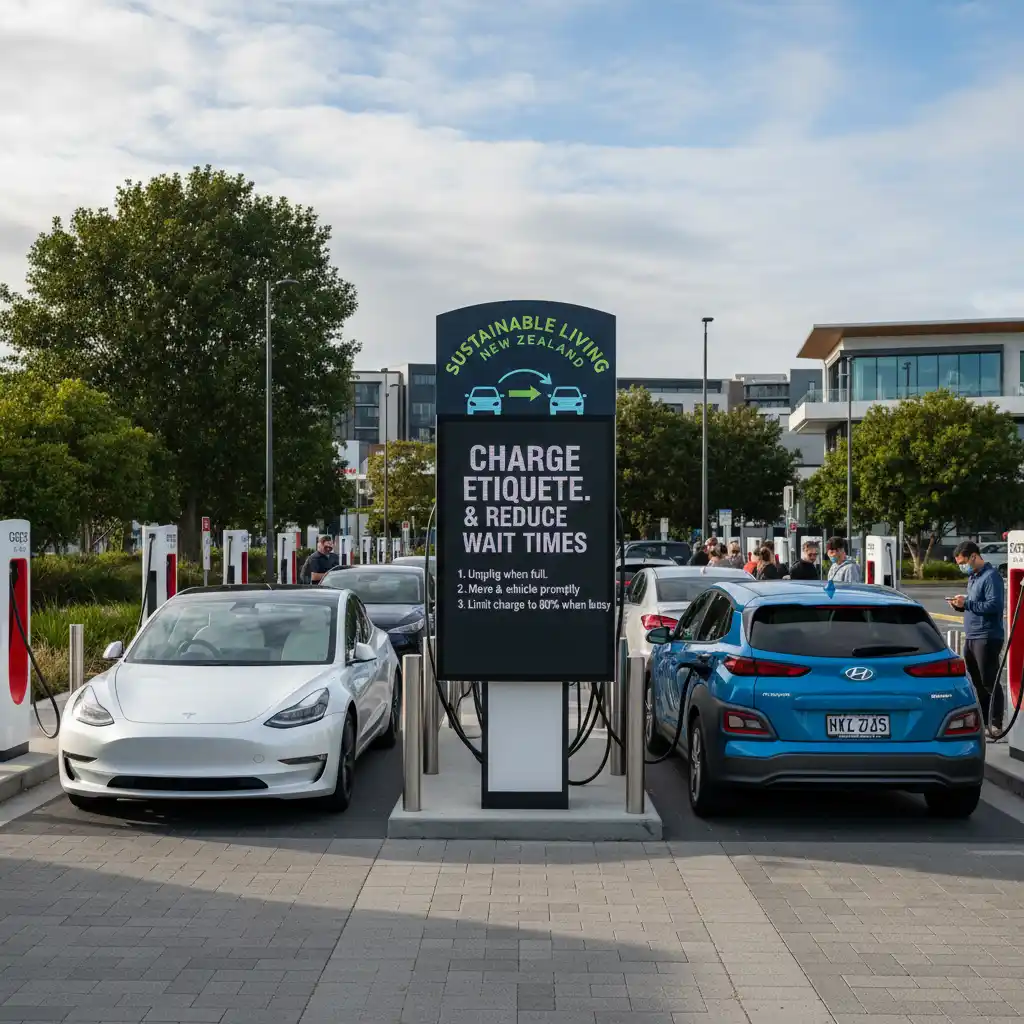
“A little consideration goes a long way in fostering a positive and efficient public charging experience for everyone in the growing EV community.”
Future of EV Charging Technology
The evolution of EV charging NZ is far from over. Exciting advancements are on the horizon, promising even greater convenience, speed, and seamless integration with renewable energy systems.
Emerging Innovations
- Ultra-Fast Charging: Chargers capable of 350kW+ are becoming more common, significantly reducing charging times to just minutes for compatible EVs, often adding hundreds of kilometres of range in under 15 minutes.
- Wireless Charging: Inductive charging pads that allow EVs to charge simply by parking over them are in development and trial phases, potentially revolutionising convenience by eliminating cables.
- Battery Swapping: While not widespread, some manufacturers are exploring battery swapping stations for instant ‘refuelling’ – an entire battery pack replaced in minutes.
- Dynamic Charging (In-Road): Imagine charging your EV while driving! Trials for inductive charging coils embedded in roads are underway globally, promising continuous charging on designated routes.
- Robotic Charging: Automated robotic arms could soon plug in your EV for you, particularly useful in smart parking facilities.
Smart Grids & V2G
The integration of EVs with the wider energy grid is a game-changer for sustainable living. Smart charging systems can optimise charging times to align with periods of high renewable energy generation (e.g., when solar or wind power is abundant) or lower electricity prices.
Stat Callout: Projections indicate that by 2030, over 50% of global EV charging will be ‘smart’, leveraging demand response and renewable energy availability to benefit both consumers and the grid. (Source: International Energy Agency)
Vehicle-to-Grid (V2G) technology takes this a step further, allowing your EV’s battery to discharge power back into your home or the grid during peak demand or outages. This turns your car into a mobile energy storage unit, potentially earning you money while helping to stabilise the grid and maximise renewable energy use in New Zealand’s unique energy landscape.

Embracing an Electric Future
The transition to electric vehicles in New Zealand is well underway, supported by a continuously improving charging infrastructure. Whether you opt for the unrivalled convenience of a home EV charger or rely on the expanding public network for longer trips, managing your EV charging needs is becoming increasingly seamless and user-friendly.
By understanding the available solutions, making informed choices about your home setup, and practicing good charging etiquette, you can confidently embrace an electric future. Every charged EV contributes to a cleaner, greener Aotearoa. The journey towards sustainable transport begins with a fully charged battery and an informed driver!
Frequently Asked Questions (FAQ)
What is the most common EV charging connector type in NZ?
For AC home and public charging (Level 2), the Type 2 (Mennekes) connector is standard in New Zealand. For DC fast charging, CCS2 (Combined Charging System 2) is the most prevalent standard, though some older EVs or Japanese imports might use CHAdeMO. Most new EVs sold in NZ today come with CCS2 for DC fast charging compatibility.
How long does it take to fully charge an EV in NZ?
Charging time varies significantly based on battery size, charger type, and your EV’s acceptance rate. A typical 60 kWh EV battery could take:
- Level 1 (standard wall plug, ~2.4 kW): 25-30 hours for a full charge.
- Level 2 (7.4 kW home charger): 8-10 hours for a full charge.
- DC Fast Charger (50 kW): Around 60-90 minutes (to 80% charge, as charging slows after this).
- Hyper-Fast Charger (150-350 kW): 20-40 minutes (to 80% charge for compatible vehicles).
Are there any government subsidies or grants for EV chargers in New Zealand?
Currently, there are no nationwide government grants specifically for *private* home EV charger installation in NZ for individual owners. However, the government has actively supported the expansion of the public charging network through various initiatives. Some local councils or energy retailers may occasionally offer incentives or schemes, so it’s always worth checking with your specific local providers and utility company.
Can I charge my EV during peak electricity hours?
Yes, you can charge your EV during peak electricity hours, but it’s generally more expensive. Many electricity providers in NZ offer off-peak rates, typically overnight (e.g., 9 PM to 7 AM). Smart chargers can be programmed to automatically charge during these cheaper, off-peak hours, significantly saving you money and simultaneously reducing strain on the national grid during periods of high demand. This is an excellent way to optimise your EV charging NZ costs and environmental impact.
References & Sources
- Ministry of Transport. (Accessed 2024). Electric Vehicles in New Zealand: Data and Statistics. Retrieved from transport.govt.nz
- Energy Efficiency and Conservation Authority (EECA). (Accessed 2024). Charging an Electric Vehicle. Retrieved from eeca.govt.nz
- ChargeNet NZ. (Accessed 2024). NZ’s Largest EV Charging Network. Retrieved from charge.net.nz
- International Energy Agency (IEA). (2023). Global EV Outlook 2023. Retrieved from iea.org
- EV Roam. (Accessed 2024). Interactive EV Charging Map for New Zealand. Retrieved from eeca.govt.nz/ev-roam/