Waste Reduction & Circular Economy in NZ: Your Guide to a Sustainable Aotearoa
Are you ready to make a tangible difference in Aotearoa’s environmental future? Waste reduction in NZ isn’t just a buzzword; it’s a critical pathway to a healthier planet and a more sustainable lifestyle for all New Zealanders. From understanding basic zero waste principles to embracing the circular economy, this guide will equip you with practical steps and insights to significantly reduce your environmental footprint.
Transitioning to a lower-waste lifestyle can feel daunting, but it’s a journey made of small, achievable steps. We’ll explore actionable strategies, local New Zealand initiatives, and empower you to become an active participant in building a regenerative future. Let’s dive in!
Table of Contents
Understanding Zero Waste Principles
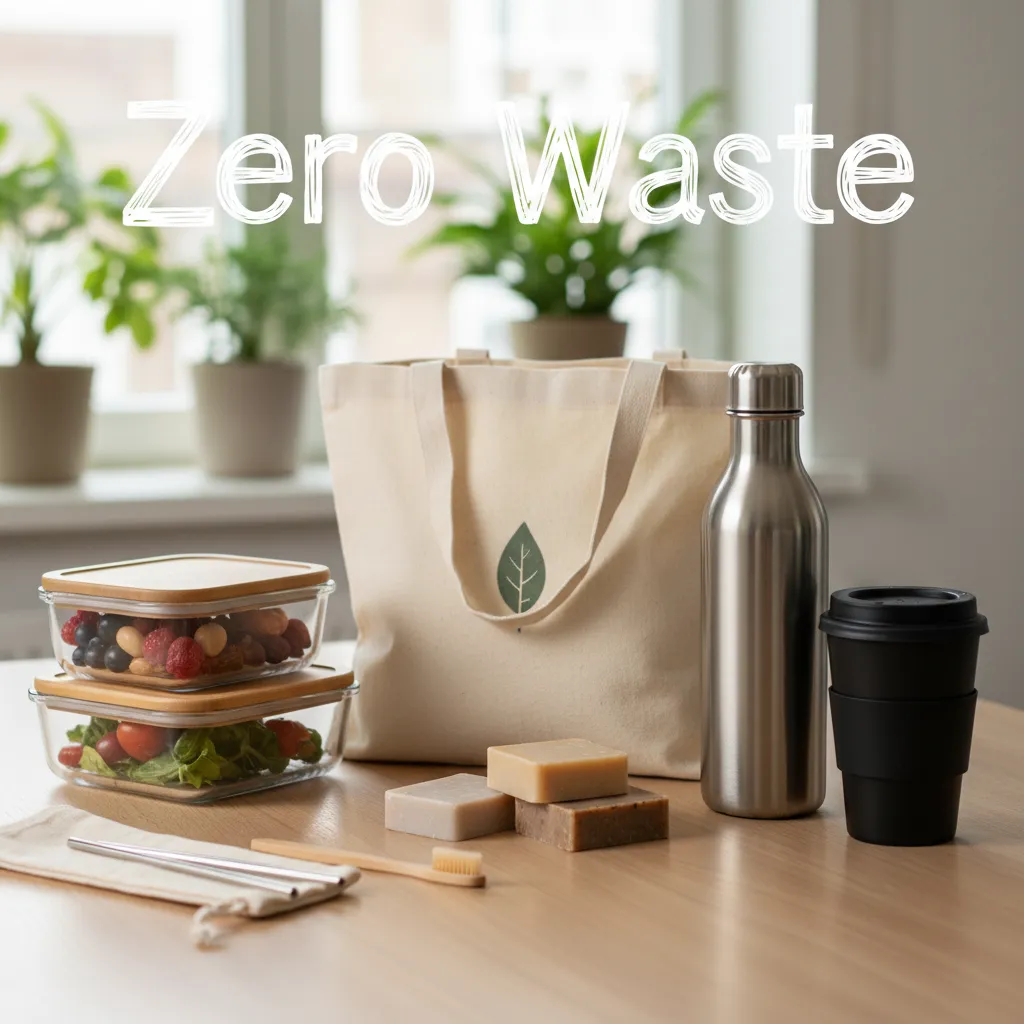
The concept of zero waste is about much more than just recycling; it’s a holistic approach to rethink our relationship with consumption and disposal. It encourages us to design and manage products and processes to systematically eliminate the volume and toxicity of waste and materials, conserve and recover all resources, and not burn or bury them.
“True zero waste goes beyond simply diverting materials from landfill. It’s a systemic shift towards eliminating waste at its source, valuing resources, and fostering a regenerative cycle.” – Authoritative voice
At its core, the zero waste philosophy is guided by the 5 Rs hierarchy:
- Refuse: Say no to things you don’t need (e.g., freebies, excessive packaging).
- Reduce: Minimise what you buy and consume.
- Reuse: Opt for reusable items over single-use (e.g., bags, bottles, containers).
- Recycle: Properly sort and recycle items that cannot be refused, reduced, or reused.
- Rot: Compost organic waste, returning nutrients to the earth.
STAT CALLOUT:
On average, each New Zealander sends approximately 750 kg of waste to landfill annually, a figure that highlights the urgent need for effective waste reduction strategies in NZ. (Ministry for the Environment, 2023)
Composting & Food Waste Solutions
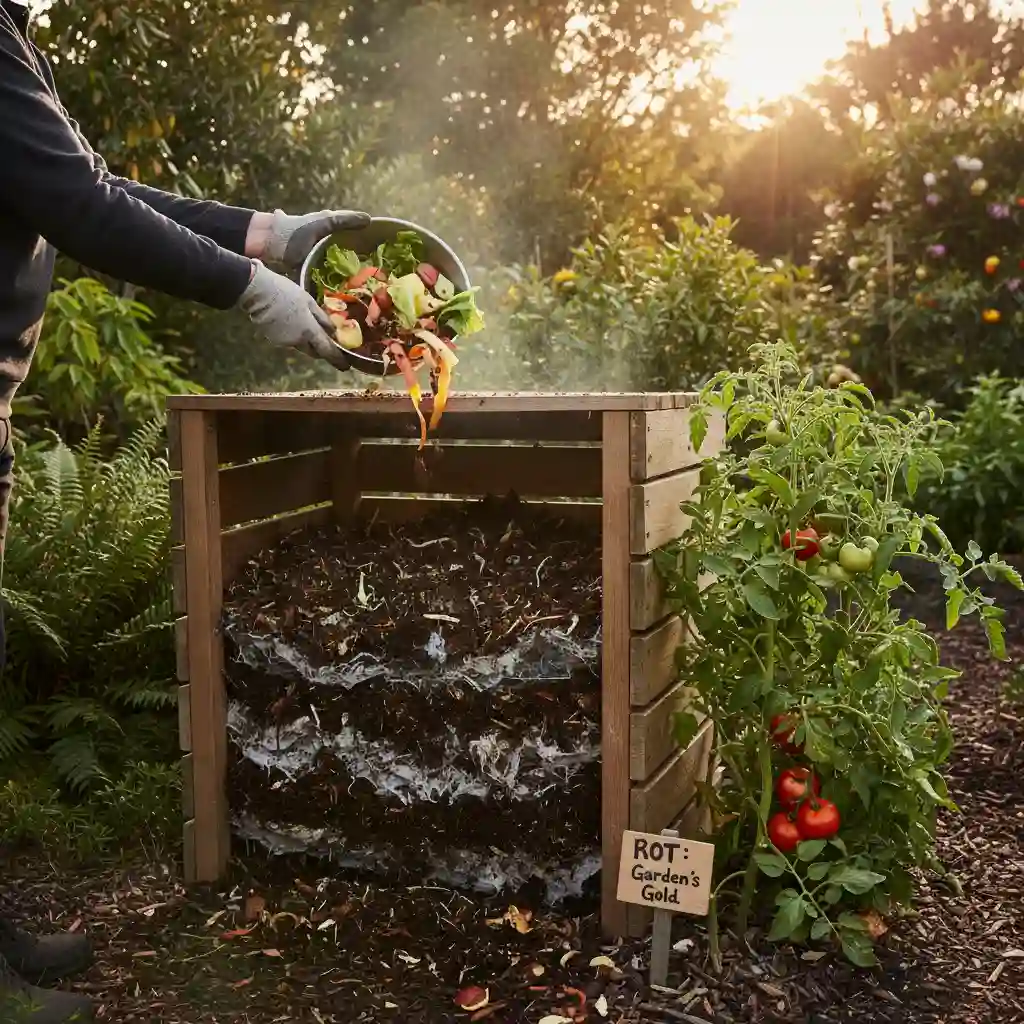
Food waste is a significant contributor to landfill emissions in New Zealand, producing potent greenhouse gases like methane. Diverting food scraps from landfill through composting or other organic waste solutions is one of the most impactful ways to practise waste reduction in NZ.
Simple Steps to Reduce Food Waste
- Plan Your Meals: Before shopping, check your fridge and pantry. Create a meal plan for the week to buy only what you need.
- Store Food Smartly: Learn proper storage techniques to extend the shelf life of fruits, vegetables, and leftovers.
- Understand Date Labels: “Best before” indicates quality, not safety. “Use by” is about safety. Don’t toss food unnecessarily.
- Love Your Leftovers: Get creative with remaining ingredients. Transform them into new meals or freeze them for later.
- Compost the Rest: For unavoidable food scraps, consider composting.
Your Composting Options in NZ
- Traditional Compost Bin: Ideal for gardens, processing a wide range of kitchen and garden waste.
- Worm Farms: Excellent for smaller spaces, worms efficiently convert food scraps into nutrient-rich vermicompost and liquid fertiliser.
- Bokashi Systems: Ferments food waste using microbes, suitable for all food types (including meat and dairy) and indoor use before burying or adding to a compost pile.
- Council Food Waste Collections: Some local councils in NZ offer kerbside food waste collection services; check with your local authority.
Recycling Guide for NZ
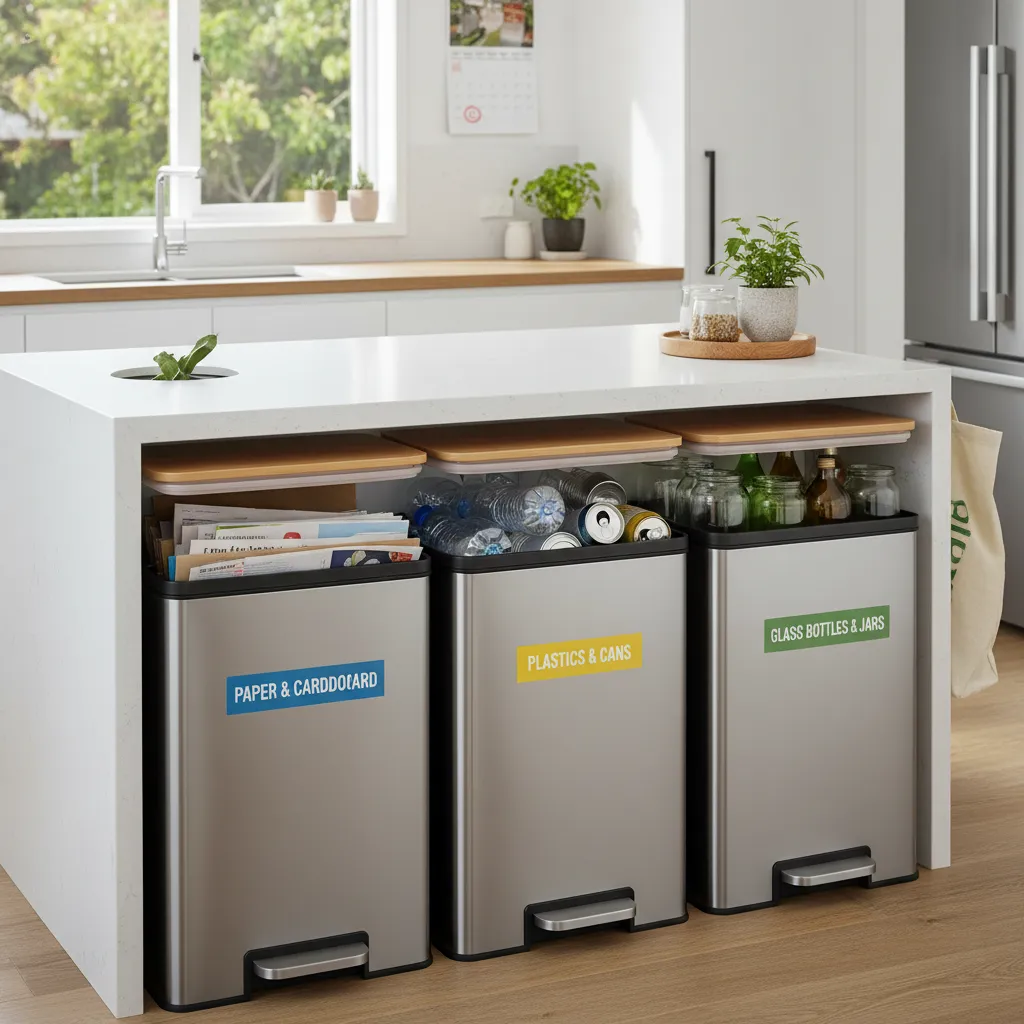
Recycling plays a crucial role in managing materials that can’t be reused, but it’s important to do it right. New Zealand’s recycling system can vary by council, leading to confusion. Understanding your local rules is key to effective waste reduction in NZ.
Common Recyclable Items in NZ (Generally)
- Plastics: Primarily numbers 1, 2, and 5 (check local council for specifics, some accept 3, 4, 6, 7).
- Paper & Cardboard: Cereal boxes, newspapers, magazines, junk mail, clean pizza boxes (remove food residue).
- Glass: Bottles and jars (lids removed, rinsed).
- Aluminium & Steel: Cans and tins (rinsed).
Your NZ Recycling Checklist
- ✓ Know Your Local Rules: Visit your council’s website for specific accepted items and collection days.
- ✓ Rinse Containers: Always rinse food and drink containers to prevent contamination.
- ✓ Remove Lids/Caps: Most plastic bottle lids are too small to be sorted and should be removed.
- ✓ Flatten Cardboard: Save space and aid sorting.
- ✖ No Soft Plastics: Plastic bags, film, and wrappers generally can’t go into kerbside bins (use supermarket drop-offs if available).
- ✖ No Food Scraps: Food contaminates recycling; compost instead.
- ✖ No Ceramics/Pyrex: These melt at different temperatures than glass bottles.
When in doubt, leave it out! Putting non-recyclable items into the recycling bin (often called ‘wish-cycling’) can contaminate entire batches, sending valuable resources to landfill.
Reducing Plastic Use
Plastic pollution remains a global challenge, and New Zealand is no exception. While bans on single-use plastic bags and certain items have been implemented, there’s still a significant opportunity for individual and collective action to further plastic waste reduction in NZ.
“Every piece of plastic ever made still exists today in some form. Choosing reusable alternatives is a powerful act of environmental stewardship.” – Environmental advocate
Practical Steps to Go Plastic-Free
- Carry Reusables: Always have a reusable shopping bag, water bottle, and coffee cup with you.
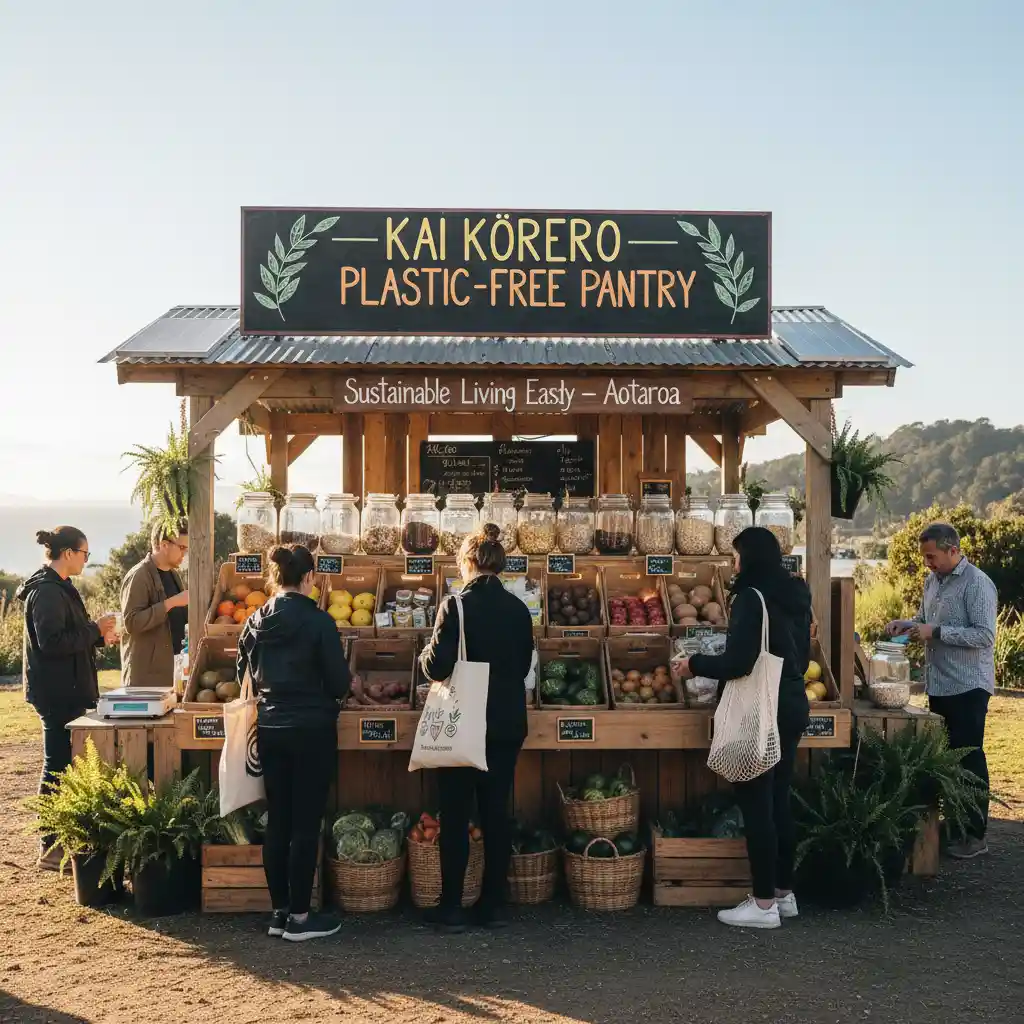
- Shop in Bulk & Package-Free: Utilise bulk food stores and markets that allow you to bring your own containers for produce, grains, nuts, and even liquids.
- Say No to Plastic Straws & Cutlery: Opt for reusable alternatives or simply decline if offered.
- Choose Solid Toiletries: Switch to soap bars, shampoo bars, and conditioner bars to eliminate plastic bottles.
- Ditch Plastic Wrap: Use beeswax wraps, silicone lids, or glass containers for food storage.
- Support Local & Sustainable: Prioritise businesses that actively reduce their plastic footprint and offer plastic-free options.
Circular Economy Initiatives in NZ
While individual actions are vital, true waste reduction in NZ requires a systemic shift towards a circular economy. Unlike the traditional ‘take-make-dispose’ linear model, a circular economy aims to keep resources in use for as long as possible, extract the maximum value from them whilst in use, then recover and regenerate products and materials at the end of each service life.
How the Circular Economy Works
- Design Out Waste & Pollution: Products are designed for durability, repair, and eventual reuse or recycling.
- Keep Products & Materials in Use: Through repair, refurbishment, remanufacturing, and shared ownership models.
- Regenerate Natural Systems: Returning biological materials to the earth safely through composting and other natural processes.
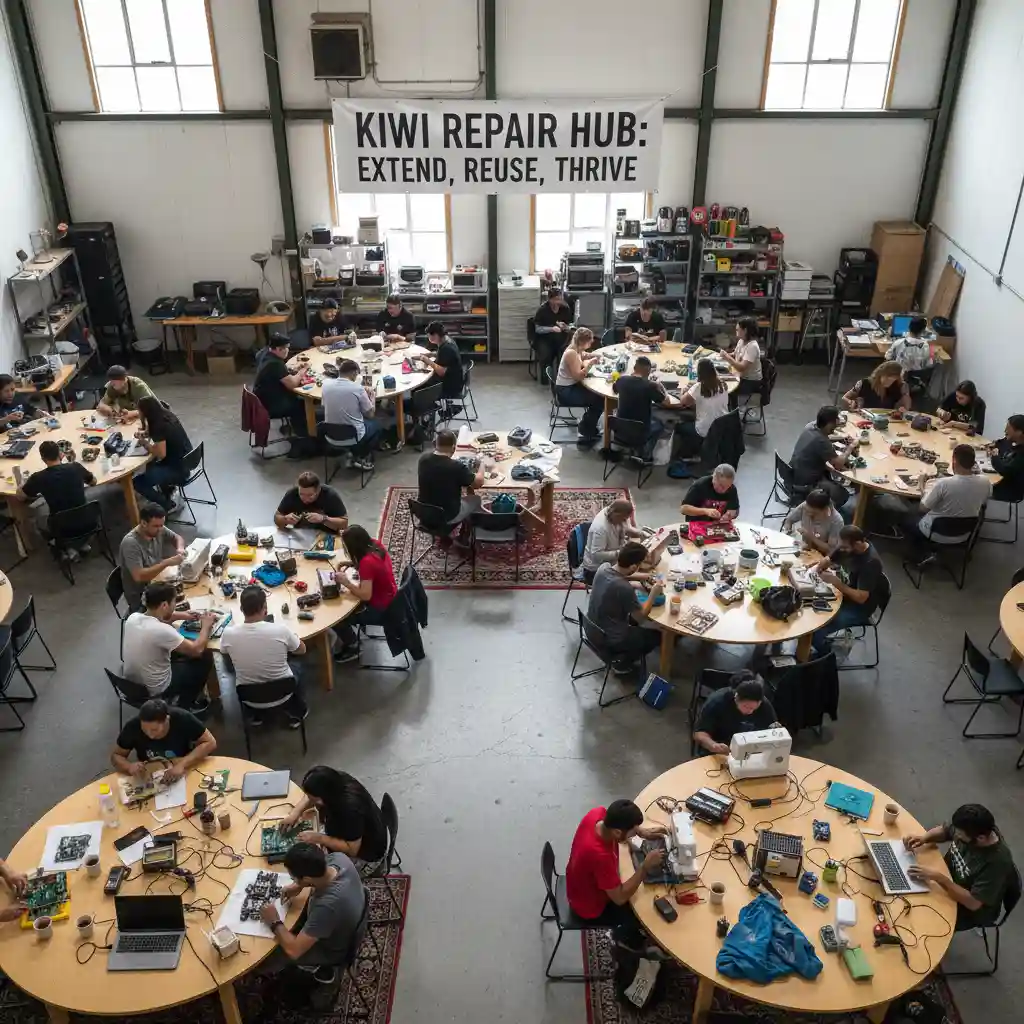
New Zealand is increasingly seeing businesses and organisations embracing circular principles. From companies offering reusable packaging systems to repair cafes and product-as-a-service models, the landscape for sustainable consumption is evolving.
Supporting the Circular Economy as a Consumer
- Choose Durable Products: Invest in items built to last, reducing the need for frequent replacements.
- Support Repair Services: Opt to repair broken items rather than replacing them. Seek out local repair cafes or services.
- Buy Second-Hand: Give products a second life through op-shops, online marketplaces, or community exchanges.
- Lease or Share: Consider renting tools or equipment, or participating in sharing economy initiatives, rather than owning rarely used items.
- Demand Sustainable: Support brands that demonstrate clear commitments to circular design, ethical sourcing, and end-of-life responsibility for their products.
Your Journey Towards a Waste-Free Aotearoa
Embracing effective waste reduction in NZ is a continuous journey, not a destination. By adopting zero waste principles, optimising your composting and recycling efforts, reducing plastic use, and supporting circular economy initiatives, you contribute to a more resilient and beautiful New Zealand. Every small action cumulatively creates a significant positive impact.
Start today, share your knowledge, and inspire those around you to join the movement. Together, we can build a truly sustainable Aotearoa for generations to come.
Frequently Asked Questions about Waste Reduction in NZ
What are the most impactful ways to reduce waste in New Zealand?
The most impactful ways often align with the ‘Refuse’ and ‘Reduce’ principles. This includes avoiding unnecessary purchases, buying in bulk, choosing reusable alternatives for bags, bottles, and coffee cups, and composting food waste. These actions prevent waste from being created in the first place, which is more effective than managing it after it exists.
How do I find out what’s recyclable in my specific NZ region?
Recycling rules can vary significantly between different councils in New Zealand. The best way to find accurate information is to visit your local city or district council’s official website. They usually have a dedicated ‘Waste and Recycling’ section detailing accepted items, collection schedules, and any specific sorting requirements.
What is the difference between zero waste and a circular economy?
Zero waste is a personal and community goal and a set of principles aimed at preventing waste from ending up in landfills or incinerators. The circular economy is a broader economic framework that aims to design out waste and pollution, keep products and materials in use, and regenerate natural systems. Zero waste practices are essential individual contributions to achieving a circular economy on a larger scale.
Where can I find plastic-free shopping options in NZ?
New Zealand has a growing number of bulk-food stores, farmers’ markets, and eco-friendly shops that specialise in package-free and low-waste options. Online directories like ‘The Rubbish Trip’ often list zero-waste stores and bulk bins across the country. Additionally, many supermarkets are expanding their plastic-free produce sections and offering refill stations for certain products.
References & Sources
- Ministry for the Environment. (2023). Our atmosphere and climate 2023. Retrieved from environment.govt.nz
- Zero Waste International Alliance. (n.d.). Zero Waste Definition. Retrieved from zwia.org
- Ellen MacArthur Foundation. (n.d.). What is a circular economy? Retrieved from ellenmacarthurfoundation.org
- The Rubbish Trip. (n.d.). NZ Zero Waste Guides. Retrieved from therubbish.trip